
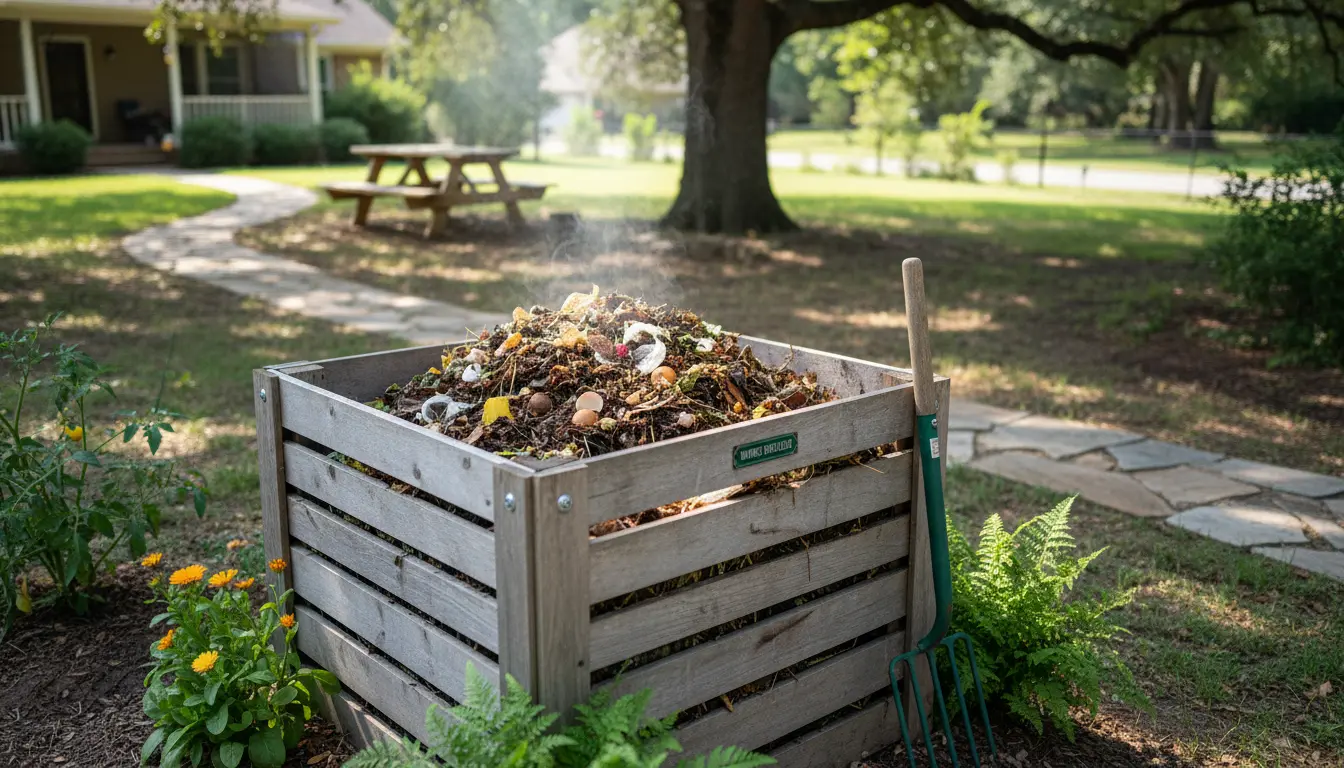
Home Composting for Beginners: Why Compost?
Composting turns kitchen and yard waste into rich soil you can use in containers or garden beds. It cuts landfill waste and reduces the need for store-bought fertilizers.
This guide gives clear, practical steps for safe, effective home composting for beginners. Follow these tips to avoid common mistakes and build a low-effort system that works year-round.
Choose a System for Home Composting for Beginners
Select a compost method that fits your space and time. Popular options include an open pile, a simple bin, and a tumbler. Each has tradeoffs in odor control, maintenance, and speed.
- Open pile – cheap, simple, needs space and less turning.
- Compost bin – tidy and contained; choose plastic or wooden models.
- Tumbler – faster decomposition with regular turning; good for small yards.
What You Need to Start Home Composting for Beginners
Gather a few basic items before you begin. You do not need expensive tools to compost successfully.
- A bin or designated pile area
- Kitchen scrap container for collecting waste
- Garden fork or aerator for turning compost
- Optional: thermometer to check pile temperature
Materials and Ratios for Home Composting for Beginners
Compost needs a balance of carbon rich (brown) and nitrogen rich (green) materials. A good starting ratio is roughly 3 parts brown to 1 part green by volume.
Examples:
- Brown: dry leaves, straw, shredded cardboard, paper
- Green: vegetable scraps, coffee grounds, fresh grass clippings
Step by Step: How to Start and Maintain Compost
Follow these steps to build a functioning compost pile that breaks down efficiently.
- Place the bin on bare soil or grass to allow worms and microbes to enter.
- Start with a 4–6 inch layer of coarse brown material for airflow.
- Add alternating layers of green and brown materials, keeping the 3:1 brown to green ratio.
- Keep the pile moist like a wrung-out sponge. Water during dry periods.
- Turn the pile every 1–2 weeks to add oxygen and speed decomposition.
- Harvest finished compost (dark, crumbly, earthy smell) after a few months to a year.
Troubleshooting Common Problems in Home Composting for Beginners
New composters often face a few predictable issues. Adjust the basics to correct most problems quickly.
- Smelly pile – Add more brown material and turn the pile to introduce air.
- Too dry – Water the pile until it feels like a damp sponge.
- Slow decomposition – Chop materials smaller and ensure the pile is warm by increasing size and nitrogen inputs.
- Pests – Avoid meat, dairy, and oily foods; use a closed bin to deter rodents.
Seasonal Tips for Home Composting for Beginners
Composting can continue through winter with small adjustments. Insulate bins or pile with extra brown material to retain heat.
In warm months, increase turning frequency and monitor moisture to prevent drying out. During wet seasons, cover the pile to avoid waterlogging.
Composting can reduce household waste volume by up to 30 percent and cut methane emissions from landfills. Small actions at home support larger climate benefits.
Using Finished Compost
Finished compost is an excellent soil amendment. Mix it into potting mixes, topdress lawns, or work it into garden beds to improve structure and nutrient content.
Apply a thin 1–2 inch layer around plants or blend 20–30 percent compost into potting soil for container plants.
Real World Example
Case study: Maria, a city apartment dweller, began a small worm bin under her kitchenette counter. She saved vegetable scraps in a sealed container and emptied it into the bin twice weekly.
After six months, Maria harvested rich worm castings and reduced her trash volume substantially. She now uses the compost in balcony pots and reports healthier tomatoes and herbs.
Simple Dos and Don Ts for Home Composting for Beginners
- Do: Chop or shred large pieces to speed breakdown.
- Do: Keep a small countertop container to reduce kitchen trips.
- Don’t: Add pet waste, meat, or dairy to open compost systems.
- Don’t: Let the pile become completely dry or waterlogged.
Final Checklist for Home Composting for Beginners
- Choose a bin type and location
- Gather brown and green materials
- Maintain moisture and aeration
- Turn regularly and harvest finished compost
Home composting for beginners is practical and scalable. Start small, observe the process, and adjust the mix and maintenance rhythm as you learn. Within months you can convert kitchen scraps into valuable soil and reduce household waste.