
How to Start a Vegetable Garden: A Practical Overview
Starting a vegetable garden is an achievable, rewarding project for most homeowners and renters. This guide gives clear, practical steps you can follow from planning to first harvest.
Choose the Right Location for Your Vegetable Garden
Location determines how healthy and productive your garden will be. Pick a spot with at least 6 hours of direct sunlight per day for most vegetables.
Also consider access to water, good drainage, and protection from strong winds. If you have limited space, container gardens or raised beds are excellent alternatives.
Factors to check
- Sun exposure: 6–8 hours ideal
- Water access: hose or drip system nearby
- Soil slope: avoid low spots that collect water
- Accessibility: easy to reach for planting and maintenance
Prepare Soil and Beds
Soil quality affects plant growth more than any other factor. Test your soil pH and texture to understand what amendments it needs.
Improve heavy clay or sandy soils by adding organic matter such as compost, aged manure, or leaf mold. For a fast start, use raised beds filled with a quality garden mix.
Simple soil prep steps
- Clear weeds and grass from the area.
- Loosen top 8–12 inches with a fork or tiller.
- Mix in 2–3 inches of compost and a balanced slow-release fertilizer if needed.
- Rake level and water to settle the mix.
Select Plants and Plan Your First Season
Begin with easy, reliable vegetables to build confidence. Good starter crops include lettuce, radishes, spinach, bush beans, tomatoes, and zucchini.
Check your local frost dates and choose seeds or seedlings that match your growing season. Stagger plantings to extend harvests over weeks instead of a single surge.
Planting tips
- Sow leafy greens in partial shade during hot months.
- Start tomatoes indoors or buy transplants for earlier harvest.
- Space plants according to seed packet directions to avoid crowding.
Watering and Mulching
Consistent watering is essential. Most vegetables prefer 1–1.5 inches of water per week, delivered at the soil level to avoid wetting leaves.
Apply 2–3 inches of organic mulch around plants to conserve moisture, moderate soil temperature, and suppress weeds.
Pest and Disease Basics
Manage pests and diseases with prevention and simple interventions. Healthy plants, clean tools, and crop rotation reduce many common problems.
Use row covers, hand-pick larger pests, and apply organic sprays (like insecticidal soap) only when necessary.
Integrated pest approach
- Inspect plants weekly for damage or eggs.
- Encourage beneficial insects with flowering herbs and flowers.
- Rotate crop families each year to limit soil-borne diseases.
Adding one inch of compost per year can increase soil organic matter significantly over several seasons, improving water retention and plant health.
Maintenance Routines
Establish a simple weekly routine: check watering, remove weeds, harvest ripe produce, and inspect for pests. Consistent small tasks prevent big problems later.
Keep a garden journal to note planting dates, varieties, and issues. This record will guide improvements each season.
Harvesting and Storing Your Vegetables
Harvest at the right stage for best flavor and continued production. For example, pick beans when firm and 2–3 inches long, and harvest lettuce when leaves are tender.
Store root crops in a cool, dark place and refrigerate leafy greens promptly. Preserve surplus by freezing, canning, or pickling.
Common Beginner Mistakes and How to Avoid Them
- Planting too much at once: start small and expand.
- Overwatering: water deeply and less often rather than frequent shallow watering.
- Ignoring soil health: invest time in composting and testing soil pH.
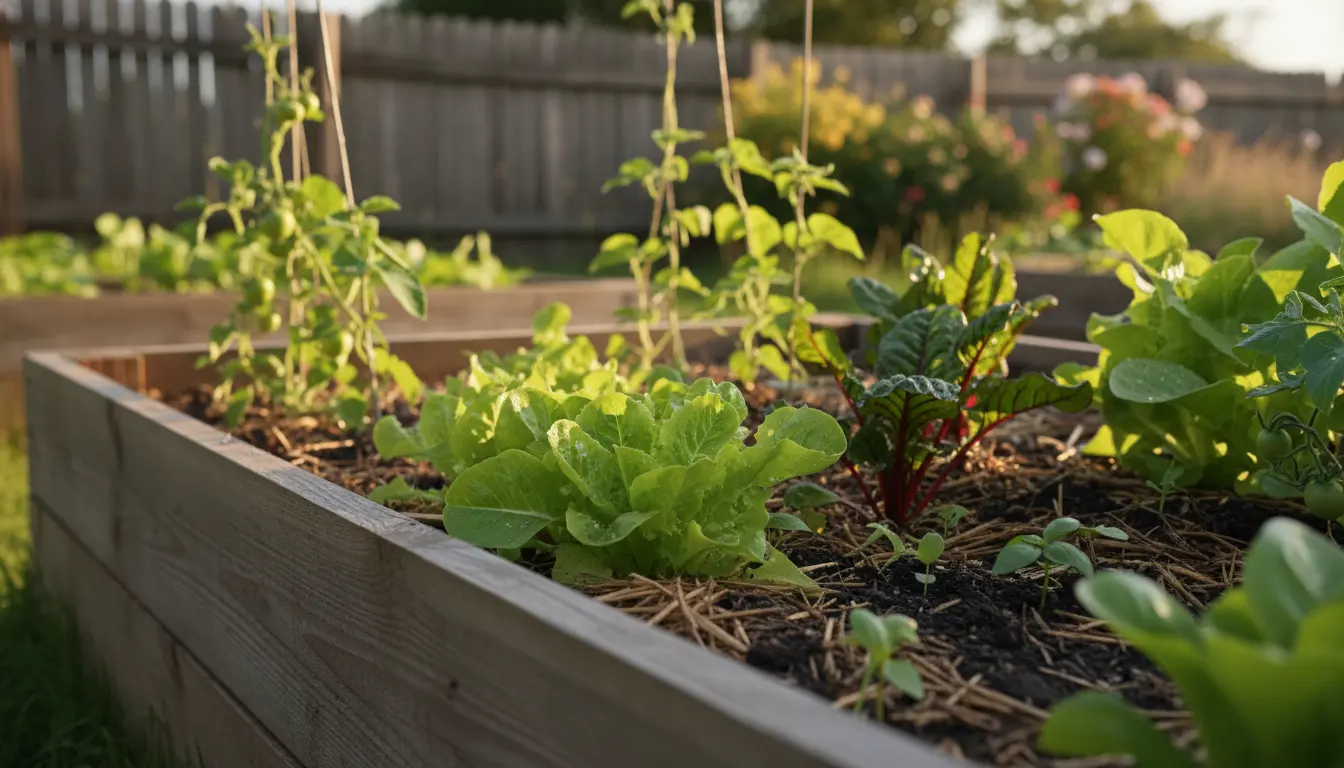
Small Real-World Example: A Backyard Raised Bed
Case study: Maria, a new gardener in Denver, built a 4×8 raised bed and filled it with a mix of topsoil, compost, and coconut coir. She planted tomatoes, basil, lettuce, and bush beans.
By following watering schedules and mulching, she harvested fresh salad greens in six weeks and summer tomatoes by week 10. Keeping a simple log helped her avoid overwatering and identify nutrient needs.
Next Steps: Start Small and Learn
To start your first vegetable garden, pick one small area or a single raised bed, choose three to five easy crops, and commit to weekly care.
Gardening is iterative. Expect trial and error, and use each season’s experience to improve soil, timing, and plant selection.
Ready to begin? Make a short plan today: choose a spot, buy seed or starts, and set aside an hour this weekend to prepare your bed.