
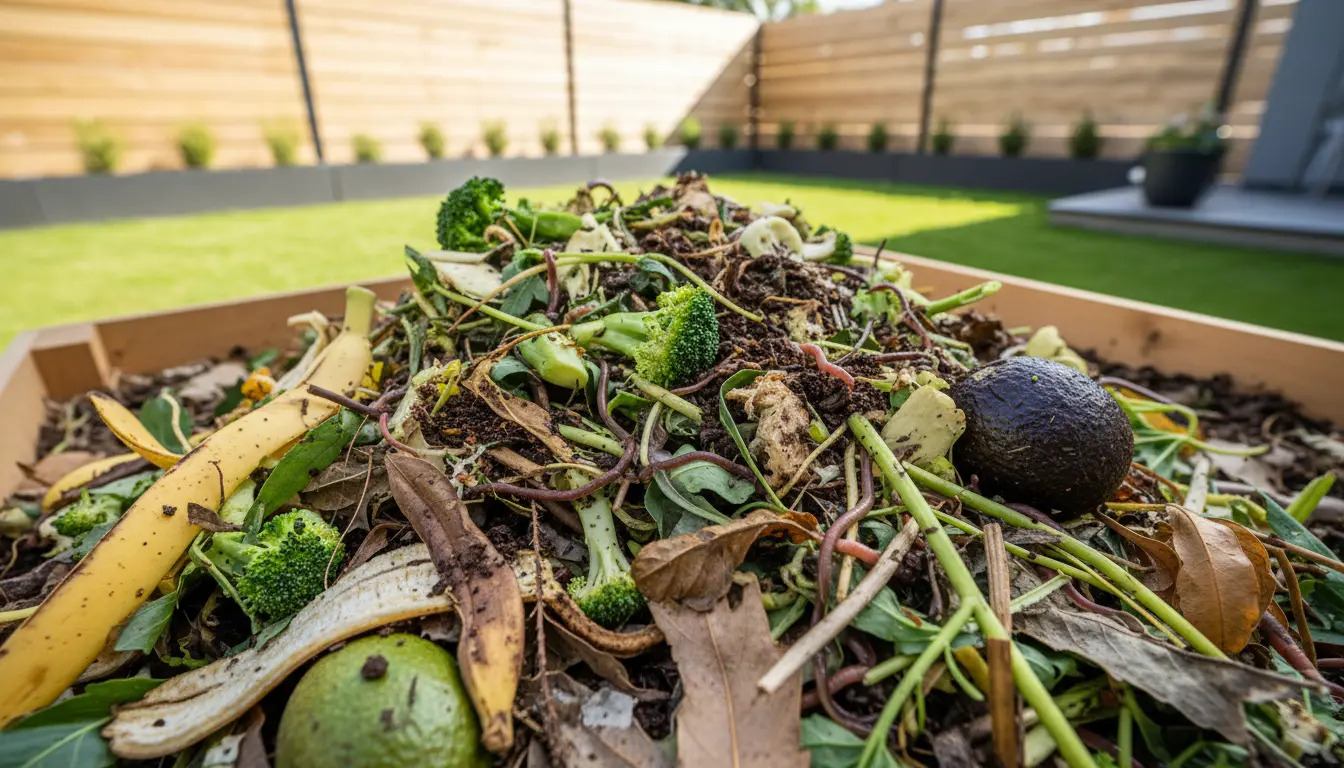
Composting turns kitchen scraps and yard waste into nutrient-rich soil. For beginners, it may seem technical, but the basics are simple and forgiving.
Why Home Composting for Beginners Matters
Composting reduces household waste and supplies free fertilizer for plants. It also improves soil health and cuts methane emissions from landfills.
What You Can Compost
Start by separating materials into “greens” (nitrogen) and “browns” (carbon). Maintaining a balance helps decomposition and reduces odors.
- Greens: fruit and vegetable scraps, coffee grounds, fresh grass clippings.
- Browns: dry leaves, shredded paper, straw, cardboard pieces.
- Avoid: meat, dairy, oils, diseased plants, and pet waste.
Examples of Common Compost Ingredients
Chop larger items to speed breakdown. Eggshells are fine but break them up first. Coffee grounds are a welcome green that adds nitrogen.
Choosing a Bin: Options for Home Composting for Beginners
Pick a system that fits your space and commitment. Options range from simple piles to tumblers and worm bins.
- Open pile: low cost, requires outdoor space and occasional turning.
- Compost bin: contains material and looks neater; many have vents.
- Tumbler: easy turning, faster results, ideal for small yards.
- Worm (vermicompost) bin: great for apartments and produces liquid fertilizer.
Step-by-Step: How to Start Home Composting for Beginners
Follow these practical steps to set up and maintain your compost system.
- Choose a sunny or partly shaded spot with good drainage.
- Layer a 4–6 inch base of browns to help airflow.
- Add kitchen scraps in small amounts with alternating brown layers.
- Keep the pile moist like a wrung-out sponge; water if dry.
- Turn or mix every 1–2 weeks to aerate and speed up decomposition.
Balancing Greens and Browns
A good rule is roughly 2–3 parts browns to 1 part greens by volume. If the pile smells, add more browns and turn it.
Compost can reach internal temperatures of 130–160°F (55–70°C) in hot piles, which kills most weed seeds and pathogens. Cold composting works more slowly but still produces quality humus.
Maintenance Tips for Home Composting for Beginners
Regular attention prevents common problems. Use these maintenance tips to keep your compost healthy.
- Monitor moisture: add water if dry, add browns if too wet.
- Turn the pile to add oxygen and speed decomposition.
- Chop or shred materials to reduce decomposition time.
- Cover new food scraps with browns to deter pests.
Troubleshooting Common Issues
Smells, pests, and slow breakdown are common but solvable.
- Bad odor: add dry browns, turn the pile, and check drainage.
- Pests: bury scraps deeper and avoid meat/dairy; secure the bin.
- Slow composting: increase surface area by chopping materials and add greens for nitrogen.
When Is Compost Ready?
Finished compost is dark, crumbly, and smells earthy. The time depends on method: hot composting can finish in weeks, while cold composting may take 6–12 months.
Using Finished Compost
Mature compost enriches garden beds, improves soil structure, and retains moisture. Mix a few inches into garden soil or use as a top dressing for lawns.
Practical Uses and Application Rates
- Vegetable beds: mix 2–4 inches into the top 6–8 inches of soil before planting.
- Potted plants: blend 10–20% compost into potting mix.
- Mulch: apply 1–2 inches around shrubs and trees, avoiding direct stem contact.
Small Real-World Case Study
Case: Anna, a city renter, started vermicomposting in a 2-bin worm bin on her balcony. In six months, she diverted about 60% of her kitchen waste from the trash and produced five gallons of rich worm castings.
Result: Her balcony herb garden grew noticeably faster, and she saved money on potting soil. Minimal space and daily food scraps were enough to keep the system productive.
Quick Checklist for Home Composting for Beginners
- Choose a compost system that fits your space.
- Collect greens and browns separately.
- Maintain moisture and turn regularly.
- Watch for pests and odors and adjust balance accordingly.
- Harvest finished compost and use it to enrich soil.
Starting composting at home is a low-cost way to reduce waste and improve garden health. Begin small, learn by doing, and adjust as you go. Within months you can produce valuable soil amendment from items that would otherwise be discarded.