
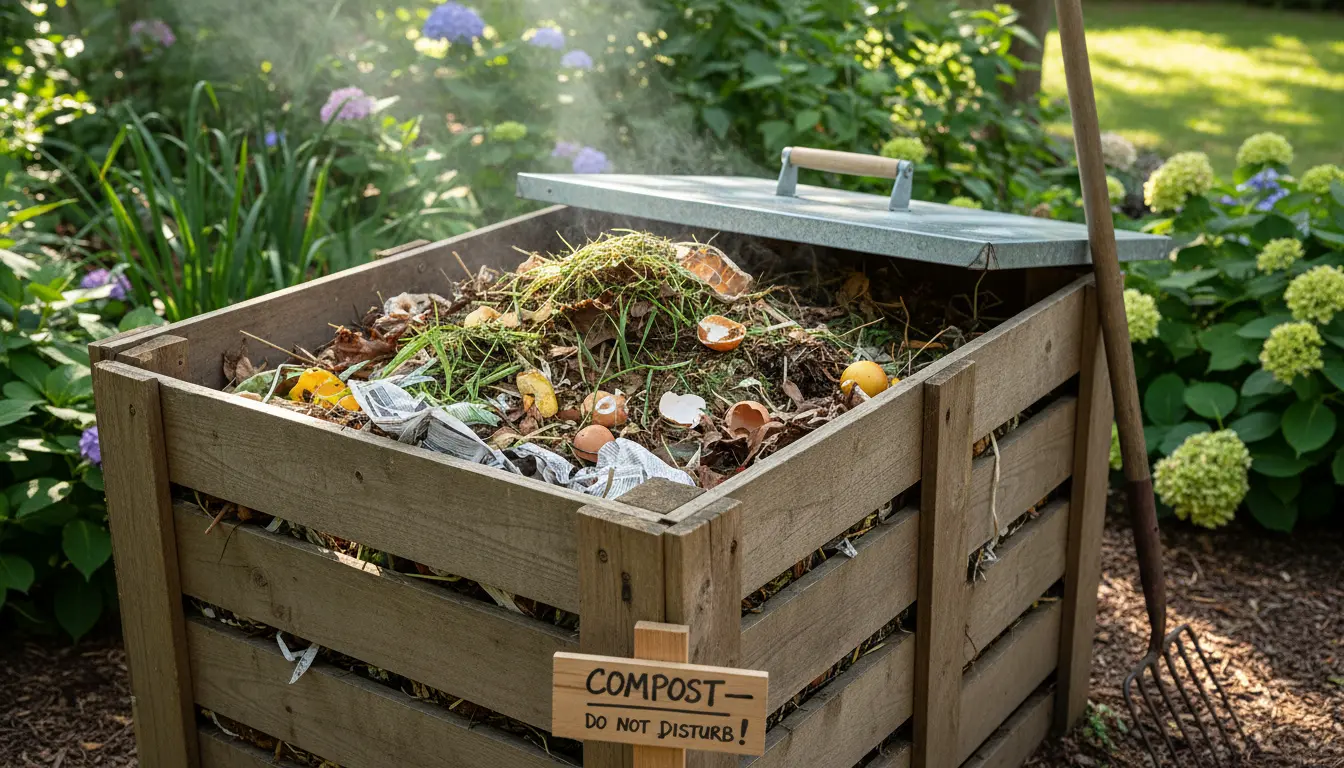
Composting at home turns kitchen and yard waste into nutrient-rich material for your garden. This guide gives clear, practical steps for beginners to set up and maintain a compost system that works year-round.
Home Composting for Beginners Essentials
Start by understanding the two core inputs: greens and browns. Greens are nitrogen-rich materials like vegetable scraps and fresh grass clippings. Browns are carbon-rich items like dried leaves, straw, shredded paper, and cardboard.
Mixing these correctly creates the environment microbes need to break down organic matter efficiently. Aim for a rough ratio of 2 to 3 parts browns to 1 part greens by volume for most home systems.
Home Composting for Beginners Step 1 Choose a Bin
Select a compost container based on space, budget, and how quickly you want results. Options include open piles, tumblers, and stationary bins made of plastic or wood. Tumblers speed up mixing but hold less material; stationary bins are cheaper and simpler for larger volumes.
- Small yards or balconies: countertop compost pail + small tumbler or bokashi system.
- Medium gardens: 3-bin stationary system or a single large bin.
- Large yards: open windrow or multiple bins for staged composting.
Home Composting for Beginners Step 2 Balance Greens and Browns
Layering is simple and effective. Start with a base of coarse browns to help airflow, add a layer of greens, and cover with browns. Repeat as you add material. Shredding or chopping larger items speeds decomposition.
If your compost becomes too wet and smells, add more browns and mix to introduce air. If it is dry and barely heating, add water and more greens to boost microbial activity.
How to Maintain Your Compost
Regular turning and moisture control are the most important maintenance tasks. Turning mixes materials, distributes heat, and prevents anaerobic pockets that cause odors. Aim to turn a backyard pile every 1–2 weeks, or rotate a tumbler every few days.
Keep moisture like a wrung-out sponge. You should be able to squeeze a few drops of water from a handful; too dry and microbes slow down, too wet and odors appear. Use a tarp to protect from heavy rain or move the bin under a shelter.
Troubleshooting Common Problems
- Bad smell: Add browns, increase turning, and reduce wet inputs like large amounts of fruit or dairy.
- Slow breakdown: Chop materials, add water if dry, and add greens for more nitrogen.
- Fruit flies: Cover fresh food scraps with a layer of browns or bury them deeper in the pile.
- Rodents: Use a closed bin or hardware cloth around the bin and avoid meat, bones, and oily foods.
When Is Compost Ready and How to Use It
Mature compost looks dark, crumbly, and smells earthy rather than sour. Depending on method and temperature, compost can be ready in 2 months to a year. If you see identifiable food or large leaf pieces, it needs more time.
Use finished compost as a soil amendment, mixing 1 to 3 inches into the topsoil for beds, or blend with potting mix for containers. Compost improves structure, water retention, and microbial life in soil.
Small Case Study: A Practical Example
Sarah, a homeowner with a small suburban garden, started composting with a 65-gallon plastic bin. She collected kitchen scraps in a countertop pail and added dried leaves from her yard. She aimed for a 2:1 ratio of browns to greens and turned the bin weekly.
Within six months her compost was dark and crumbly. She mixed it into her vegetable beds at planting time and noticed healthier tomato plants and better soil moisture retention the following season. Her weekly household waste volume also decreased noticeably.
Tips and Best Practices for Beginners
- Keep a small sealed container for kitchen scraps to avoid attracting pests.
- Chop or shred materials to increase surface area and speed decomposition.
- Use a thermometer for hot composting: 130–150°F indicates active decomposition.
- Be patient—cold composting takes longer but works with less effort.
Composting can reduce household waste by up to 30 percent. Adding compost to soil can increase water retention by as much as 20 percent, reducing irrigation needs.
Final Steps and Next Actions
Start small with a manageable bin and consistent habit of adding materials. Track results by noting how long it takes for materials to break down and adjust your ratios and turning frequency accordingly.
Home composting is low-cost and scalable. With a basic setup and a few simple routines, beginners can convert kitchen and yard waste into a valuable soil resource while reducing household waste.