
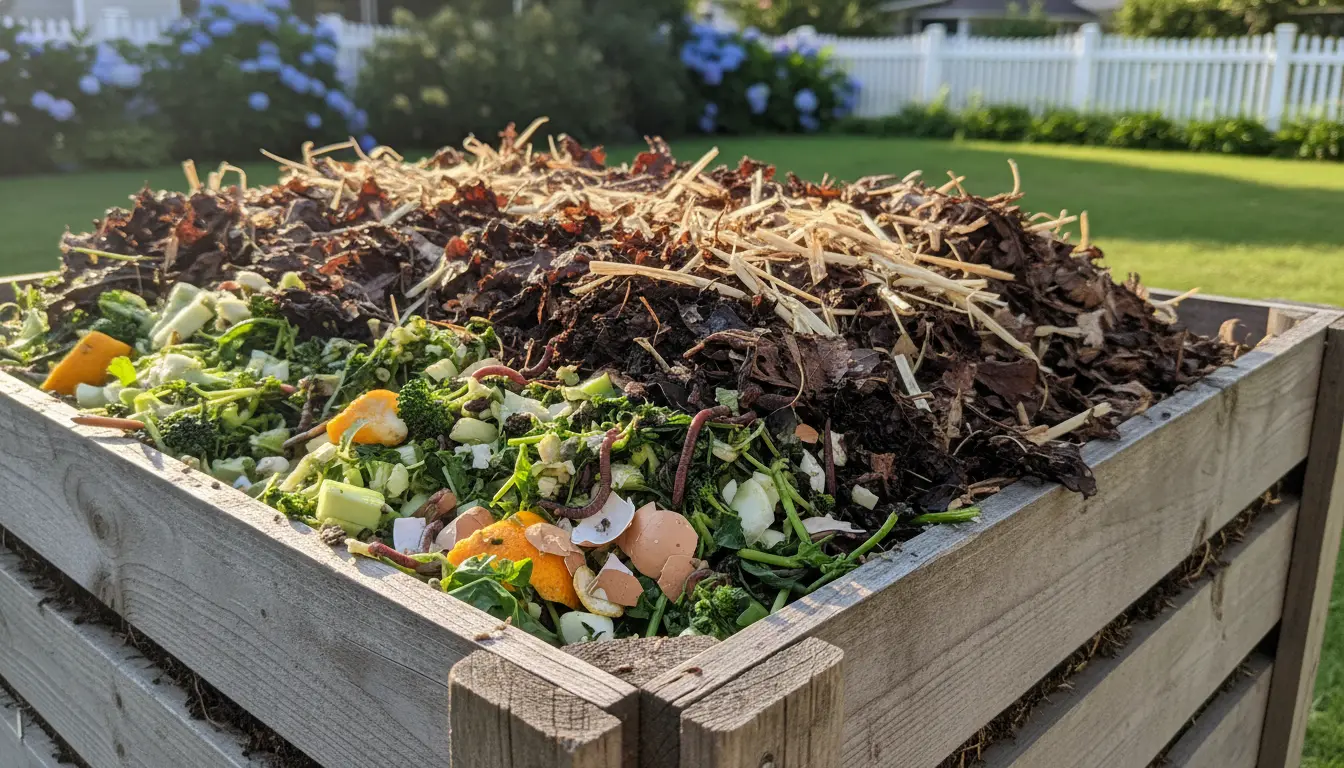
Home composting turns kitchen and yard waste into nutrient-rich soil. This guide explains simple, practical steps to start home composting, maintain a healthy pile, and avoid common problems.
Why Choose Home Composting
Home composting reduces household waste and creates free soil amendment for gardens. It also lowers methane emissions from landfills and supports healthier plants.
Benefits of home composting
Composting returns nutrients to soil, improves water retention, and cuts down on chemical fertilizers. For many households it also saves money on garbage bags and garden products.
How to Start Home Composting
Starting home composting takes a few basic items and a routine for adding materials. You can begin with a simple pile or a purchased bin depending on space and neighbors.
Basic steps for home composting
- Choose a location: a shaded, well-drained spot near your kitchen or garden.
- Select a system: open pile, tumbler, or stationary bin based on space and odor control needs.
- Layer materials: alternate brown (carbon) and green (nitrogen) materials.
- Maintain moisture and aeration: keep the mix like a wrung-out sponge and turn every 1–2 weeks.
- Wait and harvest: compost can be ready in 2–6 months depending on conditions.
Choosing a Bin or System for Home Composting
Your choice affects maintenance and appearance. Tumblers speed up decomposition but cost more. Simple bins or enclosed composters suit small yards and reduce pests.
Considerations when selecting a bin
- Volume: aim for at least a 3x3x3 foot pile for efficient heat retention.
- Pest control: closed bins or elevated systems deter rodents and insects.
- Accessibility: choose a bin that allows easy turning and harvesting.
- Location: place near water and the garden to simplify use.
What to Compost and What Not to Compost
Knowing what goes in the pile keeps it healthy and helps prevent odors or pests. Balance green and brown materials for steady decomposition.
Good materials for home composting
- Greens (nitrogen): fruit and vegetable scraps, coffee grounds, fresh grass clippings.
- Browns (carbon): dry leaves, straw, shredded paper, cardboard.
- Small amounts of wood chips or sawdust, properly mixed.
Materials to avoid
- Meat, fish, dairy, and oily foods (attract pests and smell).
- Diseased plants, invasive weeds, and treated wood.
- Pet waste from carnivores and large amounts of charcoal ashes.
Managing Your Compost: Tips for Success
Proper balance, moisture, and aeration keep the microbes active. Small fixes can correct common problems quickly.
Quick maintenance checklist
- Turn the pile every 1–2 weeks to add oxygen and mix materials.
- Maintain moisture: if too dry, add water and green materials; if too wet, add dry browns and increase turning.
- Monitor temperature: a hot pile (130–150°F) speeds decomposition, but home piles can still work slowly at ambient temps.
- Chop larger items to increase surface area and speed breakdown.
Composting a single household can divert up to 1,000 pounds of organic waste per year from the landfill, depending on diet and yard size.
Troubleshooting Home Composting Problems
Some common issues are easy to resolve with small adjustments. Identifying the symptom helps fix the cause quickly.
Common problems and fixes
- Bad odors: usually too wet or too many greens. Add browns and turn the pile.
- Pests: avoid meat and dairy, use a closed bin, and bury food scraps under a 6-inch layer of browns.
- Slow decomposition: increase surface area by chopping materials, add nitrogen if mostly browns, and ensure moisture.
- Compaction: add coarse materials or turn more often to add air pockets.
Small Real-World Example: One Family Case Study
The Ramirez family in a suburban home started home composting with a 35-gallon tumbler. They collected kitchen scraps in a countertop pail and added dry leaves collected in fall.
Within three months their compost was usable. They reduced trash volume by about 30% and used the compost to top-dress vegetable beds. Their simple routine: add scraps daily, turn the tumbler twice a week, and add dry leaves as needed.
Final Checklist for Successful Home Composting
- Choose the right system for your space and pest concerns.
- Maintain a balance of greens and browns in roughly 2:1 to 3:1 carbon to nitrogen by volume.
- Keep moisture like a wrung-out sponge and turn regularly for aeration.
- Monitor and adjust if odors, pests, or slow breakdown occur.
- Harvest finished compost and use it to improve garden soil and plant health.
Home composting is a low-cost, high-impact way to reduce waste and nourish your garden. Start small, monitor results, and adjust as you learn what works best for your household.