
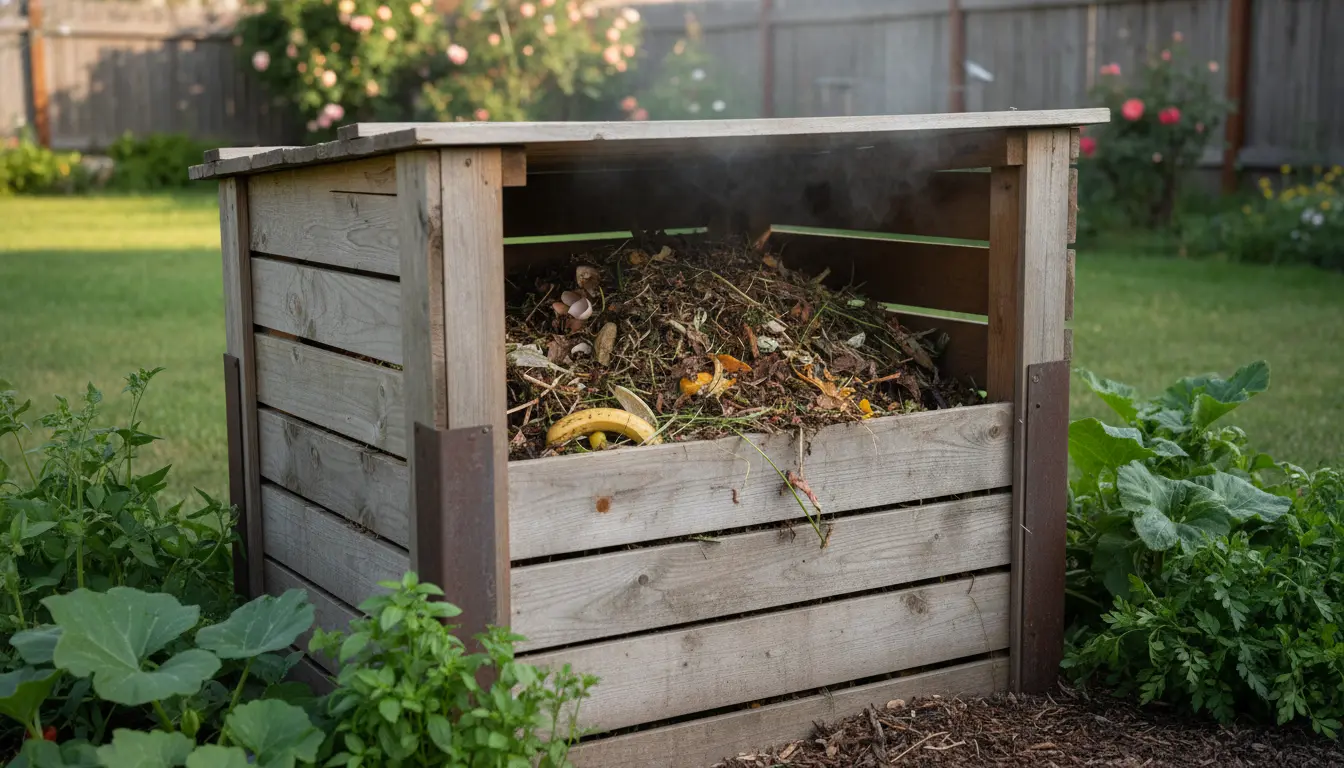
Begin Home Composting: Simple Steps and Methods
Home composting turns kitchen scraps and yard waste into rich soil for gardens and potted plants. This guide gives practical steps, clear methods, and quick troubleshooting to get started today.
Leaving out eggshells speeds up breakdown when crushed. Crushing increases surface area and helps worms and microbes work faster.
What Is Home Composting?
Home composting is the controlled decomposition of organic material into humus. It relies on microbes, oxygen, moisture, and the right mix of materials to create nutrient-rich compost.
Why Start Home Composting?
Composting reduces landfill waste and lowers household methane emissions. It also improves soil structure, retains moisture, and cuts the need for chemical fertilizers.
Getting Ready: Choose a Home Composting Method
Select a method that fits your space, time, and needs. The three common methods are bin composting, tumbler composting, and vermicomposting.
Bin Composting
Use a simple outdoor bin or a DIY wooden frame. This method is low-cost and good for yard waste and household scraps.
Tumbler Composting
Rotating tumblers speed up mixing and aeration. They are cleaner and faster but cost more than basic bins.
Vermicomposting (Worm Composting)
Use red wiggler worms in a bin to process food scraps quickly. Vermicomposting suits apartments or small spaces with minimal odor.
Essential Materials: Browns and Greens
Compost needs a balance of carbon-rich ‘browns’ and nitrogen-rich ‘greens’. Follow the 3:1 or 4:1 browns to greens rule by volume for steady decomposition.
- Greens: vegetable scraps, coffee grounds, fresh grass clippings.
- Browns: dry leaves, shredded paper, straw, small wood chips.
- Avoid: meat, dairy, oils, diseased plants, and pet waste.
Step-by-Step: How to Start Home Composting
Start with a manageable container and add materials in layers. Keep the bin moist like a wrung-out sponge and turn or aerate regularly.
- Step 1: Place a 4–6 inch layer of coarse browns for drainage.
- Step 2: Add a 2–3 inch layer of greens, then cover with browns.
- Step 3: Maintain moisture and turn weekly for faster results.
- Step 4: Harvest finished compost in 2–6 months depending on method and conditions.
Troubleshooting Home Composting
Problems are common but fixable. Check a few basic conditions to keep decomposition on track.
Common Issues and Fixes
- Bad odor: Add more browns and improve aeration; avoid meat and dairy.
- Too dry: Add water and greens to rehydrate the pile.
- Pile not heating: Add fresh greens, chop materials smaller, and turn to introduce oxygen.
- Fruit flies: Bury food scraps under a brown layer or use a closed tumbler.
Maintenance and Timing
Regular turning and checking moisture are the main maintenance tasks. A hot, actively managed bin can produce compost in 2–3 months, while passive piles may take up to a year.
Seasonal Tips
- Summer: Watch moisture—heat increases evaporation. Add water during dry spells.
- Winter: Insulate the bin or slow the pile with larger materials. Vermicomposting may need indoor relocation.
Small Real-World Case Study
Jane, a two-person household, started a 65-gallon tumbling composter in spring. She collected kitchen scraps in a counter caddy and layered them with shredded leaves from the yard.
Result: After three months of weekly turns, Jane harvested roughly 15 liters of dark compost. She used it to top-dress vegetable beds and reported healthier tomato plants and reduced watering frequency by about 20%.
How to Use Finished Home Compost
Finished compost is dark, crumbly, and earthy-smelling. Mix it into potting soil or use as a top dressing for lawns and garden beds.
- Seedlings: Blend 10–20% compost into seed starting mix.
- Vegetables: Work 1–2 inches into topsoil before planting.
- Houseplants: Add a thin layer to the top of pots or mix into potting soil.
Final Practical Tips for Home Composting
Start small and build a routine that fits your household. Record what you add and how the pile responds to learn faster.
- Chop or shred large items to speed decomposition.
- Keep a balanced mix and avoid persistent items like citrus in large amounts.
- Label bins and keep them accessible to boost use and consistency.
Home composting is a low-cost, high-impact way to close the loop on organic waste. With a bit of setup and simple maintenance, most households can turn scraps into valuable soil in months, not years.