
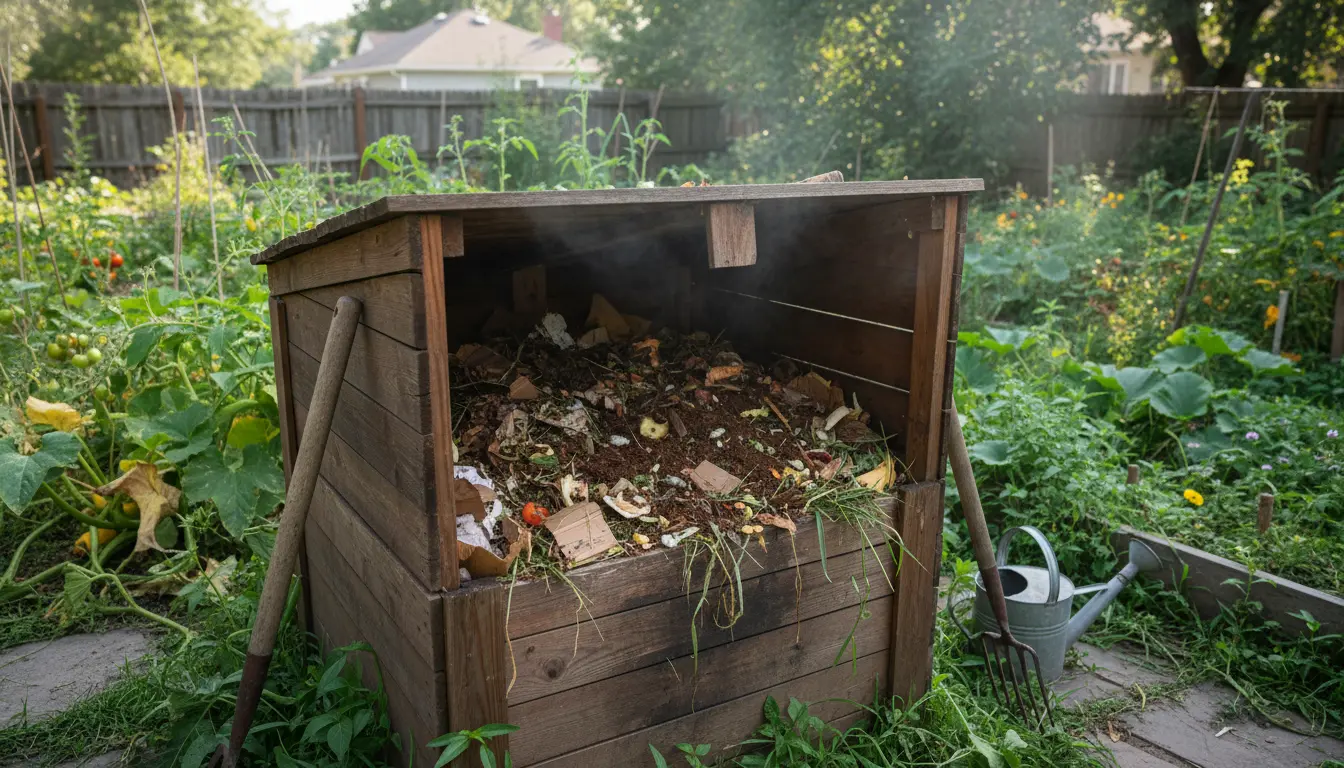
Start Home Composting for Beginners: What It Is and Why It Matters
Home composting is the process of turning kitchen scraps and yard waste into nutrient-rich soil. It reduces household waste and improves garden soil without chemical fertilizers.
This guide is focused on practical steps a beginner can follow. You will learn materials to use, simple methods, troubleshooting, and a short real-world case study.
Why Home Composting for Beginners Works
Composting relies on microorganisms breaking down organic matter. When managed correctly, heat, moisture, oxygen, and a mix of materials speed decomposition.
Beginners can succeed by keeping the process simple: balance greens and browns, maintain moisture, and turn the pile occasionally.
Benefits of Home Composting for Beginners
- Reduces household waste and trash volume.
- Creates free soil amendment for pots and garden beds.
- Improves water retention and soil structure.
- Reduces need for chemical fertilizers.
Materials to Use in Home Composting for Beginners
Use a mix of ‘greens’ (nitrogen-rich) and ‘browns’ (carbon-rich). Aim for roughly a 1:2 ratio by volume—greens to browns.
- Greens: fruit and vegetable scraps, coffee grounds, young green lawn clippings.
- Browns: dry leaves, shredded newspaper, cardboard, straw, wood chips.
- Avoid: meat, dairy, oily foods, diseased plants, and pet waste.
Home Composting for Beginners Step by Step
Follow these steps for a basic backyard bin or tumbler method. The instructions are easy to adapt for small spaces or containers.
- Choose a container: a bin, tumbler, or a simple pile works. Ensure some airflow and drainage.
- Layer materials: start with coarse browns for drainage, then alternate greens and browns.
- Moisture: aim for a damp sponge feel. Add water if too dry, add browns if too wet.
- Turn occasionally: every 1–2 weeks speeds decomposition and reduces odors.
- Harvest: compost is ready when dark, crumbly, and earthy-smelling—usually 2–6 months.
Quick Tips for Success
- Chop or shred large items to speed breakdown.
- Keep the pile at least 1 cubic foot to maintain heat.
- Use a compost thermometer to monitor temperature if you want faster results.
Composting can divert up to 30% of household waste from landfills. Proper composting also reduces methane emissions from organic waste in landfills.
Common Problems in Home Composting for Beginners
Even simple systems can run into issues. Here are common problems and quick fixes to keep composting on track.
Bad Smell
Cause: too many greens, lack of oxygen, or excess moisture. Fix: add dry browns, turn the pile, and fluff for airflow.
Pile Too Dry or Too Wet
Too dry: add water and more greens. Too wet: add browns and turn to dry it out. Aim for moisture like a wrung-out sponge.
Slow Decomposition
Cause: large pieces, poor balance, low temperature. Fix: chop materials, add a mix of greens and browns, and turn to increase heat.
Methods Suitable for Home Composting for Beginners
Choose a method that matches your space, time, and goals. Each method works; pick what you can maintain.
Backyard Bin
Simple and low-cost. Use a plastic or wooden bin with holes for airflow. Good for households with yard space.
Tumbler
Easy to turn and faster to compost. Tumblers are ideal for beginners who want a neater setup and less handling.
Vermicomposting
Uses worms to break down kitchen scraps quickly. Suitable for apartments when managed at room temperature and kept moist.
Small Real-World Example
Case study: An apartment family of three started a small vermicompost bin under their kitchen sink. They collected fruit and vegetable scraps in a lidded container and fed worms twice a week.
Within three months they produced enough castings to top houseplants and reduce weekly trash by one small bag. Key changes were regularly chopping scraps and keeping bedding moist.
How to Use Finished Compost from Home Composting for Beginners
Finished compost can be mixed into garden beds, used to pot up seedlings, or added to container plants. Apply a 1–2 inch layer around plants or mix 10–25% compost into potting mixes.
Compost improves soil structure, boosts beneficial microbes, and provides slow-release nutrients.
Final Checklist for Home Composting for Beginners
- Choose a container that fits your space.
- Balance greens and browns and keep moisture consistent.
- Turn regularly and monitor for odors or pests.
- Harvest when dark and crumbly, then reuse in your garden.
Home composting is a low-cost, high-impact practice that anyone can adopt. Start small, learn the basics, and adjust based on your routine and space.