
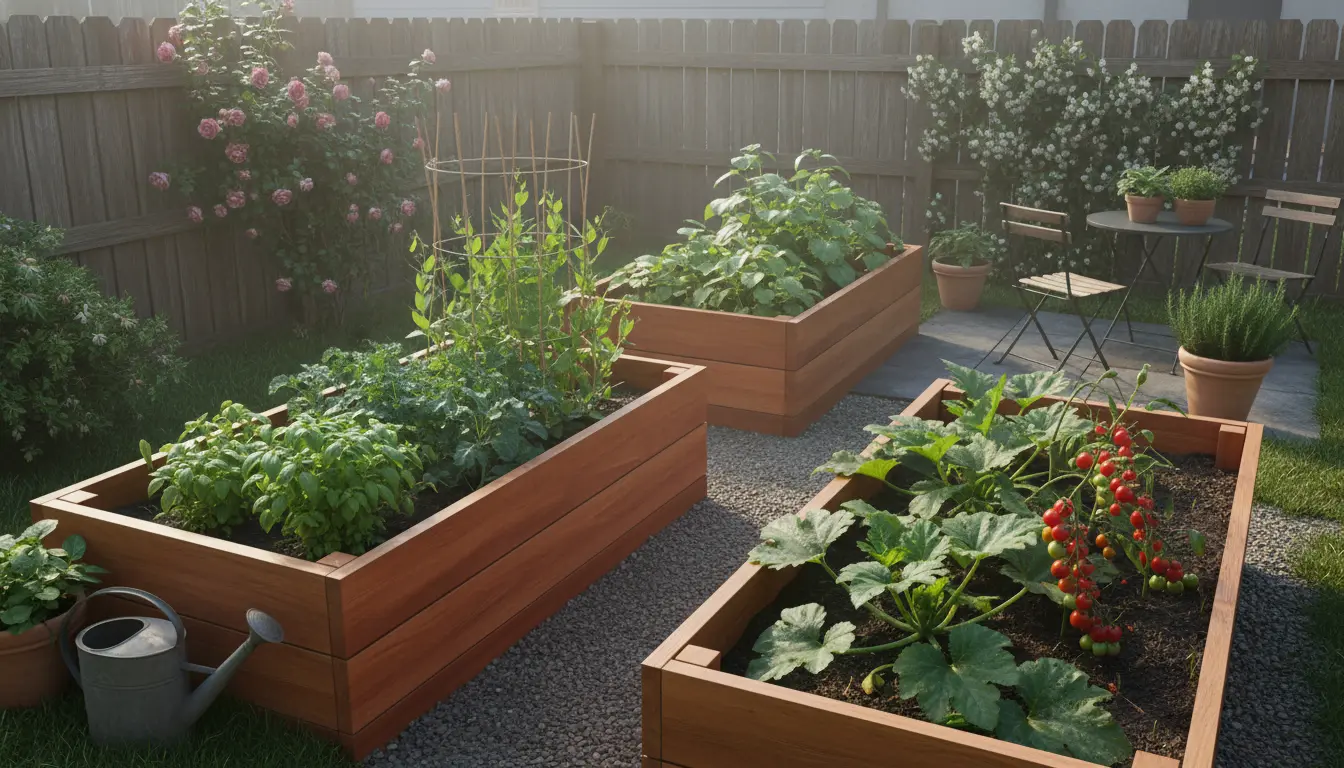
Starting a small vegetable garden is an achievable project for any homeowner or renter with a balcony. This guide walks through the essential steps to plan, plant, and maintain a productive small vegetable garden.
Plan Your Small Vegetable Garden
Good planning saves time and increases harvest success. Begin by deciding what you want to grow and how much space you can dedicate. Start small to reduce maintenance and learning curve.
Choose What to Grow
Select vegetables that match your climate, space, and cooking habits. Fast, reliable crops for small gardens include lettuce, radishes, cherry tomatoes, herbs, and bush beans. Focus on high-value plants you will eat often.
Decide on a Growing Method
Common setups for small vegetable gardens include raised beds, containers, and vertical supports. Raised beds are efficient for soil control. Containers work well on balconies and patios. Vertical trellises maximize limited ground space.
Choose a Location for Your Small Vegetable Garden
Light and access determine success. Most vegetables need 6–8 hours of direct sunlight daily. If full sun is not available, pick partial-sun crops like leafy greens and some herbs.
Consider Access and Water
Place beds or containers near a water source for easy watering. Make sure you can reach plants comfortably for pruning and harvesting. Avoid locations that are hard to access.
Prepare Soil and Containers
Healthy soil is the foundation of a productive small vegetable garden. If using ground soil, amend with compost. For containers and raised beds, use a quality mix with good drainage.
- Mix equal parts compost and topsoil for raised beds.
- Use a commercial potting mix for containers; add perlite for drainage if needed.
- Test pH if you suspect issues; most vegetables prefer pH 6.0–7.0.
Planting Your Small Vegetable Garden
Planting method depends on crops and season. Use seed-starting for many annuals or buy transplants to get a jump on the season. Follow recommended spacing to avoid overcrowding.
Succession Planting
Succession planting keeps a small garden productive. Sow quick crops like radishes and salad greens in intervals of two to three weeks to maintain continuous harvests. Remove spent plants and replant the space.
Watering and Fertilizing
Small gardens dry out faster, especially in containers. Water deeply and regularly to keep roots moist but not waterlogged. Aim for consistent soil moisture rather than frequent shallow watering.
- Water in the morning to reduce disease risk.
- Mulch around plants to conserve moisture and suppress weeds.
- Apply a balanced organic fertilizer every 4–6 weeks during the growing season.
Pest and Disease Management
Monitor plants regularly for pests and signs of disease. Early detection reduces damage and prevents spread across a small space. Use integrated pest management (IPM) practices to minimize chemical use.
- Encourage beneficial insects with flowers and herbs.
- Use row covers to protect young seedlings from pests.
- Remove diseased leaves promptly and compost healthy plant debris.
Harvesting and Crop Rotation
Harvest regularly to encourage continued production. Harvest leafy greens before they bolt and pick tomatoes when they reach full color. Keep notes on what worked to plan rotations.
Crop Rotation Tips for Small Vegetable Garden
Even in small gardens, rotate plant families to reduce soil-borne disease and nutrient depletion. Move nightshades, brassicas, and legumes to different spots in subsequent seasons when possible.
Planting basil next to tomatoes can help repel some pests and may improve tomato flavor according to many home gardeners. Companion planting is a low-cost way to support plant health.
Tools and Supplies Checklist
Keep essential tools on hand to maintain your small vegetable garden. A few basic items cover most needs and save time for regular care.
- Hand trowel and garden fork
- Watering can or hose with a gentle nozzle
- Pruning shears and gloves
- Compost or well-rotted manure
- Mulch and trellising materials
Case Study: A Balcony Vegetable Garden
Anna had a 6-foot balcony and wanted fresh salad greens and some tomatoes. She used three 12-inch containers for mixed greens and two 5-gallon buckets for determinate cherry tomatoes.
In her first season she planted seeds for lettuce and bought two tomato seedlings. With watering twice weekly and weekly fertilizer, she harvested salads for two people all summer and about 60 cherry tomatoes.
Key wins were vertical space for the tomatoes, consistent watering, and using fast-maturing lettuce varieties to replace crops quickly.
Common Mistakes to Avoid
- Overplanting small spaces — give plants their recommended spacing.
- Ignoring sunlight — plant shade-tolerant crops in partial sun only.
- Inconsistent watering — this stresses plants and reduces yield.
Next Steps to Start Your Small Vegetable Garden Today
Pick a light-filled location, choose two to four crops to begin with, and set up simple containers or a single raised bed. Keep a planting calendar and adjust based on what succeeds in your space.
Starting a small vegetable garden is practical and rewarding. With basic planning, regular care, and a little experimentation, you can enjoy fresh homegrown produce even in limited space.