
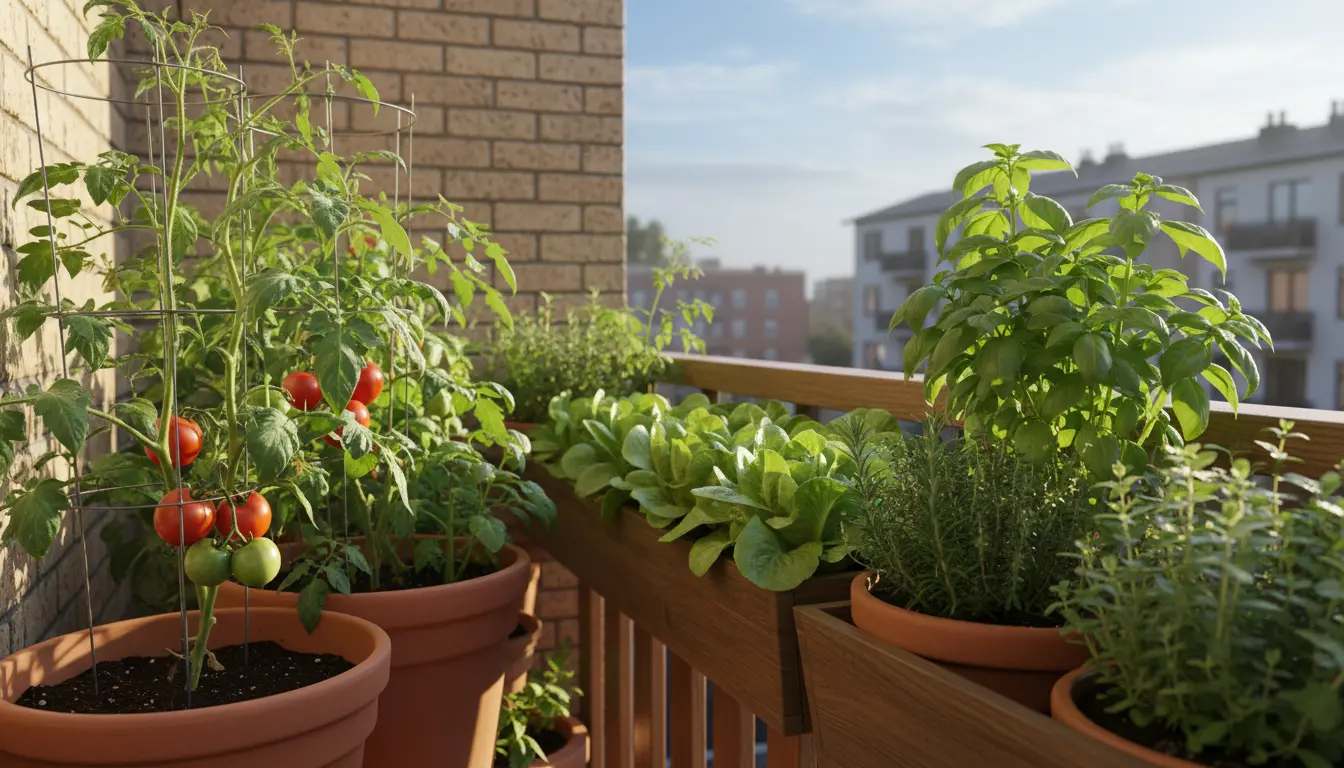
Plan Your Small Space Vegetable Garden
Starting a vegetable garden in small spaces begins with planning. Assess available light, floor area, and how much time you can commit each week.
Decide whether you’ll use containers, raised beds, or vertical systems. Each option affects plant choice, soil volume, and watering needs.
Choose the Right Containers for a Small Space Vegetable Garden
Container choice is critical for a successful small space vegetable garden. Use containers that hold enough soil for root growth and retain moisture well.
- Small herbs and lettuces: 6–8 inch pots
- Tomatoes and peppers: 12–20 inch containers
- Root crops (carrots, radishes): deep narrow pots or grow bags at least 10–12 inches deep
Use containers with drainage holes and place a tray to protect floors or balconies from water runoff.
Pick the Best Plants for a Vegetable Garden in Small Spaces
Choose compact, high-yield varieties labeled ‘bush’, ‘patio’, or ‘compact’. These are bred to produce well in limited space.
- Leafy greens: lettuce, spinach, arugula
- Compact vegetables: bush beans, dwarf tomatoes, baby cucumbers
- Herbs: basil, parsley, chives
Stagger planting times (succession planting) to maximize continuous harvest in a small area.
Vertical Gardening for Small Space Vegetable Garden
Use trellises, wall planters, or stacked pots to grow up instead of out. Vertical setups work great for peas, beans, cucumbers, and vining tomatoes.
Secure climbing supports early so plants have a structure as they grow.
Soil, Fertilizer, and Potting Mix
Good soil is the foundation of any small space vegetable garden. Use a high-quality potting mix rather than garden soil for containers.
Look for mixes with compost, peat or coconut coir, and perlite for drainage. Add a slow-release organic fertilizer at planting and supplement with weekly liquid feed during the season.
Watering and Drainage in a Small Space Vegetable Garden
Containers dry out faster than ground beds. Water deeply but less frequently to encourage stronger roots.
- Check moisture daily in hot weather.
- Water at the soil level to reduce evaporation and disease.
- Consider self-watering pots or drip irrigation for consistent moisture.
Sunlight and Placement for a Small Space Vegetable Garden
Most vegetables need 6–8 hours of direct sunlight. Track sun patterns for a few days to find the best spot.
If light is limited, prioritize leafy greens and herbs that tolerate partial shade. Rotate pots weekly if light is uneven across your space.
Maintenance and Pest Control in Small Space Vegetable Garden
Maintenance tasks for a compact vegetable garden are manageable with routine checks. Prune spent flowers and remove yellowing leaves promptly.
Use these pest control strategies:
- Handpick large pests like slugs and caterpillars.
- Use row covers for seedlings to prevent insect damage.
- Encourage beneficial insects by planting flowers like marigolds or alyssum.
Container-grown tomatoes can produce as much as ground-grown varieties if given at least 10 gallons of soil and consistent water and nutrients.
Tools and Supplies for a Small Space Vegetable Garden
You don’t need many tools to maintain a small space garden. Keep basics handy to save time and work efficiently.
- Hand trowel and pruning shears
- Watering can or small hose with a gentle nozzle
- Soil moisture meter (optional) and gloves
Real-World Example: A Balcony Vegetable Garden Case Study
Case study: Jenna, a city renter with a 6-foot balcony, transformed the space into a productive garden. She used three 10-inch pots for mixed lettuces, two 15-gallon containers for a dwarf tomato and a pepper, and a vertical pocket planter for basil and chives.
By rotating containers for light and watering every other day in summer, she harvested salad greens weekly and picked 8–10 pounds of cherry tomatoes across the season. Her modest setup required about 30 minutes of care per week.
Seasonal Tips for a Small Space Vegetable Garden
Adjust your approach by season. In spring, start seedlings indoors or buy transplants to get a head start. In summer, increase watering and shade delicate crops during heat waves.
In fall, plant cool-season crops like kale and spinach. Empty containers can be cleaned and refilled with fresh potting mix between seasons to reduce disease risk.
Quick Checklist: Start Your Small Space Vegetable Garden
- Assess light and space
- Choose containers and good potting mix
- Select compact or vertical-friendly plants
- Set up watering and drainage
- Plan feeding and pest checks
With planning and the right choices, a small space can yield a surprising harvest. Begin with a few containers, learn from observations, and expand as you gain confidence.