
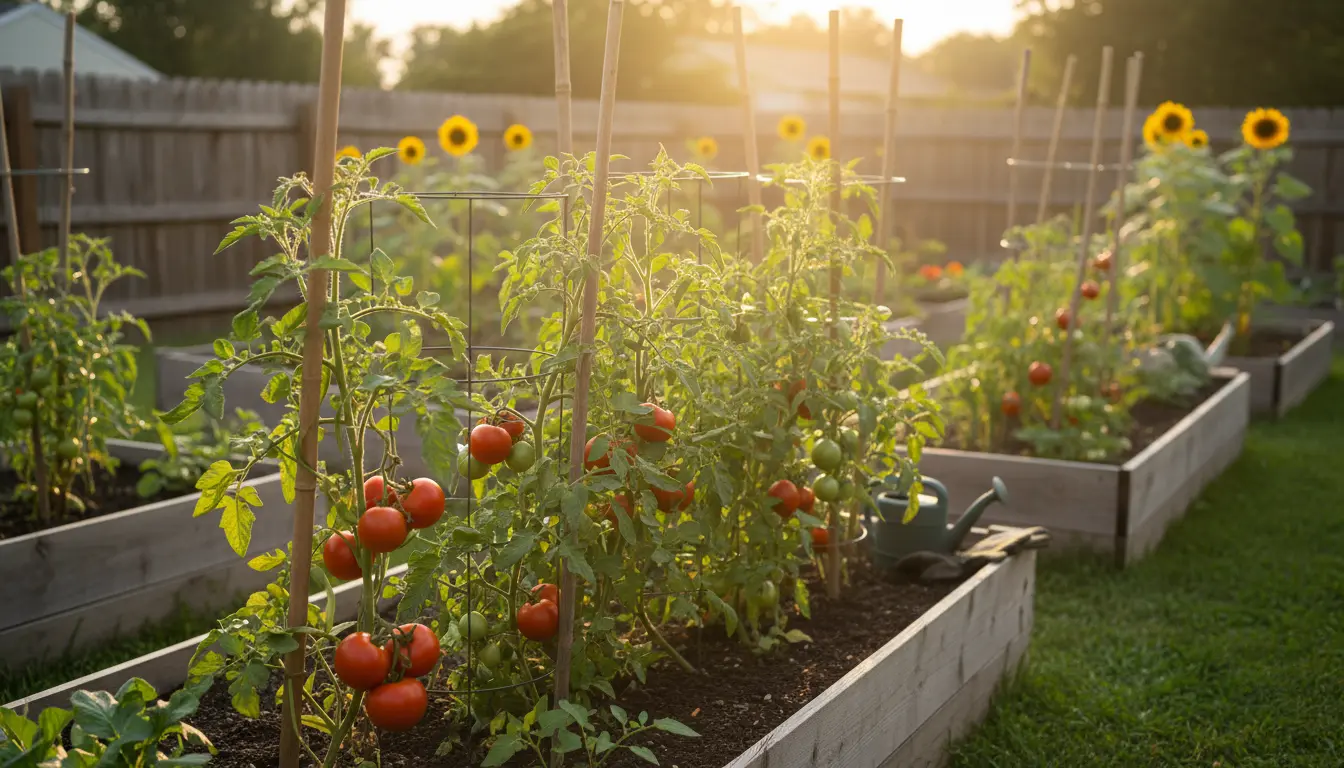
Starting a backyard vegetable garden is a practical way to grow fresh food and learn hands-on skills. This guide covers planning, soil preparation, planting, and simple maintenance so you can get started with confidence.
Planning Your Backyard Vegetable Garden
Good planning cuts work and improves yields. Begin by choosing a sunny spot that receives at least six hours of direct sunlight daily.
Decide on the garden size based on time and space. A 4×8 or 10×10 bed is a manageable start for most beginners.
Choosing Vegetables for a Backyard Vegetable Garden
Select vegetables that match your climate, season, and cooking preferences. Start with easy crops like lettuce, radishes, tomatoes, and bush beans.
- Lettuce and spinach: fast, cool-season greens.
- Radishes and carrots: good for quick harvests and small spaces.
- Tomatoes and peppers: summer staples; need staking or cages.
- Beans and peas: fix nitrogen and are low maintenance.
Site Factors and Layout for a Backyard Vegetable Garden
Consider access to water, soil slope, and proximity to trees. Plan beds so you can reach the middle without stepping on soil.
Raised beds or defined rows make maintenance easier and improve drainage in many yards.
Preparing the Site and Soil for a Backyard Vegetable Garden
Soil quality determines long-term success. Test soil pH and fertility with a simple kit or local extension service.
Most vegetables prefer a pH between 6.0 and 7.0. Amend soil based on test results to correct acidity or add missing nutrients.
Key steps to prepare soil:
- Clear weeds and grass from the bed area.
- Loosen soil to a depth of 8–12 inches for root crops.
- Add 2–4 inches of compost and mix thoroughly.
- Rake level and water to settle the soil before planting.
Compost improves structure and provides slow-release nutrients. Use well-aged compost or composted manure to avoid burning young plants.
Planting and Timing in a Backyard Vegetable Garden
Planting on the right date matters. Use last frost dates for your zone to time seedlings and direct sowing.
Start seeds indoors for long-season crops like tomatoes, or buy healthy seedlings from a nursery to save time.
Follow seed packet spacing and depth guidelines. Crowded plants reduce air flow and increase disease risk.
Watering and Mulching for a Backyard Vegetable Garden
Consistent moisture is crucial. Water deeply once or twice a week rather than light daily sprinkling to encourage deep roots.
Apply 2–3 inches of organic mulch to conserve moisture, suppress weeds, and moderate soil temperature.
Maintenance Tasks for a Backyard Vegetable Garden
Weekly checks keep problems small. A short walk through the garden reveals pest damage, nutrient issues, and watering needs.
Common maintenance tasks:
- Weeding: pull weeds while small to prevent seed set.
- Pruning and staking: support tomatoes and remove damaged foliage.
- Fertilizing: side-dress with compost or balanced fertilizer mid-season.
- Crop rotation: avoid planting the same family in the same spot each year.
Simple Pest Control in a Backyard Vegetable Garden
Start with prevention: healthy soil, proper spacing, and clean beds reduce pest problems. Use row covers to protect seedlings from insects.
For pests that appear, try hand-picking, insecticidal soap, or introducing beneficial insects like ladybugs. Use chemical controls as a last resort and follow label directions.
Interplanting basil near tomatoes can help repel some pests and may improve tomato flavor. Companion planting is a low-cost strategy to support plant health.
Harvesting and Storing from a Backyard Vegetable Garden
Harvest during peak ripeness for best flavor and nutrition. Leafy greens can be cut repeatedly; root crops are pulled when mature.
Store harvests properly: cool and dry root vegetables in a cellar, refrigerate greens, and preserve extras by freezing or canning.
Small Case Study: Maria’s 10×10 Backyard Vegetable Garden
Maria converted a sunny 10×10 patch into three raised beds. She chose tomatoes, bush beans, lettuce, and carrots based on family meals.
After one season she harvested enough lettuce and beans to reduce grocery visits by half for those items. Composting kitchen scraps improved soil, and simple trellises kept yields high.
What worked: regular watering, mulch, and staggered plantings to extend harvests. What she would change: adding a rain barrel to save water and planting more slow-growing herbs.
Quick Checklist to Start Your Backyard Vegetable Garden
- Choose a sunny site and measure your space.
- Test soil and add compost as needed.
- Select easy crops for your first season.
- Plan irrigation and install stakes or supports.
- Perform weekly garden checks for weeds, pests, and moisture.
With modest effort and simple planning, a backyard vegetable garden can supply fresh produce and rewarding hands-on learning. Start small, observe, and adjust each season to improve results.