
How to Start a Vegetable Garden: Plan Before You Dig
Starting a vegetable garden begins with a short plan. Decide on space, time you can commit, and the crops you want to grow.
Small is better at first. Choose vegetables you like to eat and that are suited to your climate.
How to Start a Vegetable Garden: Choose the Right Location
Sunlight is the most important factor. Most vegetables need 6 to 8 hours of direct sun each day.
Also consider access to water and flat ground. Avoid low spots where water pools after rain.
Soil and Bed Types for How to Start a Vegetable Garden
Decide between in-ground beds, raised beds, or containers. Each has pros and cons for drainage, soil control, and effort.
Test your soil or assume poor soil and bring in compost. Good soil is rich, loose, and drains well.
How to Start a Vegetable Garden: Prepare the Soil
Remove grass and weeds, then loosen the soil to 8–12 inches deep. Mix in 2–4 inches of compost or well-rotted manure.
For compacted clay or sand, add organic matter and avoid walking on beds to keep soil structure. Mulch after planting to suppress weeds and retain moisture.
How to Start a Vegetable Garden: Choose Seeds or Seedlings
Seeds are cheaper and offer more varieties, while seedlings (transplants) give a head start. Buy healthy seedlings from a local nursery for best results.
Check the planting calendar for your region. Some crops like tomatoes and peppers need transplanting, while beans and carrots do best from seed.
Planting Tips When You Start a Vegetable Garden
Follow seed packet spacing and depth. Crowded plants reduce yield and increase disease risk.
Group plants by water needs. Put thirsty crops together and drought-tolerant types in drier spots.
How to Start a Vegetable Garden: Watering and Feeding
Water deeply and less often to encourage strong roots. A drip irrigation system or soaker hose reduces evaporation and disease.
Apply a balanced organic fertilizer at planting and again during the main growth period. Avoid over-fertilizing leafy greens if you prefer slower, sweeter growth.
How to Start a Vegetable Garden: Manage Pests and Diseases
Inspect plants weekly to catch problems early. Remove affected leaves and use physical barriers like row cover for insects.
Encourage beneficial insects with flowers such as marigolds, calendula, and dill. Use organic controls like insecticidal soap when needed.
Seasonal Tasks to Keep the Garden Productive
- Spring: Prepare beds, plant cool-season crops, and start warm-season transplants.
- Summer: Mulch, water deeply, and harvest regularly to encourage production.
- Fall: Sow cover crops or add compost and remove spent plants.
How to Start a Vegetable Garden: Harvesting and Crop Rotation
Harvest vegetables when ripe to boost flavor and productivity. Frequent harvesting of crops like beans and zucchini promotes more fruit.
Rotate families of vegetables yearly to reduce nutrient depletion and disease buildup. For example, follow tomatoes with legumes to help soil nitrogen levels.
Planting a small patch of flowering herbs can increase pollination and boost vegetable yields. Herbs like basil and borage attract bees and beneficial insects.
Small Case Study: A Beginner Who Started a Vegetable Garden
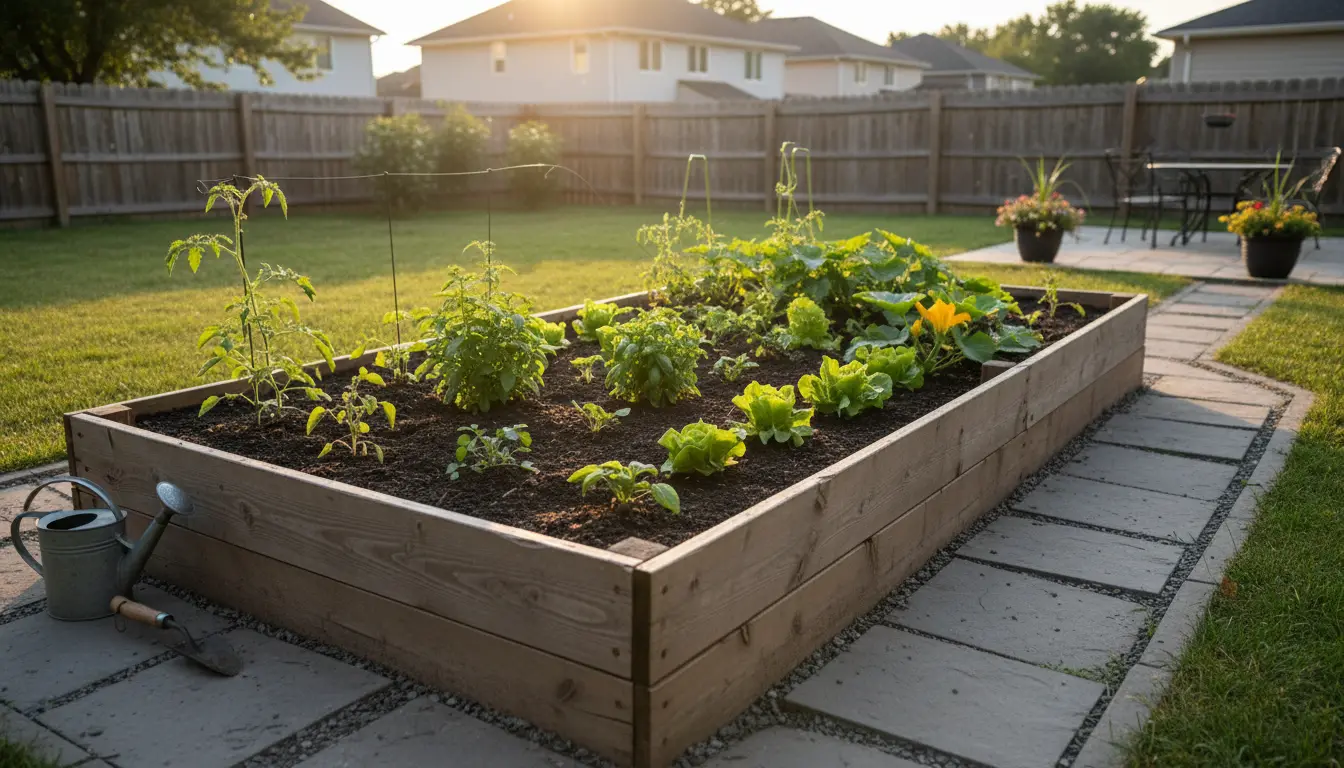
Maria had a 10 by 4 foot raised bed and three hours per week to tend it. She chose tomatoes, lettuce, and bush beans for quick results.
In her first season she added compost, used drip irrigation, and harvested weekly. By mid-summer she had continuous salads and a steady tomato harvest with minimal pests.
The keys to her success were realistic scale, weekly checks, and choosing crops suited to her sunlight and time.
Common Mistakes When You Start a Vegetable Garden
- Planting too many crops at once. Start small and expand next season.
- Overwatering or shallow watering which weakens roots.
- Ignoring soil health. Healthy soil reduces most problems.
Simple Checklist to Start a Vegetable Garden Today
- Pick a sunny location and measure available space.
- Choose 4–6 easy crops for your first season.
- Prepare soil with compost and set up watering.
- Plant seeds or seedlings following spacing guidelines.
- Mulch, inspect, and harvest regularly.
Starting a vegetable garden is a step-by-step process. With a small plan, basic tools, and weekly attention you can grow healthy food at home.