
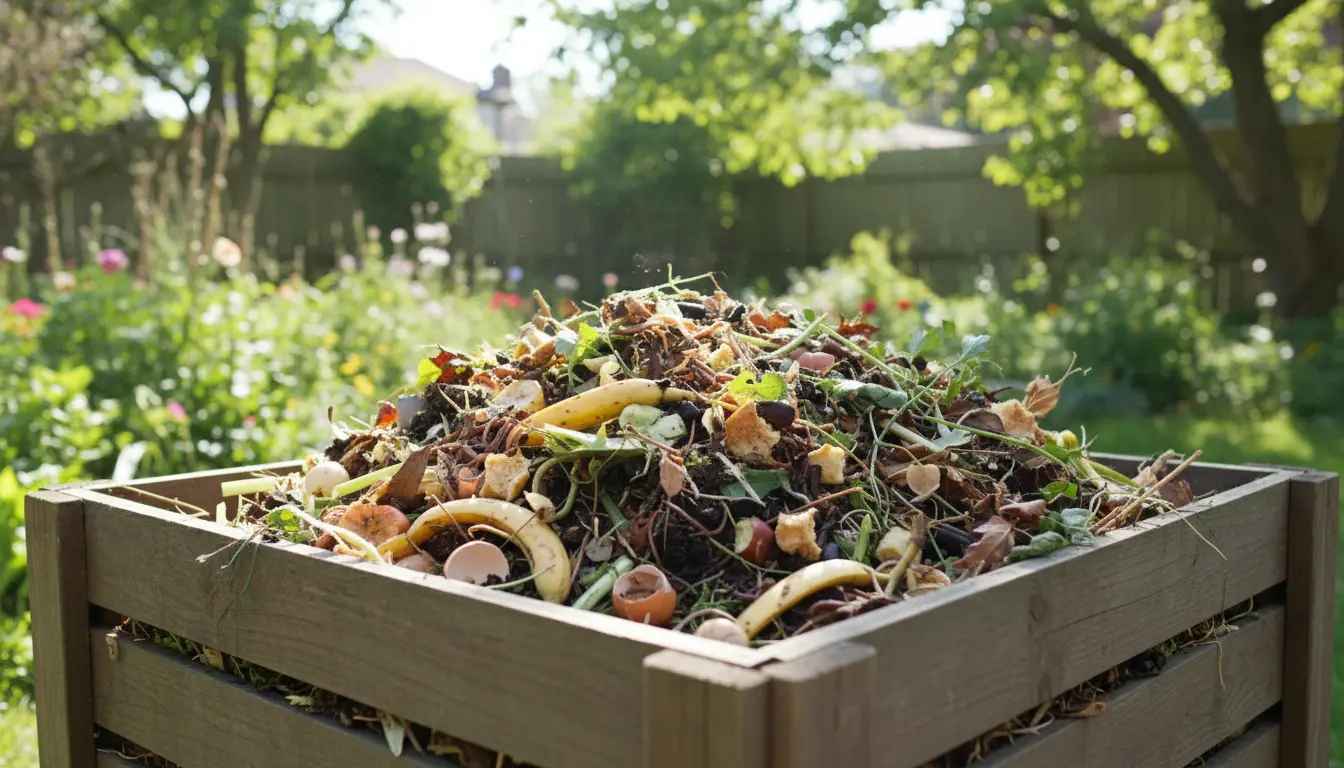
Composting at home turns food scraps and yard waste into a useful soil amendment. This guide explains clear steps you can follow to start home composting with minimal fuss.
Why Choose Home Composting
Home composting reduces household waste and returns nutrients to your garden. It also lowers landfill use and can save money on soil amendments.
Composting is flexible: you can compost in a backyard bin, a tumbler, or even with a worm bin indoors. Choose the method that fits your space and daily routine.
How to Start Home Composting
Starting home composting is mainly about setting up the right mix and maintaining it. Follow these basic steps and adjust as you learn what works for your situation.
1. Choose a Compost Container
Select a container that suits your space: a plastic or wooden bin, a compost tumbler, or a simple pile. Bins help retain heat and keep pests out, while tumblers speed up turning and aeration.
2. Find the Right Spot
Place your compost bin on bare soil if possible to allow worms and microbes to join the process. Choose a partly shaded, level spot with good drainage to avoid standing water.
3. Balance Browns and Greens
Home composting works best with a balance of carbon-rich “browns” and nitrogen-rich “greens.” Aim for roughly a 3:1 ratio of browns to greens by volume.
- Greens: vegetable scraps, fruit peels, coffee grounds, fresh grass clippings.
- Browns: dry leaves, shredded paper, straw, cardboard.
4. Maintain the Pile
Keep the compost moist like a wrung-out sponge and turn it every 1–2 weeks to add oxygen. Turning helps microbes break down materials more evenly and prevents odors.
Best Materials for Home Composting
Knowing which materials to add makes home composting predictable and effective. Use common household items and yard waste to build your pile.
Good Items to Compost
- Fruit and vegetable scraps
- Eggshells (crushed)
- Coffee grounds and filters
- Dry leaves and shredded paper
- Small yard trimmings and grass clippings
What to Avoid in Home Composting
Avoid adding meat, dairy, oily foods, diseased plants, and pet waste from carnivores. These items can attract pests or introduce pathogens into your compost.
Troubleshooting Home Composting Problems
Common issues are usually easy to fix with a small change in technique. Check moisture, aeration, and material balance first when something goes wrong.
- Bad smell: Add more browns and turn the pile to increase airflow.
- Pile too dry: Add water and more greens to restore moisture.
- Slow decomposition: Chop large pieces, increase surface area, and turn more often.
- Pests: Bury food scraps deeper, use a closed bin, and avoid meat/dairy.
Small Real-World Example: A Family Composting Case Study
Anna, a family of four in a small suburb, started home composting in a 60-gallon tumbling bin. They collected kitchen scraps in a small countertop bucket and added dry leaves from their yard each week.
Within four months the bin produced dark, crumbly compost. The family used it to top-dress vegetable beds and noticed better soil moisture retention and healthier tomato plants the next season.
Tips to Speed Up Home Composting and Use Finished Compost
You can accelerate home composting with a few practical steps. Increasing surface area, keeping the pile warm, and ensuring oxygen are key.
- Chop or shred materials before adding them to the bin.
- Layer greens and browns rather than adding one type only.
- Use a compost thermometer if you want to monitor activity; 130–160°F indicates active decomposition.
- When compost is dark and crumbly with an earthy smell, it is ready to use.
Use finished compost as a soil amendment: mix it into garden beds, use as mulch around plants, or blend with potting mix for container plants. A little compost goes a long way—apply a 1–2 inch layer to beds and work it in.
Final Notes on Sustainable Home Composting
Home composting is a manageable way to reduce waste and improve garden soil. Start small, observe the process, and adjust the methods to match your climate and space.
With consistent simple steps—choosing a bin, balancing materials, and maintaining moisture and airflow—you can create quality compost for healthier plants and less household waste.