
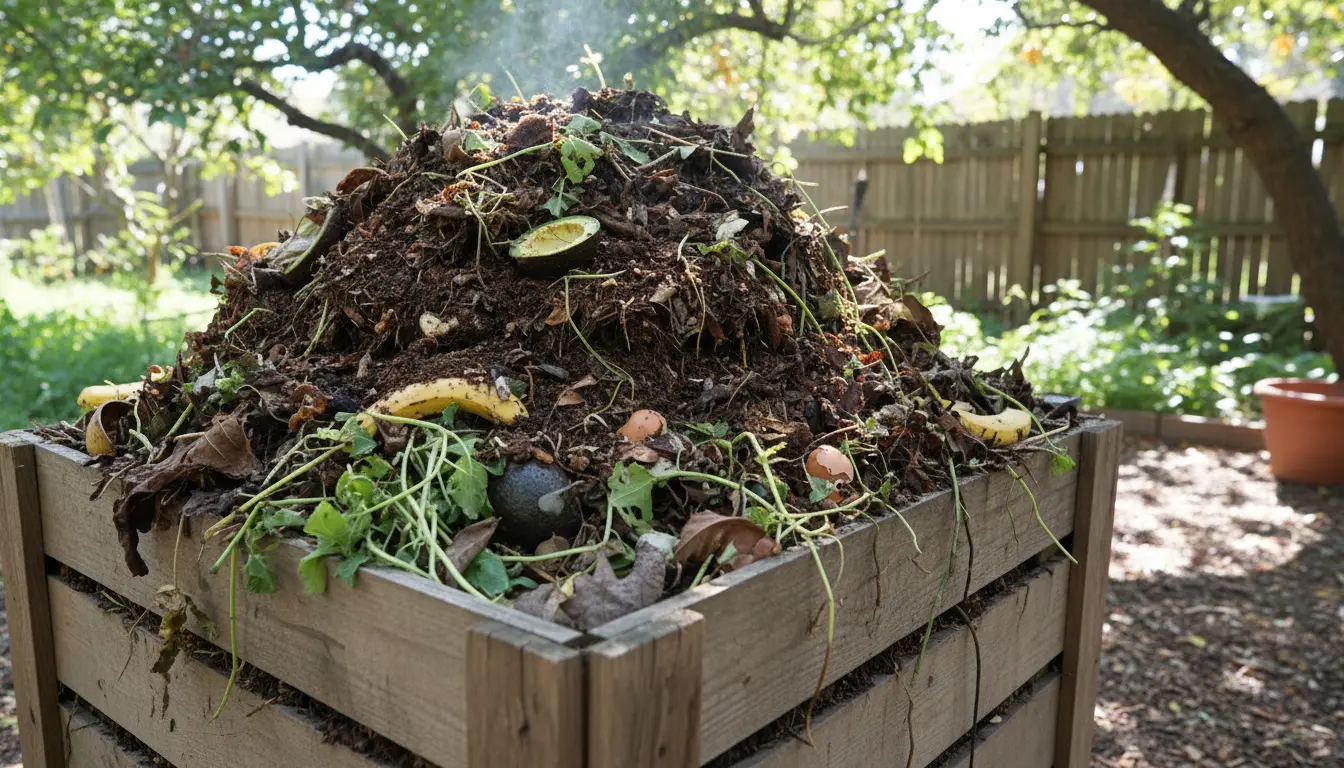
Why Choose Home Composting
Home composting reduces household waste and creates nutrient-rich soil for gardens. It lowers landfill contributions and saves money on soil amendments.
For beginners, composting can seem complex, but simple systems work well with minimal effort. This guide shows practical steps to start and maintain a compost pile at home.
Getting Started With Home Composting
Choose a compost method that fits your space and lifestyle. Popular options include a backyard pile, a compost bin, or a worm bin for apartments.
Consider these basic needs before starting: aeration, moisture, carbon and nitrogen balance, and occasional mixing.
Pick a Location and Container
Select a spot with partial shade and good drainage. Place the bin on soil if possible to allow worms and microbes to enter.
Containers can be homemade wooden bins, store-bought tumblers, or simple wire cages. For small spaces, a 10–20 gallon worm bin works well.
Balance Materials: Greens and Browns
Compost needs a mix of green (nitrogen) and brown (carbon) materials. Aim for roughly a 1:2 ratio of greens to browns by volume.
- Greens: fruit and vegetable scraps, coffee grounds, fresh grass clippings.
- Browns: dry leaves, straw, shredded paper, cardboard, wood chips.
Too many greens make compost smelly. Too many browns slow decomposition. Adjust ratios if problems arise.
How to Build a Compost Pile
Start with a base layer of coarse browns like twigs to help airflow. Alternate layers of greens and browns about 4–6 inches thick.
Keep the pile moist like a wrung-out sponge. If it’s too wet, add more browns; if it’s too dry, add water or more greens.
Turning and Aeration
Turning the pile every 1–2 weeks speeds up decomposition by adding oxygen. Use a pitchfork or a compost aerator tool.
If you use a tumbler, rotate it according to manufacturer instructions—often several times per week.
Common Troubleshooting for Home Composting
Beginner problems are usually easy to fix. Identify the symptom and adjust materials or moisture.
- Bad odors: add more browns and turn the pile to introduce air.
- Slow decomposition: chop materials finer, increase moisture, or add more greens.
- Fruit flies: cover fresh food scraps with a layer of browns or bury them in the pile.
- Too dry: add water gradually and mix; maintain shady location.
What Not to Compost
Avoid meat, dairy, oils, diseased plants, and pet waste in typical home compost piles. These items attract pests and can create health risks.
Keep large woody pieces out unless chipped; they take a long time to break down.
Using Finished Compost
Finished compost is dark, crumbly, and smells earthy. It typically takes 2–12 months depending on the method and maintenance.
Use finished compost as a soil amendment, top dressing for lawns, potting mix ingredient, or mulch around plants.
How to Test Compost Readiness
- Look: uniform texture, few recognizably original materials.
- Smell: should smell like forest soil, not rotten.
- Feel: crumbly and moist, not slimy or dry.
Small Case Study: Suburban Kitchen to Garden
Maria, a homeowner with a small backyard, started a 3-bin system in spring. She saved kitchen scraps in a sealed counter pail and layered them with leaves and shredded newspaper.
After six months of weekly turns and maintaining moisture, she produced rich compost that she mixed into vegetable beds. Her tomatoes grew stronger and she reduced weekly trash by one full bag.
Practical Tips for Beginners
- Start small and scale up as you learn. A 3×3 foot pile is ideal for backyard beginners.
- Chop or shred materials to speed decomposition.
- Record a simple log: add dates when you add large amounts and when you turn the pile.
- Use a dry, covered kitchen caddy to collect scraps and avoid flies.
- Join a local composting group or community garden for advice and material swaps.
Quick Start Checklist for Home Composting
- Choose a container and location with good drainage.
- Collect a balance of greens and browns.
- Layer materials, keep moist, and turn regularly.
- Troubleshoot common issues: odors, pests, or slow breakdown.
- Harvest finished compost and use it in your garden.
Home composting is a practical and rewarding way to reduce waste and improve soil health. Begin with simple steps, observe how your pile behaves, and adjust materials and moisture as needed. With time, you will have a steady supply of garden-ready compost.