
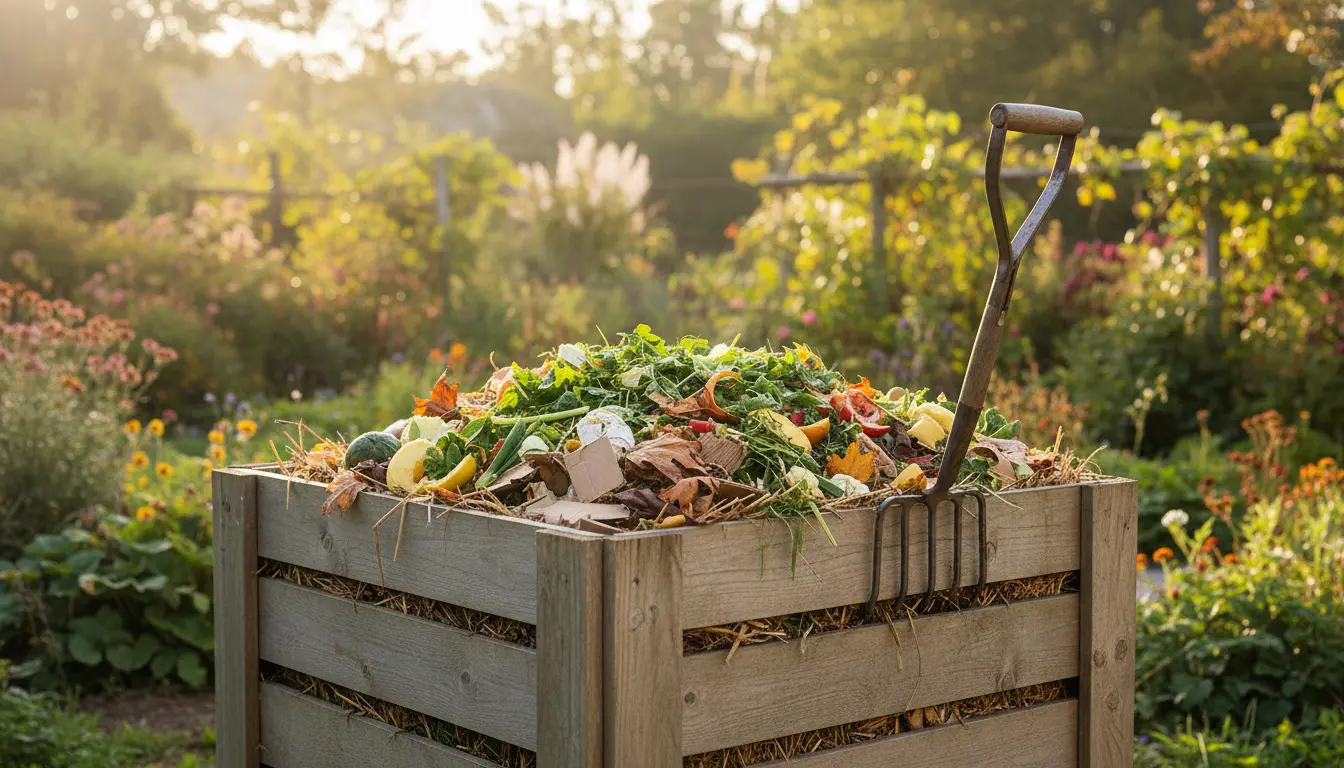
Composting turns kitchen scraps and yard waste into nutrient-rich soil. For beginners, starting a home compost system feels manageable with the right steps and expectations.
Why Home Composting for Beginners Matters
Home composting reduces landfill waste and improves garden soil without chemicals. It also saves money on fertilizers and lowers your household carbon footprint.
Basic Principles of Home Composting for Beginners
Composting relies on a balance of green materials (nitrogen) and brown materials (carbon). Microbes and worms break down the mix when moisture, air, and the right particle size are maintained.
Key Elements to Monitor
- Carbon to nitrogen ratio — aim for about 25–30:1.
- Moisture — similar to a wrung-out sponge.
- Oxygen — turn or aerate every 1–2 weeks.
- Particle size — chop or shred large pieces for faster breakdown.
Choosing a Composting System for Home Composting for Beginners
Select a system that fits space, time, and effort. Options include open bins, tumblers, worm bins (vermicomposting), and bokashi systems.
System Pros and Cons
- Open bin: low cost, simple, slower process.
- Tumbler: faster, cleaner, needs regular turning.
- Vermicompost: great for apartments, produces rich castings, needs care for worms.
- Bokashi: ferments food waste including meat, needs secondary composting or burying.
Step-by-Step Start Guide for Home Composting for Beginners
Follow these steps to begin a steady composting routine. Keep the actions simple and repeatable.
- Pick a site: a partly shaded, level spot near water access.
- Choose a container: match the container to available space and desired speed.
- Build layers: start with coarse browns (twigs) for airflow, then add greens and browns in alternate layers.
- Maintain moisture and aeration: water lightly if dry and turn or aerate regularly.
- Harvest: mature compost is dark, crumbly, and smells earthy — use it in pots or garden beds.
What to Add and Avoid
Knowing acceptable materials prevents odors and pests.
- Good greens: fruit and vegetable scraps, coffee grounds, fresh grass clippings.
- Good browns: dry leaves, straw, shredded paper, cardboard (no glossy ink).
- Avoid: meat, dairy, oils, diseased plants, pet waste, and large bones in typical backyard bins.
Troubleshooting Common Issues in Home Composting for Beginners
Problems usually relate to balance, moisture, or airflow. Small corrections are often enough to recover a pile.
Common Problems and Fixes
- Bad odors — add more browns and turn the pile to add air.
- Pile too dry — add water and green materials.
- Pile too wet and compact — add coarse browns and mix to restore airflow.
- Slow decomposition — chop materials finer and check the carbon:nitrogen balance.
How to Use Finished Compost
Incorporate finished compost into garden beds, use as potting soil amendment, or create a top dressing for lawns. A thin layer boosts moisture retention and nutrient supply.
Application Tips
- Vegetable beds: blend 1–2 inches into the top 6–8 inches of soil before planting.
- Container plants: mix one part compost to three parts potting mix.
- Lawns: lightly rake 1/4 inch of compost over the surface in spring or fall.
Composting a single family home can divert hundreds of pounds of organic waste from landfills each year, and properly managed compost piles generate heat that speeds decomposition and kills many weed seeds.
Real-World Example: A Small Balcony Vermicompost Case Study
Anna, a city resident, started a 10-liter worm bin on her balcony to compost kitchen scraps. She collected about 1 liter of food waste per week and fed her worms twice weekly.
After four months she harvested a small batch of dark worm castings. The castings improved her container tomato plants, which produced an earlier and heavier first flush than the previous season.
Key lessons from Anna’s case: keep the bin shaded, avoid overfeeding, and use a tray to catch excess liquid for a diluted fertilizer (worm tea).
Quick Checklist for Home Composting for Beginners
- Select a suitable bin or method.
- Keep a balance of greens and browns.
- Maintain moisture and aeration.
- Chop large materials to speed composting.
- Monitor and adjust to prevent odors or pests.
Starting a compost system is low-risk and scalable. Begin with small, consistent actions and expand or change your method as you learn what works for your space and lifestyle.