
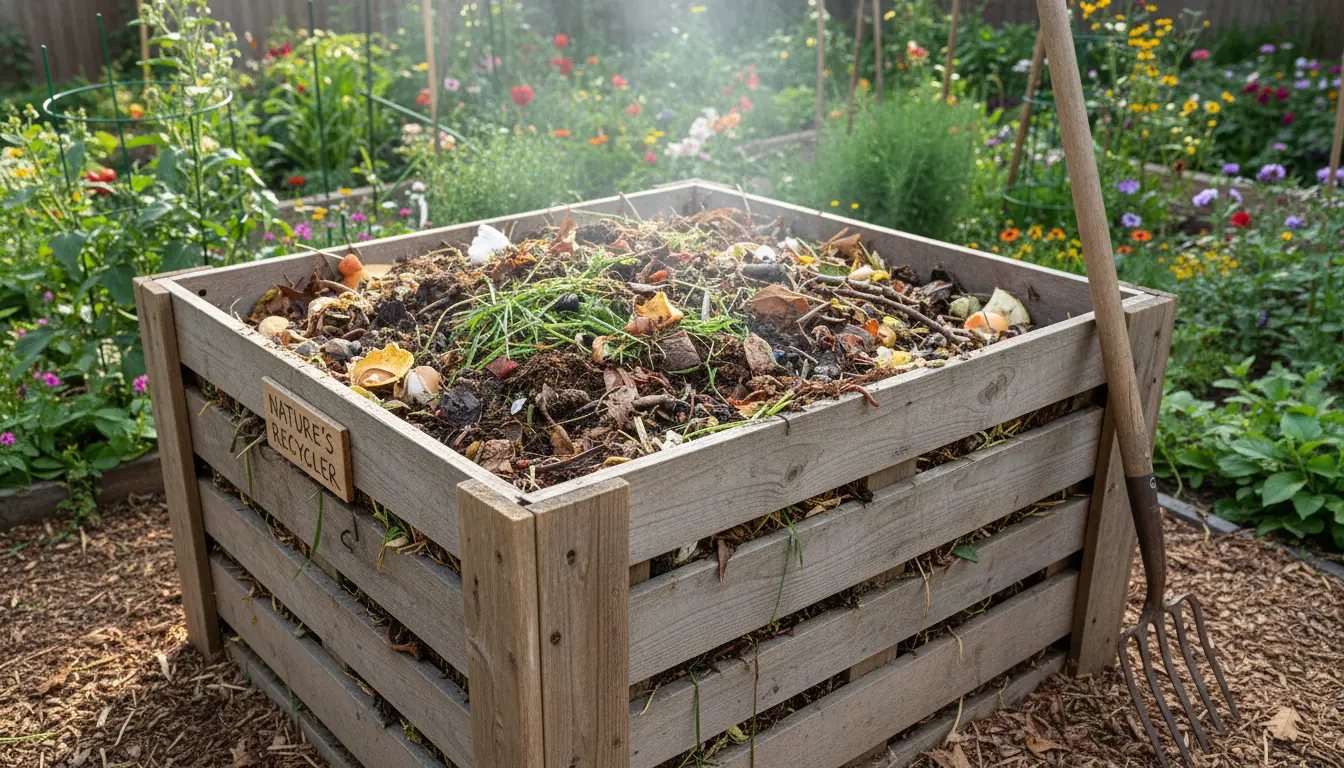
Why Home Composting Matters
Home composting reduces household waste and creates a free soil amendment for gardens. It closes the nutrient loop by turning kitchen and yard scraps into valuable compost.
This guide explains simple steps for home composting for beginners, with practical tips you can apply this week.
Choosing a Compost Method for Home Composting
Select a method that fits your space and lifestyle. Common options include a backyard bin, a tumbler, or a vermicompost (worm bin) for small indoor spaces.
Consider access, odor control, and how quickly you want finished compost when choosing a system.
Backyard Bin
Easy to use and low cost. Great for yards and larger volumes of waste.
Compost Tumbler
Faster decomposition with regular turning. Ideal for convenience and cleaner handling.
Worm Bin (Vermicompost)
Works well indoors or on balconies and produces nutrient-rich worm castings. Requires some care for the worms.
What to Compost: Greens and Browns
Home composting needs a balance of nitrogen-rich “greens” and carbon-rich “browns.” A good mix helps microbes break material down efficiently.
- Greens (Nitrogen): vegetable scraps, fruit peels, coffee grounds, fresh grass clippings.
- Browns (Carbon): dry leaves, shredded paper, cardboard, straw, wood chips.
- Avoid: meat, dairy, fats, diseased plants, and pet waste in typical home systems.
Step-by-Step Home Composting Process
Follow these steps to create and maintain a healthy compost pile or bin.
1. Start with a Base Layer
Place a 4–6 inch layer of coarse brown material like small branches or straw at the bottom for airflow. This prevents compaction and helps drainage.
2. Add Materials in Layers
Alternate thin layers of greens and browns. Aim for roughly a 2:1 or 3:1 ratio of browns to greens by volume to avoid bad odors.
3. Maintain Moisture
Compost should be as damp as a wrung-out sponge. Add water if it becomes dry, or add more browns if it’s too wet.
4. Turn Regularly
Turning introduces oxygen and speeds decomposition. Turn every 1–2 weeks for quick compost, or once a month if you prefer low-maintenance.
5. Monitor Temperature
A properly operating pile heats up. Internal temperatures of 120–140°F (50–60°C) are common in active piles and help break down materials faster.
Troubleshooting Common Problems in Home Composting
Even beginners encounter issues. These fixes are simple and effective.
- Bad Odor: Add more browns and turn the pile to increase aeration.
- Pests: Avoid meat and cooked foods; use a closed bin or buried additions.
- Slow Decomposition: Chop materials finer, increase turning, or check moisture and temperature.
- Too Wet: Add dry browns and mix to improve drainage and airflow.
Compost can improve soil structure, increase water retention by up to 20%, and supply slow-release nutrients, reducing the need for synthetic fertilizers.
Using Finished Compost
Finished compost is dark, crumbly, and earthy-smelling. Use it as a soil amendment, top dressing, or mix into potting soil.
Apply a 1–2 inch layer to garden beds, mix 10–20% into potting mixes, or use as a lawn topdressing for slow nutrient release.
Small-Scale Example: Urban Balcony Worm Bin
Sarah, a city apartment dweller, started a 10-gallon worm bin to compost kitchen scraps. She used shredded newspaper and kitchen scraps, fed the worms small amounts twice a week, and kept the bin in a shaded area.
Within three months she harvested rich worm castings and reduced her household waste by 40%. Her balcony plants showed better growth and needed less watering.
Quick Checklist to Start Home Composting
- Choose a bin: backyard bin, tumbler, or worm bin.
- Collect greens and browns separately.
- Build layers and keep moisture like a wrung sponge.
- Turn regularly and monitor for pests or odors.
- Use finished compost in your garden and pots.
Final Tips for Successful Home Composting
Start small and grow your system as you learn. Keep a small kitchen caddy to collect scraps and empty it into your bin daily.
Record what you add and how the pile behaves for two to three months to learn your local conditions and tweak ratios.
Home composting for beginners is practical and low-cost. With basic attention to balance, moisture, and aeration, you can turn household scraps into a productive soil amendment that benefits your garden and the environment.