
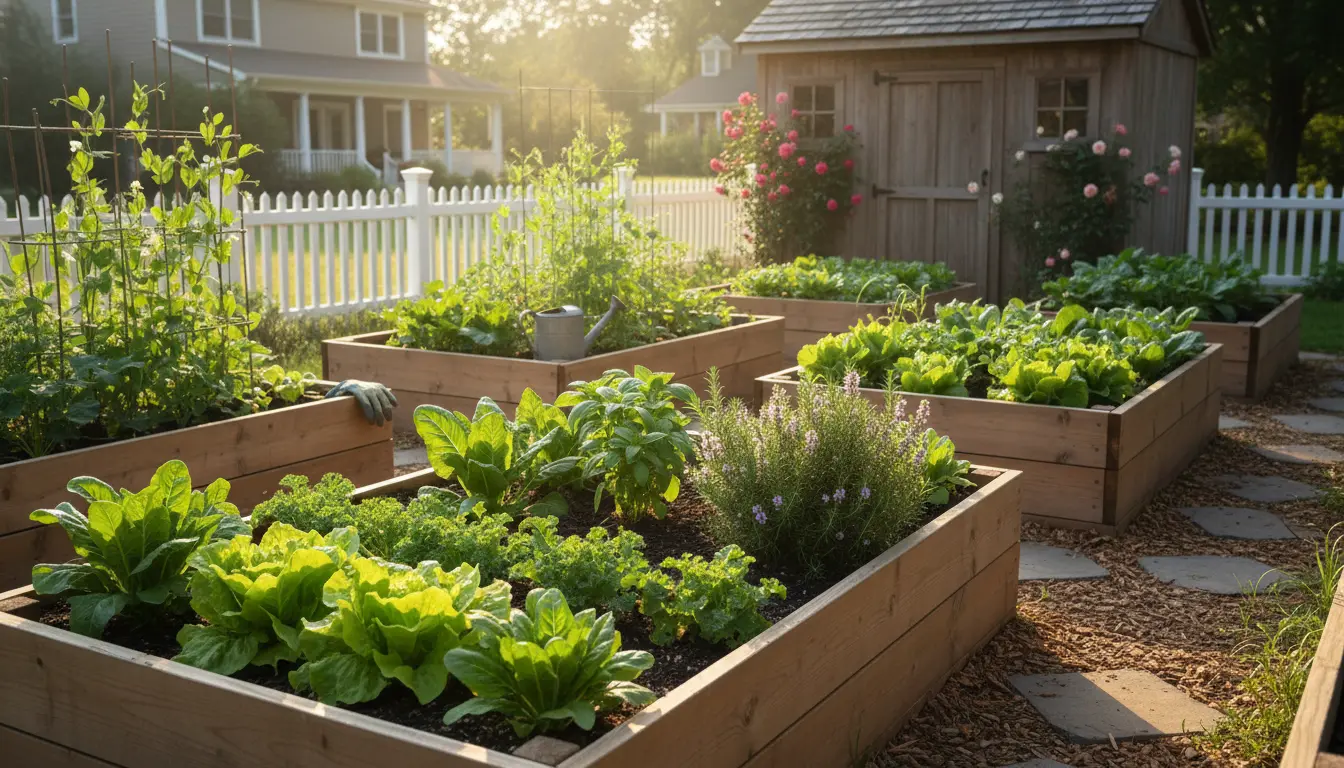
Start a Vegetable Garden: First Steps
Starting a vegetable garden can be rewarding and cost-effective. This guide gives practical, step-by-step instructions to help you plan, plant, and maintain a productive garden.
Define Your Goals
Decide what you want from your garden: fresh salad greens, space-saving herbs, or a year-round supply of staples. Clear goals make plant selection, layout, and maintenance easier.
Beginner-friendly crops include lettuce, radishes, cherry tomatoes, basil, and bush beans. These grow quickly and tolerate common mistakes.
Choose a Location to Start a Vegetable Garden
Select a spot that gets at least six hours of direct sun daily. Vegetables need light for steady growth and higher yields.
Consider access to water, wind protection, and convenience. A site near your door will encourage frequent care and easier harvesting.
Sun, Soil, and Space
Sunny, well-drained soil is ideal. If your yard has poor soil or is shady, use containers or raised beds to control conditions.
Plan space for walking paths and maintenance. Crowd plants make harvesting and pest control more difficult.
Prepare Soil and Start a Vegetable Garden Right
Good soil is the foundation of a successful garden. Test your soil pH and texture if possible; most vegetables prefer a pH between 6.0 and 7.0.
Improve soil with compost and organic matter. Aim to mix several inches of compost into the top 6–8 inches of soil.
Soil Amendments and Compost
- Add compost to increase nutrients and water retention.
- Use well-rotted manure sparingly and only if composted.
- For heavy clay, add coarse sand and organic matter to improve drainage.
Choose Plants and Planting Schedule
Select crops suited to your climate and season. Cool-season crops include spinach and peas; warm-season crops include tomatoes and peppers.
Stagger planting times to extend harvests. Plant a small batch every two weeks for leafy greens and root vegetables.
Seed vs. Transplants
Seeds are cheaper and give more variety, while transplants mature faster and reduce early-season risks. Use transplants for tomatoes and peppers, seeds for carrots and beans.
Watering, Mulch, and Routine Care
Water deeply and less frequently to encourage strong root systems. Aim for consistent moisture rather than daily shallow watering.
Apply mulch to conserve moisture, suppress weeds, and maintain soil temperature. Organic mulches like straw or shredded leaves work well.
Pest and Disease Basics
Inspect plants weekly for insects and signs of disease. Early detection makes management easier and reduces crop loss.
Use integrated pest management (IPM): cultural controls, physical barriers, and biological solutions before chemical options.
Maintenance Tasks to Keep Your Vegetable Garden Productive
Regular tasks include weeding, staking or trellising vines, pruning when needed, and harvesting promptly. Consistent care increases yield and plant health.
Rotate crops yearly to prevent nutrient depletion and reduce pest pressure. Avoid planting tomatoes in the same spot two years running.
Seasonal Checklist
- Spring: prepare beds, sow early crops, start transplants
- Summer: thin seedlings, water deeply, watch for pests
- Fall: harvest remaining crops, add compost, plant cover crop if possible
Planting basil near tomatoes can improve tomato flavor and help repel some insect pests. Companion planting is a simple, low-cost strategy for many home gardens.
Small Case Study: One Raised Bed, Big Returns
Maria, a new gardener with a 4×4 raised bed, focused on high-value, fast-growing crops. She planted lettuce, radishes, bush beans, and a single tomato plant.
After eight weeks she harvested multiple salads per week. By staggering plantings, Maria extended her harvest across the season and reduced waste.
Key results: low initial cost, quick feedback, and growing confidence that led her to add a second bed the next season.
Quick Planting Plan to Start a Vegetable Garden
- Week 1: Choose location, order seeds or transplants, build or prepare bed.
- Week 2: Amend soil with compost and plant cool-season seeds if appropriate.
- Weeks 3–8: Thin seedlings, transplant warm-season starts when soil warms, mulch and water.
Practical Tips
- Start small. A few square meters are easier to manage than a large plot.
- Keep a simple garden journal to track planting dates, varieties, and harvest yields.
- Learn from failures. Pests and weather will teach you what to change next season.
Starting a vegetable garden is a series of small decisions and regular tasks. With a clear plan and basic weekly maintenance, even beginners can grow a reliable supply of fresh produce.