
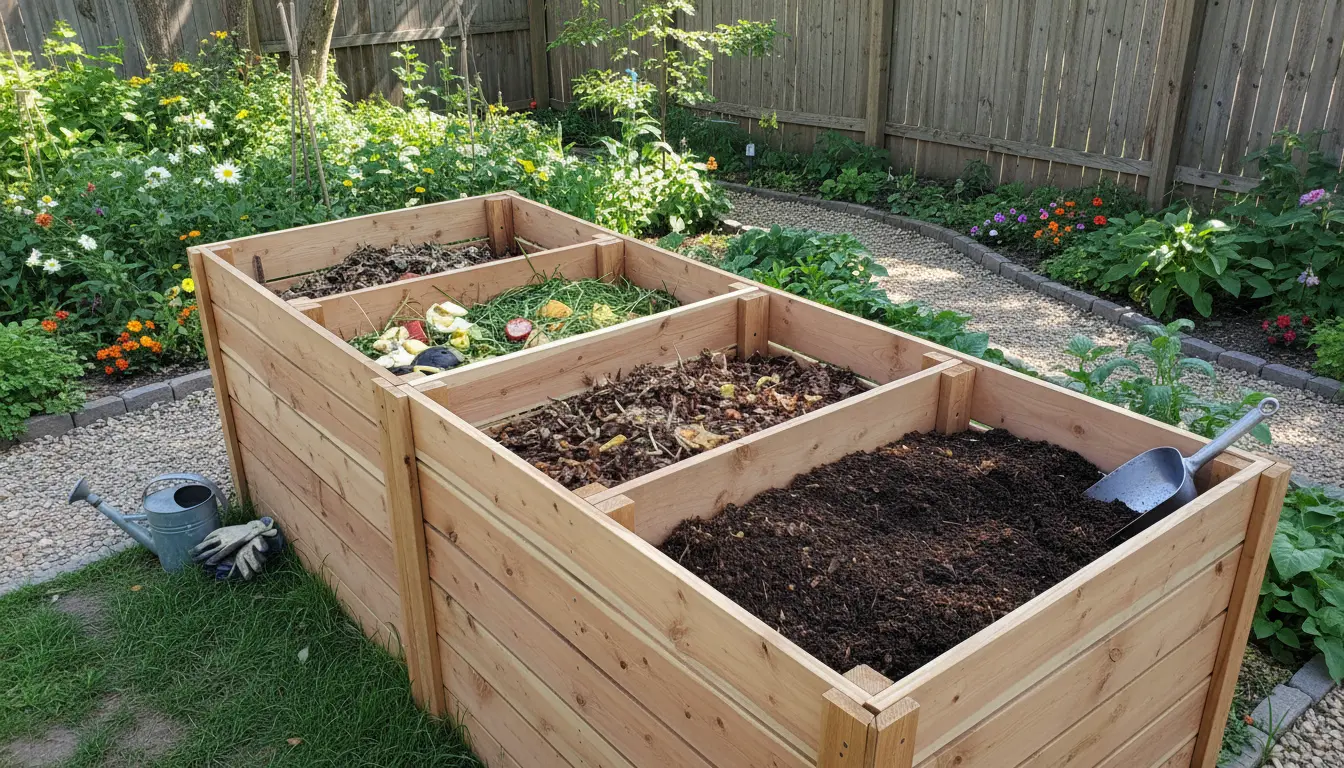
Home composting: a practical way to reduce waste
Home composting turns kitchen and garden waste into a usable soil amendment. This guide gives clear, actionable steps to start and maintain a home composting system that fits small yards or balconies.
Why home composting matters
Composting reduces household organic waste sent to landfills and lowers methane emissions. It also produces nutrient-rich compost that improves soil structure and plant health.
For many gardeners, the cost savings on soil amendments and reduced fertilizer needs make composting practical as well as ecological.
How to start home composting
Begin by choosing a method that matches your available space and time commitment. Options range from simple piles to enclosed tumblers.
Choosing a compost bin for home composting
Select a container based on space and convenience. A backyard bin can be stationary; a tumbler suits tighter schedules and faster turning.
- Open pile: low cost, needs space and regular turning.
- Enclosed bin: keeps pests out and retains heat.
- Tumbler: easier to turn and faster results, good for small yards.
What to compost at home
Balance ‘greens’ (nitrogen) and ‘browns’ (carbon) to encourage microbial activity. A 2:1 or 3:1 ratio of browns to greens by volume works for many systems.
- Greens: vegetable scraps, coffee grounds, fresh grass clippings.
- Browns: dry leaves, shredded paper, cardboard, small wood chips.
- Do not compost: meat, dairy, oils, diseased plants, pet waste from carnivores.
How to maintain home composting
Maintenance focuses on aeration, moisture, and particle size. Regular attention prevents odors and speeds decomposition.
Aeration and turning
Turn the pile every 1–3 weeks to supply oxygen. Tumblers reduce manual effort and keep the process tidy.
If you use a static bin, use a garden fork to mix the middle and edges to maintain airflow.
Moisture and temperature
Compost should be as damp as a wrung-out sponge. Too dry slows decomposition, while too wet creates odors.
Heat indicates active decomposition. A hot pile (135–160°F or 57–71°C) speeds breakdown and kills weed seeds, but low-maintenance piles still work at ambient temperatures.
Size and materials
Shred or chop large items so microbes can break them down faster. Smaller pieces heat and decompose more quickly.
Aim for a pile at least 3 feet wide and 3 feet tall when possible to retain heat, though smaller bins can work with more frequent turning.
Troubleshooting home composting problems
Common issues are easy to fix with a few adjustments. Observe smell, moisture, and activity to diagnose problems quickly.
Foul odor or anaerobic smell
Cause: too wet or not enough air. Solution: add browns (dry leaves, shredded paper) and turn the pile to reintroduce oxygen.
Pile not heating or slow decomposition
Cause: too small, too dry, or poor carbon-to-nitrogen balance. Solution: increase pile size, add greens and moisture, and mix to improve contact between materials.
Pests or rodents
Cause: food scraps like meat or excessive fruit. Solution: avoid problem materials, use an enclosed bin, or bury kitchen scraps in the center of the pile.
Small case study: Urban balcony composting
Maria, a city dweller with a small balcony, used a 20-gallon tumbler and kitchen collection pail for six months. She added coffee grounds, fruit and vegetable scraps, shredded paper, and dry leaves.
After three months of regular tumbling every other day, she produced about 15 liters of dark, crumbly compost. She used it to top-dress potted herbs and reported improved growth and less need for store-bought fertilizer.
Tips and quick checklist for home composting
- Balance greens and browns; aim for 2–3 parts browns to 1 part greens.
- Keep compost moist but not waterlogged; test with the squeeze test.
- Turn the pile regularly to maintain oxygen and temperature.
- Chop large items to speed decomposition and avoid pest attractants.
- Harvest finished compost when it is dark, crumbly, and smells earthy.
Final notes on home composting
Home composting is flexible. You can tailor methods to time, space, and goals. Whether you want faster, hotter compost or a low-effort system, small adjustments yield steady improvement.
Start small, observe regularly, and adapt. Over time, a home compost system becomes a reliable source of soil amendment and a practical way to reduce waste.