
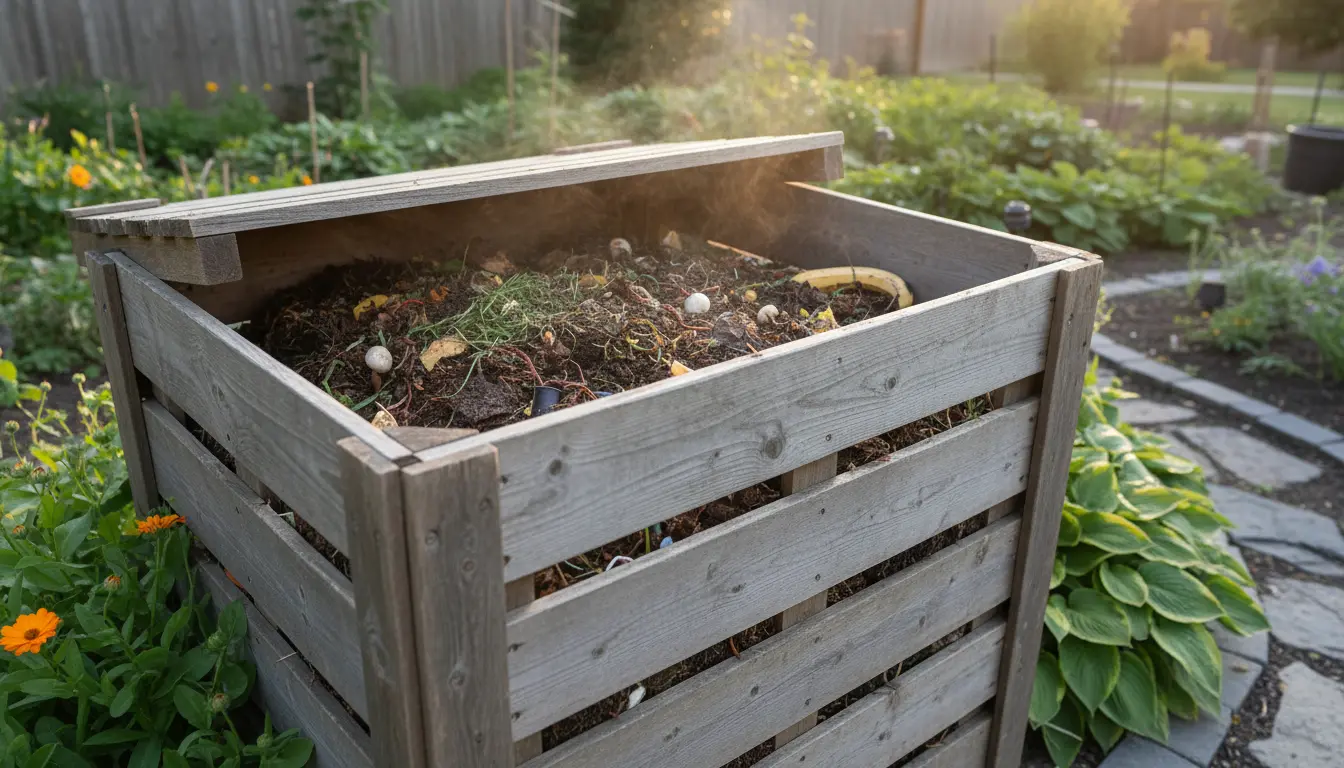
Why Home Composting Matters
Home composting turns kitchen and yard waste into nutrient-rich material for gardens. It reduces landfill waste, lowers methane emissions, and improves soil health.
Composting is a practical step anyone can take to save money on fertilizers and promote a circular household system.
How to Start Home Composting: Basic Options
Choose a method that fits your space and lifestyle. Common options include traditional outdoor bins, tumblers, worm (vermicomposting) bins, and Bokashi for indoor fermentation.
Each method has pros and cons depending on space, odor tolerance, and the speed of decomposition you want.
Outdoor Bin
Good for yards and larger volumes of waste. It requires minimal upkeep and can handle yard trimmings and food scraps.
Tumbler
Faster aeration and easier turning make tumblers a tidy choice for small to medium households. They can speed up composting by weeks.
Vermicomposting
Using red worms, vermicomposting works well indoors or on balconies. It produces fine, high-quality castings for potted plants and vegetables.
Bokashi
Bokashi ferments food waste anaerobically, including meat and dairy. It requires a secondary step of burying or adding fermented waste to a compost system.
Step-by-Step: How to Start Home Composting
Follow these clear steps to set up and maintain a basic compost system at home. These apply to most bin or tumbler setups.
- Pick a container — Choose between a bin, tumbler, or worm tray based on space and the types of waste.
- Find a spot — Place the bin on soil or a firm surface with partial shade to maintain moisture and temperature.
- Balance materials — Combine browns (dry leaves, paper) and greens (kitchen scraps, fresh grass) in roughly a 3:1 ratio by volume.
- Layer and chop — Chop larger items to increase surface area. Layer materials to encourage airflow.
- Keep it moist — Aim for the texture of a wrung-out sponge. Add water or dry materials to adjust moisture.
- Turn regularly — Aerate weekly for faster decomposition; tumblers make this easier.
What to Put In and What to Avoid
Safe items include fruit and vegetable scraps, coffee grounds, eggshells, grass clippings, leaves, shredded paper, and small yard waste. Avoid adding oils, large bones, diseased plants, or pet waste from carnivores.
Troubleshooting Home Composting Problems
Common issues can be fixed quickly with simple adjustments. Most problems come down to balance of air, moisture, and particle size.
Smelly Compost
Usually means too much wet nitrogen material or poor aeration. Fix it by adding browns, turning the pile, and increasing airflow.
Pile Too Dry
If decomposition slows, add water and more green material. Covering the pile can help retain moisture in dry climates.
Pests or Flies
Avoid exposing food scraps. Bury new kitchen waste under browns and use a closed bin or tumbler to deter animals and flies.
Practical Tips for Faster Results
- Shred or chop materials to increase decomposition speed.
- Keep a small kitchen caddy for scraps and empty it daily.
- Mix in finished compost periodically to introduce microbes.
- Use a compost thermometer for large piles—ideal range is 115–160°F (46–71°C) for hot composting.
Composting food and yard waste can reduce household waste weight by up to 30 percent. Even a small worm bin can process several pounds of scraps each week.
Small Real-World Case Study
Case: A three-person household in a city apartment started vermicomposting in a 10-liter bin. They collected only fruit and vegetable scraps and shredded paper.
After six months they produced roughly 10 liters of worm castings and reduced their weekly trash bag by about one-third. Plants fed with the castings showed healthier growth and improved water retention in pots.
Using Finished Compost in Your Garden
Finished compost should be dark, crumbly, and earthy-smelling. Use it as a soil amendment, top-dressing, or in potting mixes at up to 20 percent of the mix volume.
Compost boosts soil structure, nutrient availability, and moisture retention, especially in sandy or compacted soils.
Final Checklist: Start Composting Today
- Choose a method that fits your space (bin, tumbler, worm tray, or Bokashi).
- Collect scraps in a covered kitchen caddy to avoid pests and odors.
- Balance browns and greens, keep the pile moist, and turn regularly.
- Monitor and adjust if you notice smells, dryness, or pests.
- Use finished compost to improve garden soil and reduce fertilizer needs.
Starting home composting is a low-cost, high-impact step for households. With a small effort and consistent habits, you can cut waste and improve soil in months.