
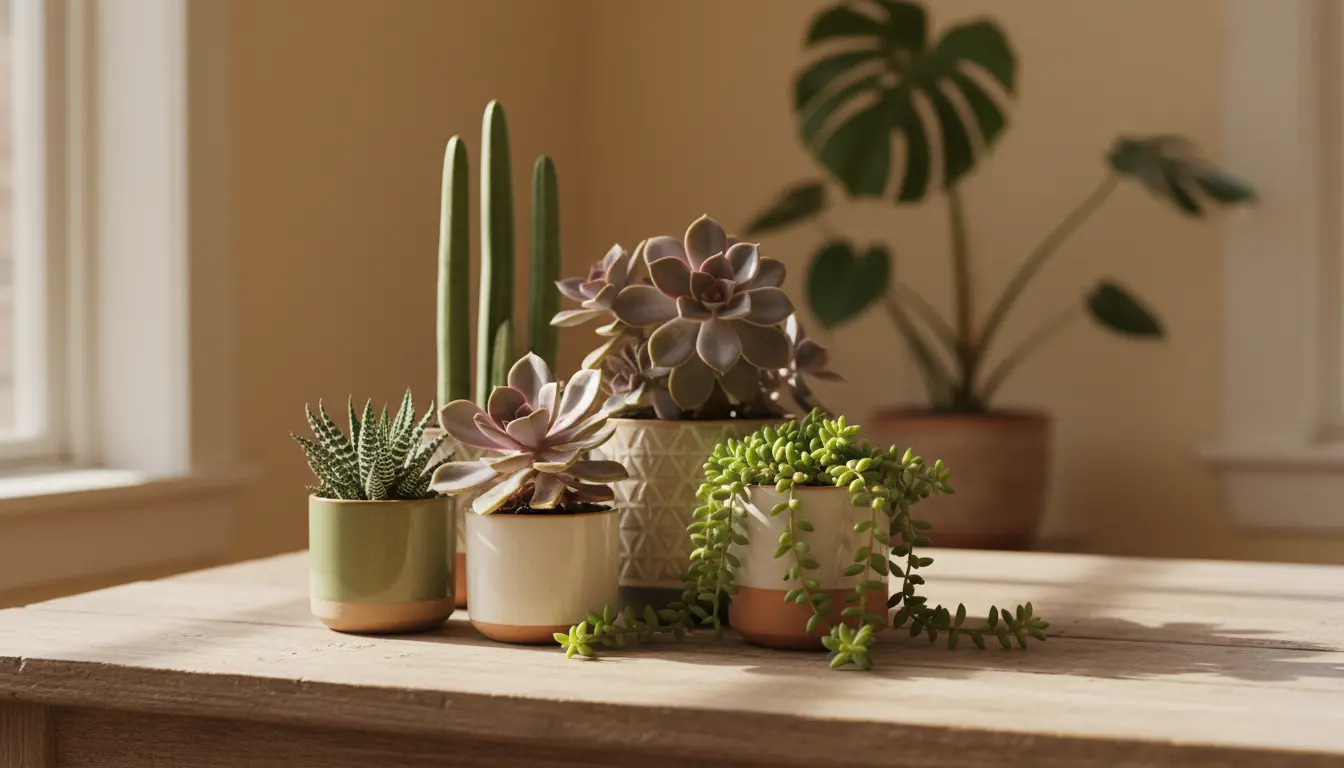
Succulents are popular for their low-maintenance look, but they still need the right conditions to thrive indoors. This guide gives clear, practical steps to keep your indoor succulents healthy.
Indoor Succulent Care: Basic Principles
Indoor succulent care relies on three main factors: light, water, and soil. Balance these and you eliminate most problems.
Succulents store water in their leaves and stems, so they tolerate drought better than overwatering. Mimic a dry, bright environment for best results.
Lighting for Indoor Succulent Care
Most succulents need bright, indirect light for at least 6 hours a day. A south- or east-facing window is ideal in many climates.
If natural light is limited, use a grow light rated for 5,000–6,500K and position it 6–12 inches above the plants for 8–10 hours daily.
Watering in Indoor Succulent Care
Water deeply but infrequently. Let the soil dry out completely between waterings to prevent root rot.
- Check soil with a finger or moisture meter to about 1 inch deep.
- Use the soak-and-dry method: water until it drains, then do not water again until dry.
- Reduce watering in winter when growth slows.
Indoor Succulent Care: Soil and Containers
Use a well-draining soil mix specific to cacti and succulents. Regular potting soil retains too much moisture and raises rot risk.
Containers must have drainage holes. Unglazed terracotta pots help soil dry faster than glazed pots or plastic.
Choosing the Right Potting Mix
Make a mix with 50–70% mineral material like pumice, perlite, or coarse sand and 30–50% organic matter. This speeds drainage and provides aeration.
Avoid fine sand or garden soil, which compacts and holds water.
Indoor Succulent Care: Feeding and Seasonal Care
Feed succulents lightly during the growing season (spring and summer). Use a diluted balanced fertilizer or a fertilizer labeled for cacti.
Fertilize once a month at half the recommended strength to avoid leggy growth and fertilizer burn.
Seasonal Adjustments
In winter, reduce water and stop feeding for many species. Some succulents enter dormancy and will not tolerate regular watering.
Watch for seasonal light changes; rotate plants periodically so all sides receive adequate light.
Indoor Succulent Care: Common Problems and Fixes
Most issues come from light or water mistakes. Identify common symptoms to correct care quickly.
- Yellow, mushy leaves — overwatering. Move to drier soil and reduce water frequency.
- Stretching or leggy growth — insufficient light. Move to brighter spot or add grow light.
- Brown, crispy leaf tips — too much direct afternoon sun or underwatering. Adjust light and water schedule.
- Pests like mealybugs — isolate plant and treat with rubbing alcohol on a cotton swab or insecticidal soap.
Repotting and Propagation
Repot every 1–2 years or when rootbound. Spring repotting gives plants the full growing season to recover.
Succulents are easy to propagate from leaves or cuttings in the growing season. Let cut ends callus for a day before placing on dry soil.
Some succulents like Haworthia actually prefer lower light than typical cacti and can suffer in intense direct sun. Matching species to light conditions improves success.
Indoor Succulent Care: Practical Checklist
Use this quick checklist when setting up or evaluating your succulents.
- Light: 6+ hours bright indirect light or supplement with grow light.
- Soil: Fast-draining cactus/succulent mix.
- Pots: Drainage holes and breathable material preferred.
- Water: Soak-and-dry method; less in winter.
- Feed: Low-strength fertilizer during active growth only.
- Pest check: Inspect monthly for mealybugs or scale.
Case Study: Quick Plant Rescue
Maria inherited a small collection of succulents that had yellowing leaves and soft stems. She repotted them into a cactus mix and placed them by an east-facing window.
She reduced watering to once every 2–3 weeks and removed rotted roots. Within six weeks the plants produced new firm leaves and brighter color.
This shows how correcting soil and watering often fixes common indoor succulent problems quickly.
Final Tips for Indoor Succulent Care
Start with a few easy species like Echeveria, Haworthia, or Sedum if you are new to succulents. Learn the specific needs of each species.
Keep small notes about each plant: light exposure, watering dates, and any treatments. This simple log helps you spot patterns and avoid repeat errors.
With the right light, soil, and watering rhythm, indoor succulent care is straightforward. Make small adjustments and observe the plants — they’ll tell you what they need.