
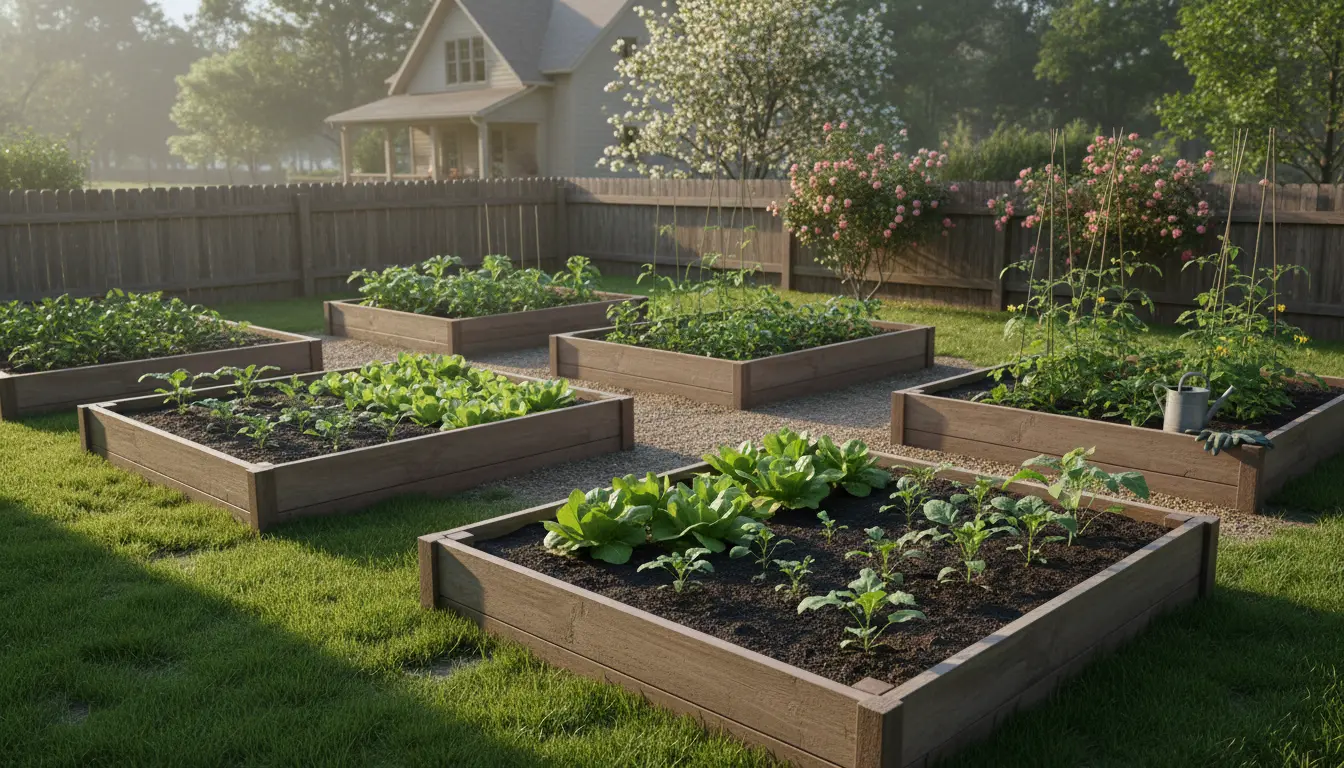
Starting a vegetable garden can be simple and rewarding. This guide gives clear, practical steps you can follow to get plants growing and harvesting food at home.
How to Start a Vegetable Garden: Quick Overview
Before you dig, make a basic plan. A small, well-placed garden is easier to manage than a large one that’s poorly located.
- Decide size and location
- Test and prepare soil
- Choose easy vegetables for your climate
- Plant and maintain on a schedule
Planning Your Vegetable Garden
Good planning saves time and increases yields. Start by observing sunlight and wind in likely spots for a few days.
Choose Location and Sunlight
Most vegetables need at least 6 hours of direct sun daily. South-facing spots are usually best in temperate climates.
Avoid low areas that stay soggy and places too close to large trees that steal water and nutrients.
Decide Garden Size and Layout
Begin with a manageable size. A 4 x 8 foot raised bed or several 3 x 3 foot beds suit most beginners.
Plan paths wide enough to access plants without compacting soil.
Prepare Soil and Beds
Healthy soil is the foundation of success. Improving soil quality pays off for years.
Test and Improve Soil
Obtain a simple soil test kit or send a sample to a local extension service. Test for pH and basic nutrients.
Most vegetables prefer slightly acidic to neutral soil (pH 6.0–7.0). Add lime to raise pH or sulfur to lower it, only if test results indicate a need.
Add Organic Matter
Mix compost or well-rotted manure into the top 6–8 inches of soil. Organic matter improves drainage, nutrient content, and soil structure.
- Use 1–3 inches of compost spread over the bed
- Turn or fork compost into the topsoil
- Repeat annually for steady improvement
Choose Vegetables for Beginners
Select crops that match your growing season and offer predictable success for first-time gardeners.
- Leafy greens: lettuce, spinach, kale
- Root crops: radishes, carrots, beets
- Warm-season staples: tomatoes, peppers, bush beans
- Herbs: basil, parsley, chives
Buy seedlings for tomatoes and peppers to get a head start. Sow radishes and lettuce directly for quick results.
Planting and Spacing
Follow seed packet or plant tag spacing instructions. Crowded plants reduce air flow and increase disease risk.
Use companion planting where helpful, for example planting basil near tomatoes to potentially improve flavor and deter pests.
Watering Basics
Water deeply and less often rather than frequent shallow watering. Deep water encourages strong root systems.
Early morning is the best time to water. Use soaker hoses or drip irrigation to reduce leaf wetness and conserve water.
Mulching and Weed Control
Apply 2–3 inches of organic mulch, such as straw or shredded leaves, to suppress weeds and retain moisture.
Pull weeds while they are small. Avoid turning the soil excessively once plants are established.
Pest and Disease Management
Monitor plants weekly for pests and disease signs. Early detection limits spread and damage.
- Inspect undersides of leaves and stems
- Remove damaged leaves promptly
- Use floating row covers to protect young plants from insects
Prefer cultural and mechanical controls first, like hand-picking pests, promoting beneficial insects, and improving air circulation.
Harvesting and Crop Rotation
Harvest vegetables at peak ripeness to encourage continued production. Continuous harvesting of leafy greens stimulates growth.
Rotate crops each season to reduce disease buildup. Avoid planting the same family in the same bed year after year.
Planting a mix of flowers like marigolds and cosmos beside vegetables can attract pollinators and beneficial insects that help control pests.
Small Real-World Case Study
Case Study: A 4 x 8 Foot Raised Bed in a Suburban Yard
Jane, a beginner gardener, converted a shaded lawn patch to a 4 x 8 raised bed. She chose a south-exposed location, filled the bed with a 50/50 mix of topsoil and compost, and planted tomatoes, lettuce, radishes, and basil.
She used a soil test kit to adjust pH, mulched with straw, and installed a soaker hose on a timer. In the first season she harvested continuous lettuce and several tomato trusses, reporting easier maintenance and a strong sense of accomplishment.
Seasonal Checklist for New Gardeners
- Early spring: test soil, plan beds, start seeds indoors
- Late spring: transplant warm-season seedlings, mulch, set up irrigation
- Summer: monitor water, harvest regularly, scout for pests
- Fall: clear spent plants, add compost, plan winter cover crops
Closing Tips
Start small and expand as you learn. Keep notes on what varieties performed well and any problems encountered.
Join local gardening groups or extension services for region-specific advice and to swap seeds.
With basic planning and consistent care, you can have a productive vegetable garden that supplies fresh food and satisfaction throughout the growing season.