
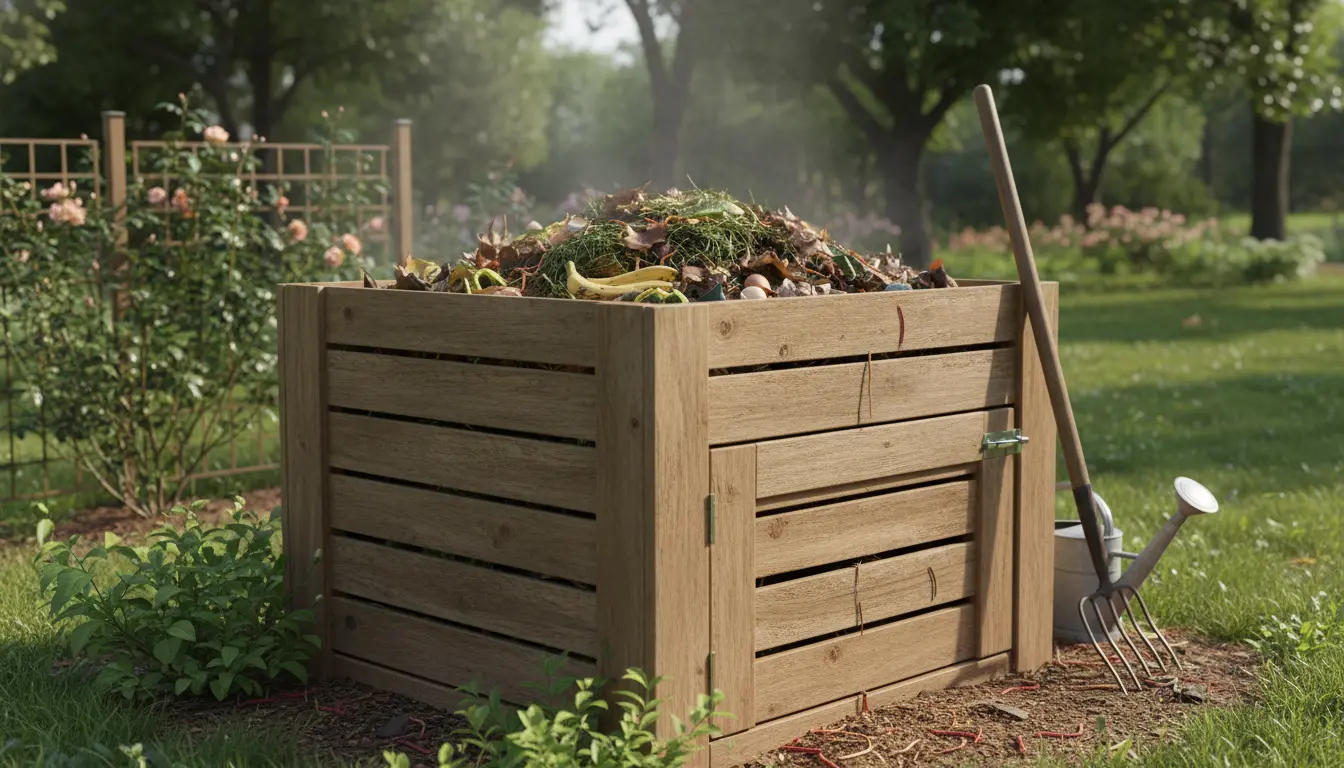
Start Composting at Home: A Practical Guide
Composting at home turns kitchen scraps and yard waste into nutrient-rich soil. This guide breaks the process into clear steps so you can set up an effective system quickly.
Why Composting at Home Matters
Composting reduces landfill waste and lowers greenhouse gas emissions. It also produces free organic fertilizer you can use in gardens, pots, and lawns.
Many municipalities now accept compostable waste, but home composting gives you direct control over materials and timing.
How to Start Composting at Home
Begin with a plan: choose a method, pick a container, and gather materials. You do not need expensive equipment to get started.
Choose a Bin or Pile for Composting at Home
Select between a simple pile, a DIY bin, or a commercial tumbler. Each option has pros and cons related to cost, smell control, and maintenance.
- Open pile: cheapest, needs more space and attention to pests.
- Stationary bin: contained, better for backyard spaces.
- Tumbler: faster turning, good for small yards and quick compost.
Layering and Balance for Composting at Home
Compost needs a balance of carbon (brown) and nitrogen (green) materials. Aim for roughly 25–30 parts carbon to 1 part nitrogen by weight.
- Carbon (brown): dry leaves, straw, shredded paper, cardboard.
- Nitrogen (green): vegetable scraps, coffee grounds, grass clippings.
Location and Size for Composting at Home
Place your bin on soil where possible to allow organisms to enter. Choose a partially shaded spot to retain moisture without overheating.
A practical home pile can be 3x3x3 feet for efficient heating and breakdown.
What to Put in a Home Compost

Good materials speed decomposition and limit odors. Keep a short list in your kitchen to make composting a habit.
- Accept: fruit and vegetable scraps, eggshells, coffee grounds, tea bags (no synthetic fibers), yard clippings, shredded paper.
- Avoid: meat, dairy, oils, diseased plants, pet waste, and treated wood.
Maintaining Your Compost Pile at Home
Successful composting is regular but simple work. Focus on adding materials evenly, keeping moisture balanced, and aerating occasionally.
- Turn or mix the pile every 1–2 weeks for faster results.
- Maintain moisture like a wrung-out sponge—too dry slows decomposition, too wet causes smells.
- Add shredded brown material if the pile looks soggy or smells like ammonia.
Speeding Up Composting at Home
To accelerate decomposition, chop scraps into smaller pieces, maintain higher pile volume, and ensure adequate airflow.
Using a compost thermometer helps: target 130–150°F (55–65°C) for active hot composting.
Troubleshooting Common Compost Problems
Simple fixes solve most issues without special tools. Diagnose by smell, texture, and presence of pests.
- Bad odor (rotten): Add dry browns, turn pile, reduce moisture.
- Pile not heating: Add greens, increase size, turn to introduce oxygen.
- Pests or rodents: Avoid meat/dairy, use closed bin or wire mesh, bury food scraps under brown layers.
- Too wet: Add cardboard or dry leaves, improve drainage, aerate more often.
Case Study: Apartment Composting Success
One family in a city apartment started composting at home using a small indoor vermicompost bin paired with a weekly drop-off for yard waste. They reduced trash volume by two kitchen bags per week.
After six months, the family used worm castings to feed balcony herb pots and shared excess compost with neighbors. The system required 10–15 minutes per week and cut grocery waste costs by reducing plant fertilizer needs.
Practical Tips to Keep Composting at Home Sustainable
- Keep a small counter bin with a tight lid for kitchen scraps to avoid flies and odors.
- Freeze scraps if you cannot visit your outdoor bin daily—this reduces pests and smells.
- Label a separate bag for ‘compostable’ to avoid accidental contamination with plastics.
- Use finished compost as mulch or mix into potting soil at a ratio of about 1:4 (compost to soil).
Composting at home is flexible and scalable. Start small, learn by doing, and adjust your system as you gain experience. With minimal weekly maintenance, you can divert organic waste from the landfill and create valuable soil amendment for plants.