
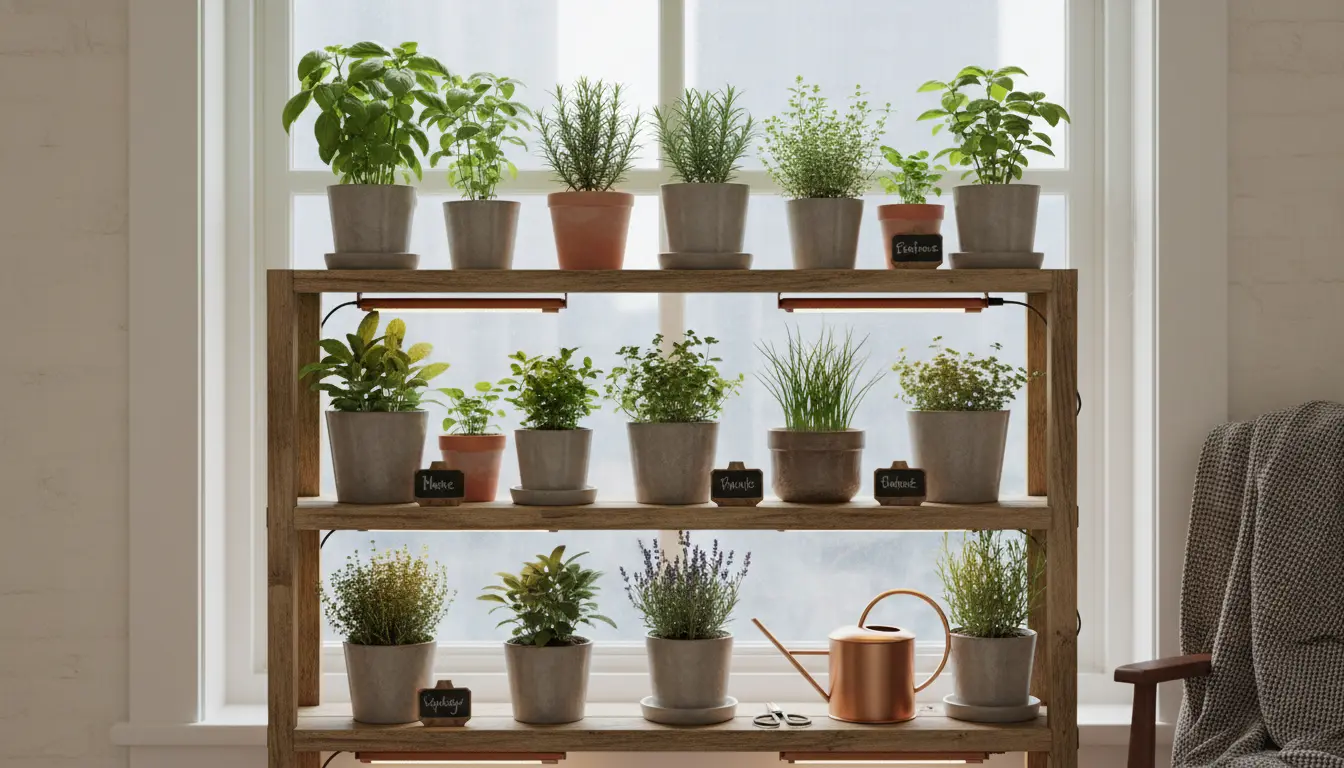
Why choose an indoor herb garden
An indoor herb garden gives fresh flavors year-round and saves money on store-bought herbs. It also adds greenery to small spaces and improves air quality slightly.
This guide shows practical steps to plan, set up, and maintain an indoor herb garden so your plants stay healthy and productive.
Planning your indoor herb garden
Start by assessing available light, space, and how you want to use herbs. A sunny windowsill is ideal, but many herbs also grow under grow lights.
Decide whether you want a single windowsill, a tiered shelf, or a series of small pots on a countertop. The plan affects container choices and lighting.
Selecting herbs for an indoor herb garden
Choose herbs that adapt well to containers and indoor light. Popular easy choices include basil, mint, chives, parsley, thyme, and rosemary.
- Basil: fast-growing and great for kitchens.
- Mint: vigorous; keep in its own pot to avoid spreading.
- Chives: low maintenance and continuous harvest.
- Thyme and rosemary: prefer slightly drier soil and bright light.
Lighting for an indoor herb garden
Light is the single most important factor. Aim for 6–8 hours of bright light or the equivalent from grow lights daily. South- or west-facing windows are best.
If natural light is limited, use a full-spectrum LED grow light positioned 6–12 inches above plants. Timers help maintain a consistent schedule.
Containers and soil for an indoor herb garden
Choose pots with drainage holes and use a lightweight potting mix designed for indoor plants. Good drainage prevents root rot and overwatering issues.

Consider pot size: shallow-rooted herbs like chives do fine in 4–6 inch pots, while basil benefits from 6–8 inch containers.
Step-by-step setup for an indoor herb garden
Follow these steps to set up your indoor herb garden quickly and correctly. Keep steps simple and practical to avoid common mistakes.
- Clean the containers and choose pots with drainage holes.
- Fill pots with fresh potting mix, leaving space for roots.
- Plant herbs at the same depth they grew in their nursery pots.
- Water thoroughly until water drains from the bottom, then let soil dry slightly between waterings.
- Place pots in your chosen light location or under grow lights with a timer.
Label pots so you can track watering and pruning needs for each herb.
Care and maintenance for an indoor herb garden
Routine care keeps herbs productive. Focus on light, water, feeding, and pruning for best results.
Watering schedule and tips
Most herbs prefer evenly moist soil but not waterlogged conditions. Check soil with your finger: water when the top 1 inch feels dry for most herbs.
Avoid daily shallow watering; instead water thoroughly and let excess drain. Use saucers to catch runoff and empty them to prevent standing water.
Feeding and pruning
Feed herbs with a balanced liquid fertilizer every 3–4 weeks during the growing season. Reduce feeding in winter when growth slows.
Prune regularly to encourage bushier growth. Pinch back stems and harvest leaves frequently instead of removing large portions at once.
Troubleshooting common problems
Yellow leaves often indicate overwatering or poor drainage. Move plants to brighter light if they become leggy or sparse.
- Pests: treat small infestations with insecticidal soap or a water rinse.
- Mildew: improve air circulation and reduce humidity near plants.
- Slowed growth in winter: reduce watering and accept slower harvests.
Small case study: One kitchen window herb garden
Emma, a renter in a studio apartment, set up an indoor herb garden on a south-facing window shelf. She chose three pots: basil, chives, and thyme.
Using 6-inch pots, a lightweight potting mix, and a 12-hour LED grow light schedule, Emma maintained steady growth. Weekly pruning and feeding every 3 weeks kept basil from flowering too soon.
Within six weeks, she harvested enough basil for pesto and used chives regularly. The setup cost under $60 and required 15 minutes of care per week.
Many common kitchen herbs like basil and parsley can be grown year-round indoors and will produce more leaves when harvested regularly. Frequent harvesting encourages new growth and delays flowering.
Practical tips and quick checklist
Use this quick checklist before you start to avoid common pitfalls. It keeps setup fast and repeatable for different spaces.
- Check light level for at least 6 hours of bright light or plan for grow lights.
- Choose pots with drainage holes and use quality potting mix.
- Group herbs with similar water needs together.
- Label pots and keep a watering schedule.
- Prune regularly to maintain shape and productivity.
Summary Start your indoor herb garden today
An indoor herb garden is a low-cost way to add fresh flavor to meals and greenery to your home. With the right light, soil, containers, and routine care, most people can grow reliable herbs year-round.
Start small, learn each herb’s needs, and expand as you gain confidence. A productive and attractive indoor herb garden is achievable in a few simple steps.