
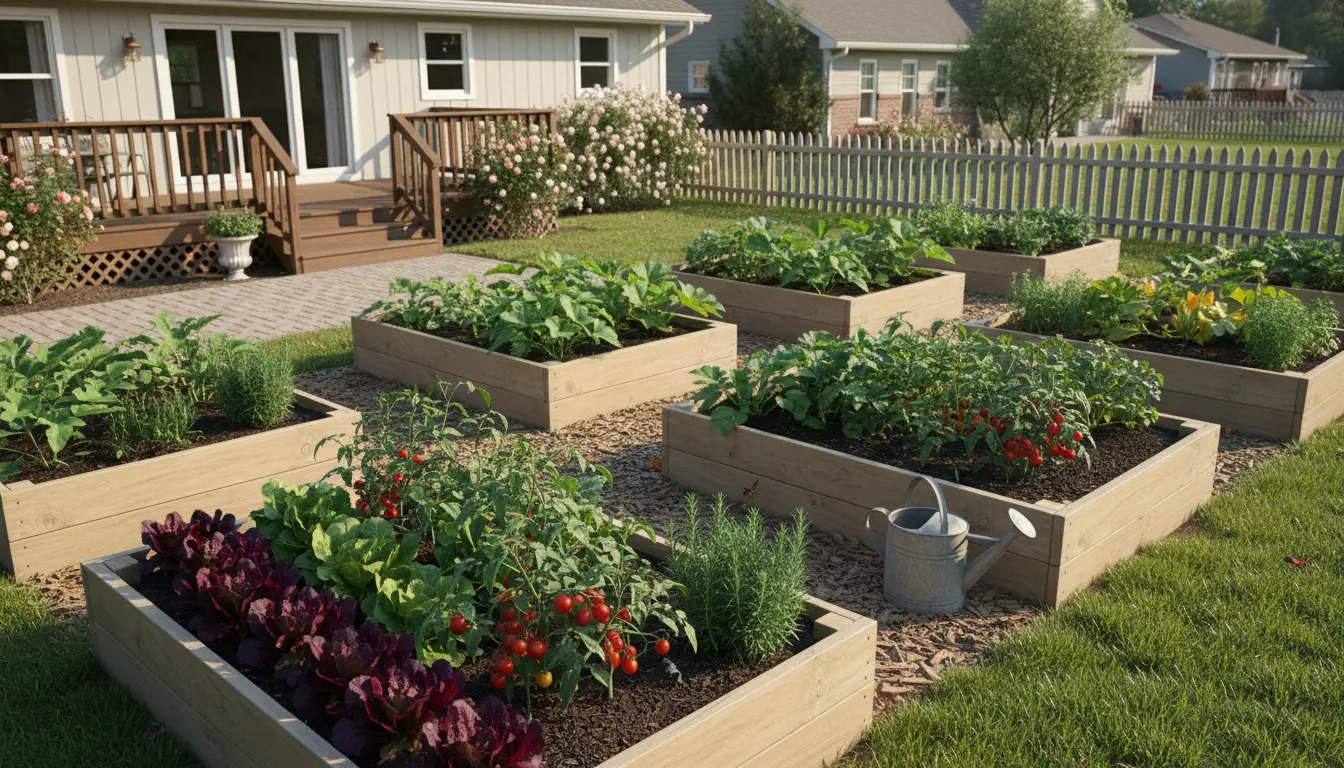
Starting a vegetable garden is a practical way to grow fresh food and learn basic horticulture. This guide gives clear, step-by-step instructions for beginners so you can plan, plant, and maintain a productive vegetable garden.
Planning Your Vegetable Garden
Good planning reduces wasted effort and increases success. Begin by deciding how much space you can commit and what vegetables you want to grow.
Choosing the Right Location for Your Vegetable Garden
Vegetables need at least 6 hours of direct sunlight per day, so pick a sunny spot. Also consider proximity to a water source and easy access for weeding and harvesting.
Choosing Vegetables for Your Garden
Select vegetables that match your climate, soil, and taste. For first-timers, choose a mix of fast-growing and low-maintenance crops like lettuce, radishes, beans, and tomatoes.
- Start small: a few raised beds or a 4×4 meter plot.
- Pick easy crops: leafy greens, radishes, bush beans.
- Consider space: vining plants need trellises; compact varieties fit small areas.
Preparing Soil for a Vegetable Garden
Healthy soil is the foundation of a productive vegetable garden. Test and improve soil structure and fertility before planting.
Testing and Improving Soil in the Vegetable Garden
Use a simple home soil test kit or send a sample to a local extension service to check pH and nutrient levels. Most vegetables prefer slightly acidic to neutral soil (pH 6.0–7.0).
To improve soil:
- Add organic matter such as compost or well-rotted manure to boost fertility and structure.
- Aerate compacted soil by digging or using broadforks, keeping layers loose to 20–30 cm (8–12 inches).
- Adjust pH with lime (to raise) or sulfur (to lower) based on test results.
Building Raised Beds or Rows for Your Vegetable Garden
Raised beds warm faster and drain better, which benefits many vegetables. Use untreated wood, stone, or recycled materials to form beds 30–45 cm high.
Leave paths between beds for access and to avoid compacting the planting area. A 60–90 cm path is comfortable for most gardeners.
Planting and Care in a Vegetable Garden
Planting at the right time and caring properly will minimize failures. Follow seed packet or plant label instructions for spacing and depth.
Watering, Fertilizing, and Mulching the Vegetable Garden
Water deeply and less often to encourage strong roots. Aim for consistent moisture; most vegetables need 1–2 cm of water per week during the growing season.
Fertilize based on soil test recommendations. As a general rule, a balanced organic fertilizer applied at planting and again mid-season supports steady growth.
Mulch conserves moisture, suppresses weeds, and moderates soil temperature. Use straw, shredded leaves, or grass clippings in a 5–8 cm layer.
Pest and Disease Management in the Vegetable Garden
Use integrated pest management (IPM): combine cultural, physical, and biological controls first, and apply chemical controls only as a last resort.
- Practice crop rotation to reduce pests and diseases that build up in soil.
- Use row covers to protect seedlings from insects.
- Encourage beneficial insects by planting flowers like marigolds and dill.
Harvesting and Crop Rotation for a Vegetable Garden
Harvest vegetables at peak ripeness for best flavor and nutrition. Regular harvesting also encourages continued production for many crops.
Rotate vegetable families (e.g., nightshades, brassicas, legumes) to different beds each year. Rotation reduces disease risk and balances nutrient use in the soil.
Real-World Example: Small Urban Vegetable Garden Case Study
Maria converted a 3×3 meter patio into a productive vegetable garden using four 1×1 meter raised boxes. She chose lettuce, cherry tomatoes, bush beans, and herbs to suit limited space.
By testing soil and adding compost, Maria achieved steady growth. She watered twice a week with a soaker hose and mulched with straw. In her first season she harvested lettuce for eight weeks and 20 kg of tomatoes.
Key takeaways from her case: start small, test soil, and choose compact varieties for limited space.
Companion planting can reduce pests and improve yields. For example, planting basil near tomatoes may boost flavor and deter some insects.
Quick Start Checklist for a Vegetable Garden
- Choose a sunny, accessible site near water.
- Test and amend soil before planting.
- Start with easy crops and small beds.
- Water deeply, mulch, and follow basic pest management.
- Rotate crops each year and keep records of what worked.
Starting a vegetable garden is a learning process. Keep notes on planting dates, varieties, and yields so you can improve each season. With modest effort and basic care, almost anyone can grow reliable, tasty vegetables at home.