
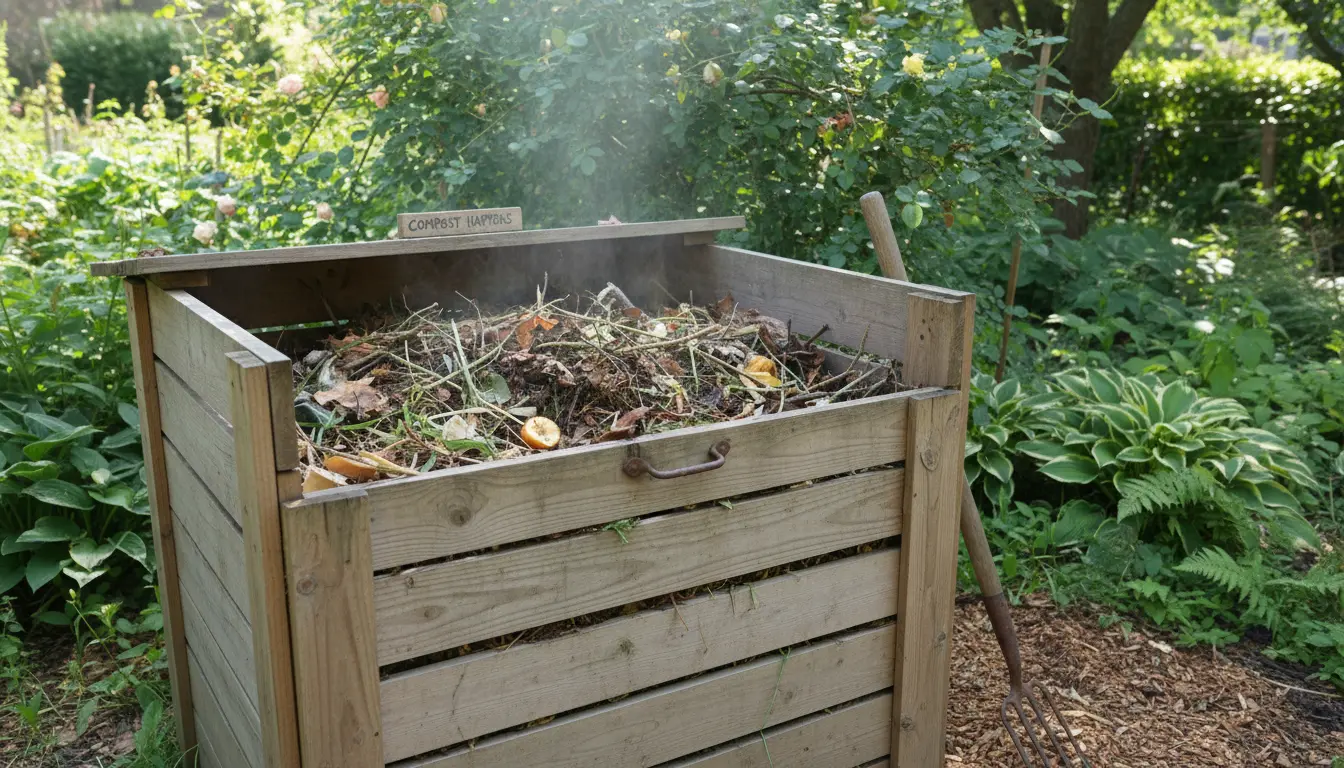
Why Home Composting for Beginners Matters
Home composting for beginners is an easy way to reduce waste and improve soil health. Composting turns kitchen scraps and yard trimmings into nutrient-rich material you can add to flower beds, vegetable gardens, and potted plants.
This guide gives practical steps, a tools list, and troubleshooting tips so anyone can start composting at home.
What You Need to Start Home Composting for Beginners

You don’t need special skills to start composting. A few basic items and the right approach are enough to get consistent results.
- Compost bin or heap (bin sizes vary by yard space)
- Garden fork or pitchfork for turning
- Kitchen container for scraps (small lidded bucket)
- Brown and green materials: see list below
- Water source for occasional moisture
Green and Brown Materials
Balance green and brown materials to keep the pile active and odor-free. Think of greens as nitrogen sources and browns as carbon sources.
- Greens: fruit and vegetable scraps, coffee grounds, fresh grass clippings
- Browns: dry leaves, shredded cardboard, straw, paper
- Aim for roughly a 2:1 or 3:1 ratio of browns to greens by volume
Step by Step Home Composting for Beginners
Follow these steps to build a compost pile that breaks down efficiently.
- Choose a location with good drainage and partial shade. A corner of the yard or beside a shed works well.
- Start with a base layer of coarse browns—twigs or straw—about 4 inches deep to encourage airflow.
- Add alternating layers of greens and browns. Keep layers thin to help microbes access materials.
- Moisten each layer slightly; the pile should feel like a damp sponge, not soaking wet.
- Turn the pile every 2–3 weeks to add oxygen and speed decomposition.
- When material looks dark, crumbly, and smells earthy, it is finished compost.
How Long Does Home Composting for Beginners Take?
Time depends on methods and materials. Hot composting with frequent turning can produce finished compost in 2–3 months. A less active bin may take 6–12 months.
If you are a beginner, expect the first batch to be slower as the microbial community establishes itself.
Choosing a Bin for Home Composting for Beginners
There are several bin options to match space and effort level. Choose the one that fits your routine.
- Stationary bin: low maintenance, good for slow composting
- Tumbler: faster decomposition, easy turning, smaller capacity
- Open heap: minimal cost, needs more space and occasional turning
Troubleshooting Common Problems
Beginners often encounter a few common issues. These fixes are simple and effective.
- Bad smell: add more browns and turn the pile to aerate it.
- Pile too dry: add water and more greens to rehydrate the pile.
- Pile too wet: add dry browns and increase turning frequency.
- Pests: avoid meat, dairy, oily foods, and bury food scraps within the pile.
Tips for Consistent Results
- Chop or shred large pieces to accelerate breakdown.
- Keep a small kitchen caddy to collect scraps and reduce temptation to discard in trash.
- Maintain pile temperature: a warm center (above 110°F or 43°C) speeds composting.
Compost can retain up to 60% of original carbon while converting the rest to stable humus. Adding compost to soil improves water retention and reduces the need for chemical fertilizers.
Using Finished Compost from Home Composting for Beginners
Finished compost is dark, crumbly, and smells like earth. Use it to enrich garden beds, amend potting mixes, or top-dress lawns.
Apply 1–3 inches to garden beds and lightly mix into the topsoil. For vegetables, incorporate compost before planting or side-dress during the season.
Simple Case Study: Small Urban Garden Success
A family in a row house started home composting for beginners using a 50-gallon tumbler. They collected kitchen scraps and bagged leaves from neighbors.
Within four months they produced enough compost to top-dress two raised beds. Their tomato harvest increased by 20% the following season and they reduced weekly trash by one third.
Final Checklist for Home Composting for Beginners
- Choose bin type and location
- Balance greens and browns
- Maintain moisture and airflow
- Turn regularly for faster results
- Use finished compost to enrich soil
Starting home composting for beginners requires modest effort and pays back with healthier soil, reduced waste, and better plant growth. Begin small, observe the pile, and adjust as needed.