
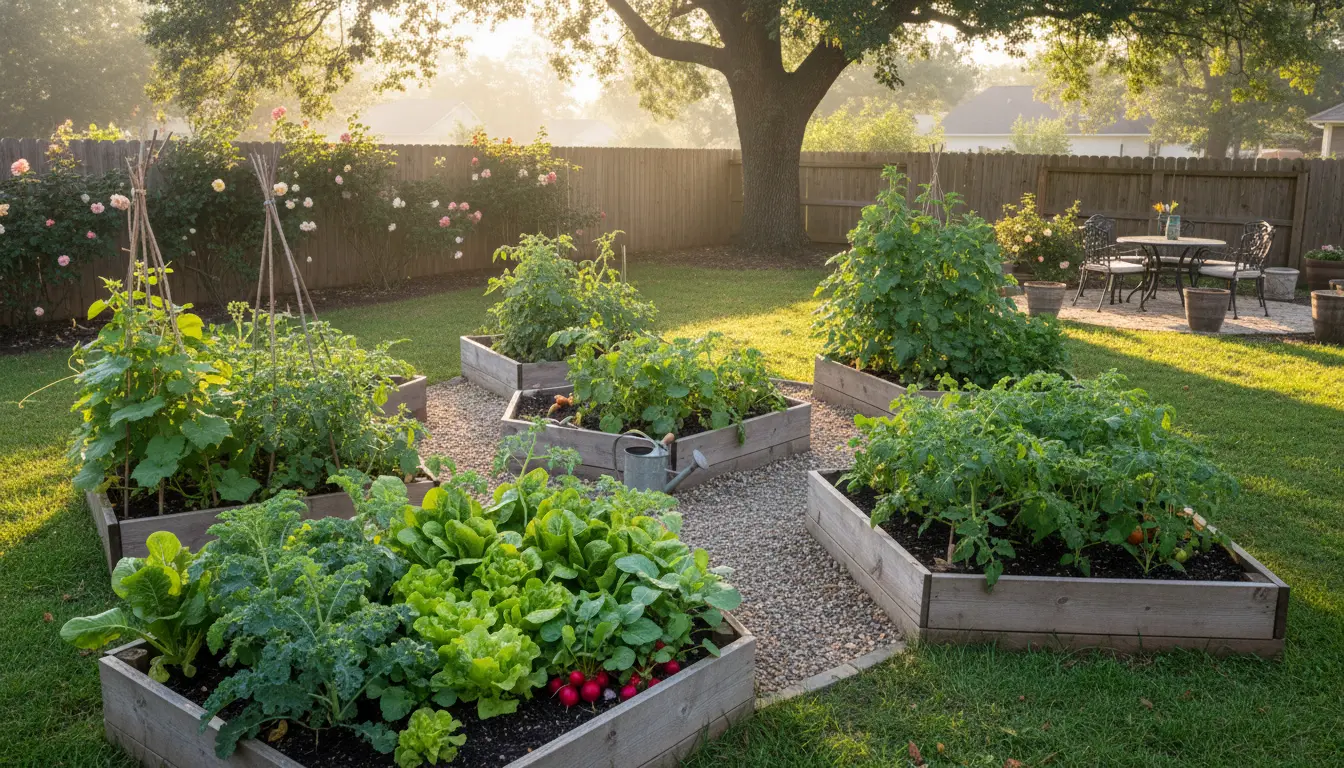
Why a Small Vegetable Garden Makes Sense
A small vegetable garden gives fresh produce without a large time or space commitment. It fits balconies, patios, small backyards, and community plots.
You get better flavor, lower grocery bills, and a steady supply of seasonal vegetables. This guide explains practical steps to start and maintain a small vegetable garden.
How to Plan Your Small Vegetable Garden
Good planning reduces wasted time and failed crops. Start by choosing what you and your household actually eat.
Decide whether you want in-ground beds, raised beds, or containers. Each option suits different spaces and skills.
Pick Vegetables for a Small Vegetable Garden
- Leafy greens: lettuce, spinach, arugula — fast and space-efficient.
- Compact fruiting crops: cherry tomatoes, peppers, bush beans.
- Root vegetables: radishes, baby carrots, beets — good for deeper containers.
- Herbs: basil, parsley, chives — high reward for small space.
Sketch a Simple Layout
Draw a 2D layout of your space. Mark sun, shade, existing structures, and access paths. Plan 2–4 main planting areas or containers.
Leave walking space for watering and harvesting. Group plants with similar water and sun needs together.
Choose Location and Light for a Small Vegetable Garden
Most vegetables need 6–8 hours of direct sun. Observe your site for a few days to confirm sunlight patterns.
If full sun is not available, choose shade-tolerant crops like lettuce, spinach, and herbs. South- or west-facing corners usually work best.
Soil and Containers for a Small Vegetable Garden
Soil quality is the foundation of success. For containers and raised beds use a good-quality potting mix or a loose garden mix.
Amend native soil with compost to improve structure and nutrients. Aim for a slightly acidic to neutral pH (6.0–7.0) for most vegetables.
Container Tips
- Choose containers with drainage holes.
- Use at least 10–12 inches of soil for root vegetables; shallow pots work for herbs and salad greens.
- Group pots on casters or trays so you can adjust sun exposure easily.
Planting and Care in a Small Vegetable Garden
Follow seed packet or plant label recommendations for spacing and depth. Overcrowding reduces air flow and increases disease risk.
Water consistently. Small gardens dry out faster, especially in containers. Water in the morning to reduce evaporation and leaf diseases.
Mulch and Fertilize
- Apply 2–3 inches of organic mulch around plants to retain moisture and suppress weeds.
- Use a balanced organic fertilizer at planting, and side-dress with compost mid-season for heavy feeders.
Pest Management and Common Problems
Start with prevention: healthy soil, proper spacing, and clean tools reduce pest and disease pressure. Inspect plants weekly.
Use these practical controls before chemical solutions:
- Handpick larger pests like cabbage loopers or beetles.
- Apply insecticidal soap or neem oil for soft-bodied insects.
- Introduce or attract beneficial insects like ladybugs and lacewings.
- Rotate crops year to year to reduce soil-borne diseases.
Harvesting and Extending the Season
Harvest crops at peak ripeness for best flavor. Frequent harvesting of greens and beans encourages more production.
Extend your season with simple tools: row covers for early spring, shade cloth for hot afternoons, and cold frames for fall harvests.
Many common salad greens can be harvested as a cut-and-come-again crop. You can take leaves regularly and get multiple harvests from a single planting.
Small Real-World Example: Balcony Garden Case Study
Maria, a city renter, converted a 6-foot balcony into a productive small vegetable garden. She used three long trough containers and two 12-inch pots.
She planted cherry tomatoes in deep containers, lettuce and spinach in troughs, and basil next to tomatoes to act as a pest deterrent. She watered from a simple drip bottle system and harvested weekly.
In one season Maria harvested enough greens and herbs to reduce her grocery lettuce purchases by half and enjoyed fresh tomatoes through summer. Her success came from regular watering, timely harvesting, and choosing compact varieties.
Quick Checklist to Start Your Small Vegetable Garden
- Choose 3–6 vegetables you will use often.
- Confirm at least 4–6 hours of sun or adjust crop choices.
- Select containers or prepare raised beds; add compost.
- Plant at recommended spacing and mulching.
- Water in the morning and inspect weekly for pests.
Final Notes on Managing a Small Vegetable Garden
A small vegetable garden is manageable and rewarding when you plan around space and time constraints. Start small and expand as you learn.
Keep notes each season about what worked and what failed. Small adjustments each year will steadily improve yields and reduce effort.
Ready to start? Pick a sunny spot, choose two easy crops, and plant this weekend. Small steps lead to a productive garden.