
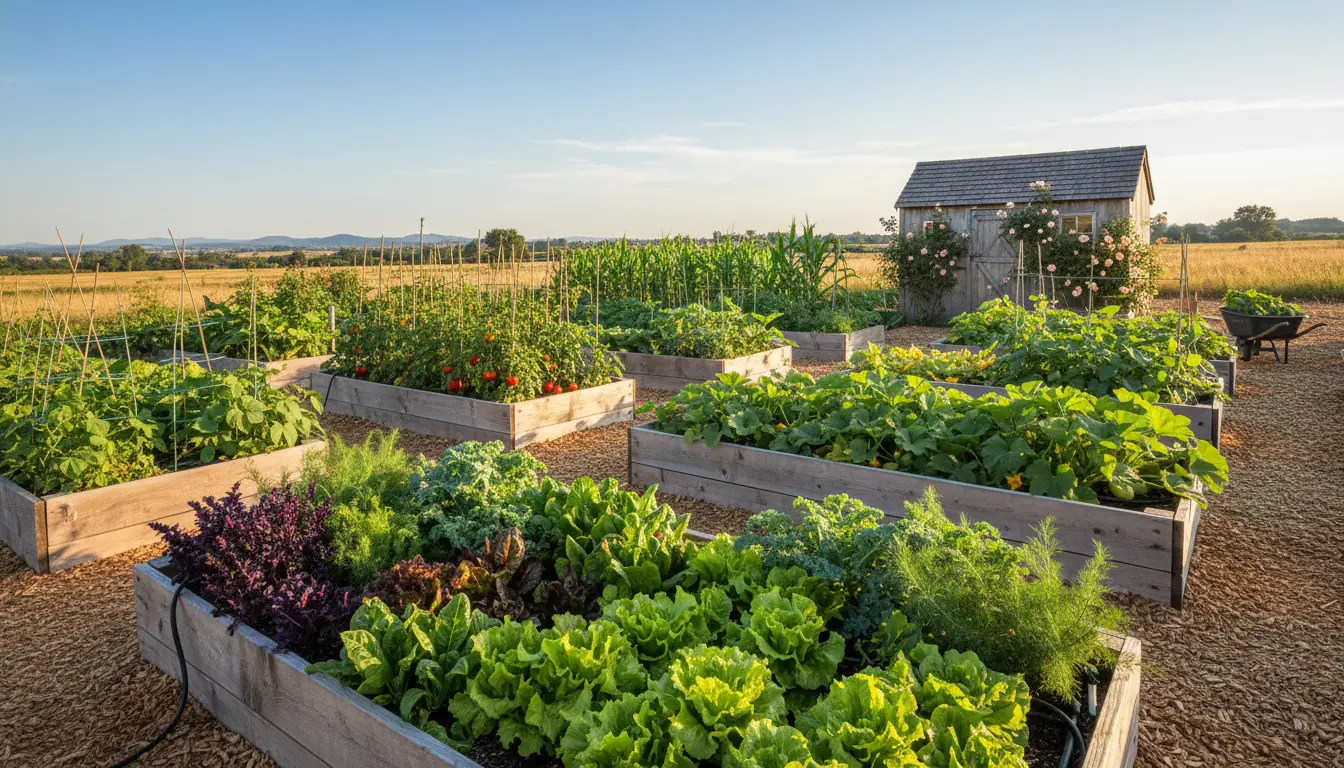
Start a Vegetable Garden: Plan and Choose a Site
Begin by deciding where to start a vegetable garden. Look for a location that gets at least six hours of sun and is level or gently sloped.
Consider access to water and how visible the area is from your home. Good access makes watering, harvesting, and maintenance easier.
Start a Vegetable Garden: Assess Sunlight and Space
Observe sunlight patterns for a few days. Morning sun with afternoon shade can work for many vegetables, but tomatoes and peppers prefer full sun.
Measure available space to determine bed size. Small raised beds or containers are ideal for limited spaces and beginner gardeners.
Start a Vegetable Garden: Prepare Soil and Beds
Healthy soil is the foundation of a productive garden. Test your soil with a simple kit to check pH and nutrient levels.
Amend heavy clay or sandy soil with compost and organic matter to improve structure and fertility. Raised beds provide better drainage and warmer soil in spring.
Start a Vegetable Garden: Choose Bed Types
Common options include in-ground beds, raised beds, and containers. Each has pros and cons depending on cost, space, and mobility.
- In-ground beds: Lower cost, larger area required.
- Raised beds: Better drainage and soil control, easier on the back.
- Containers: Best for patios and balconies, portable and space-efficient.
Start a Vegetable Garden: Select Plants and Plan Layout
Pick vegetables that match your climate, growing season, and cooking preferences. Beginners should start with forgiving crops like lettuce, radishes, beans, and cherry tomatoes.
Plan succession planting to maximize yield over the season. Group plants by water needs and height to simplify care.
Start a Vegetable Garden: Seed vs Seedlings
Decide whether to start from seed or buy seedlings. Seeds are cheaper and give more variety; seedlings offer a quicker harvest.
Use a planting calendar for your zone to know when to sow seeds indoors, transplant, or direct-sow outdoors.
Start a Vegetable Garden: Watering and Fertilizing Practices
Consistent watering is critical—provide deep, infrequent watering rather than daily shallow watering. This encourages deeper root growth.
Use mulch to reduce evaporation and suppress weeds. Organic mulches like straw or wood chips also break down and improve soil over time.
Start a Vegetable Garden: Fertilizers and Soil Nutrition
Begin with a balanced organic fertilizer or compost. Monitor plant performance and adjust with targeted nutrients if you see deficiencies.
Slow-release fertilizers and compost tea can help maintain steady nutrient levels without overfeeding.
Start a Vegetable Garden: Pest and Disease Management
Integrated pest management (IPM) reduces pest problems using prevention, monitoring, and targeted action. Encourage beneficial insects with flowers and habitat plants.
Rotate crops yearly and avoid planting the same family in the same spot to reduce disease buildup. Remove diseased leaves promptly.
Start a Vegetable Garden: Organic Controls
- Handpick large pests like slugs and caterpillars.
- Use row covers to protect young plants from insects and birds.
- Apply neem oil or insecticidal soap for soft-bodied pests when necessary.
Start a Vegetable Garden: Harvesting and Seasonal Care
Harvest regularly to encourage continued production. Pick vegetables at peak ripeness for best flavor and nutrition.
Prepare beds for the next season by adding compost and covering soil in winter to protect structure and suppress weeds.
Many common vegetables like lettuce and radishes can be harvested within 30 days of planting, making them ideal for quick success and beginner confidence.
Practical Checklist to Start a Vegetable Garden
- Choose a sunny, accessible site.
- Test and amend soil; consider raised beds.
- Select easy crops and plan layout by height and water needs.
- Establish a regular deep-watering schedule.
- Mulch, rotate crops, and monitor pests weekly.
Start a Vegetable Garden: Simple Seasonal Timeline
- Early spring: Prepare beds and sow cold-hardy seeds.
- Late spring: Transplant seedlings and plant warm-season crops.
- Summer: Maintain watering, harvest, and monitor pests.
- Fall: Harvest remaining crops and add compost.
Small Case Study: Urban Backyard Raised Beds
Maria converted a 10-by-6 foot sunny strip in her urban backyard into two raised beds. She used 4×8 beds filled with a mix of topsoil and compost.
By planting lettuce, bush beans, cherry tomatoes, and herbs in succession, she harvested fresh salad greens within four weeks and maintained continuous harvests through summer. Simple drip irrigation and straw mulch reduced water use and weed pressure.
Final Tips to Start a Vegetable Garden Successfully
Start small and expand as you gain confidence. Record what you plant and when you harvest to refine timing and varieties for your microclimate.
Connect with local gardening groups or extension services for region-specific advice. Small, consistent actions produce reliable results over time.
With basic planning, soil preparation, and regular care, anyone can start a vegetable garden and enjoy fresher produce, lower grocery bills, and the satisfaction of growing food at home.