
Vegetable Garden Basics
Starting a vegetable garden is a manageable project that rewards planning and simple seasonal care. This guide covers practical steps so you can get vegetables growing quickly and reliably.
Planning Your Vegetable Garden
Site selection for vegetable garden
Choose a location with at least six hours of direct sunlight each day for most vegetable types. Good drainage and easy water access matter as much as sunlight.
Consider proximity to your home for daily checks, and avoid low spots that collect cold air or water.
Decide on garden style and size
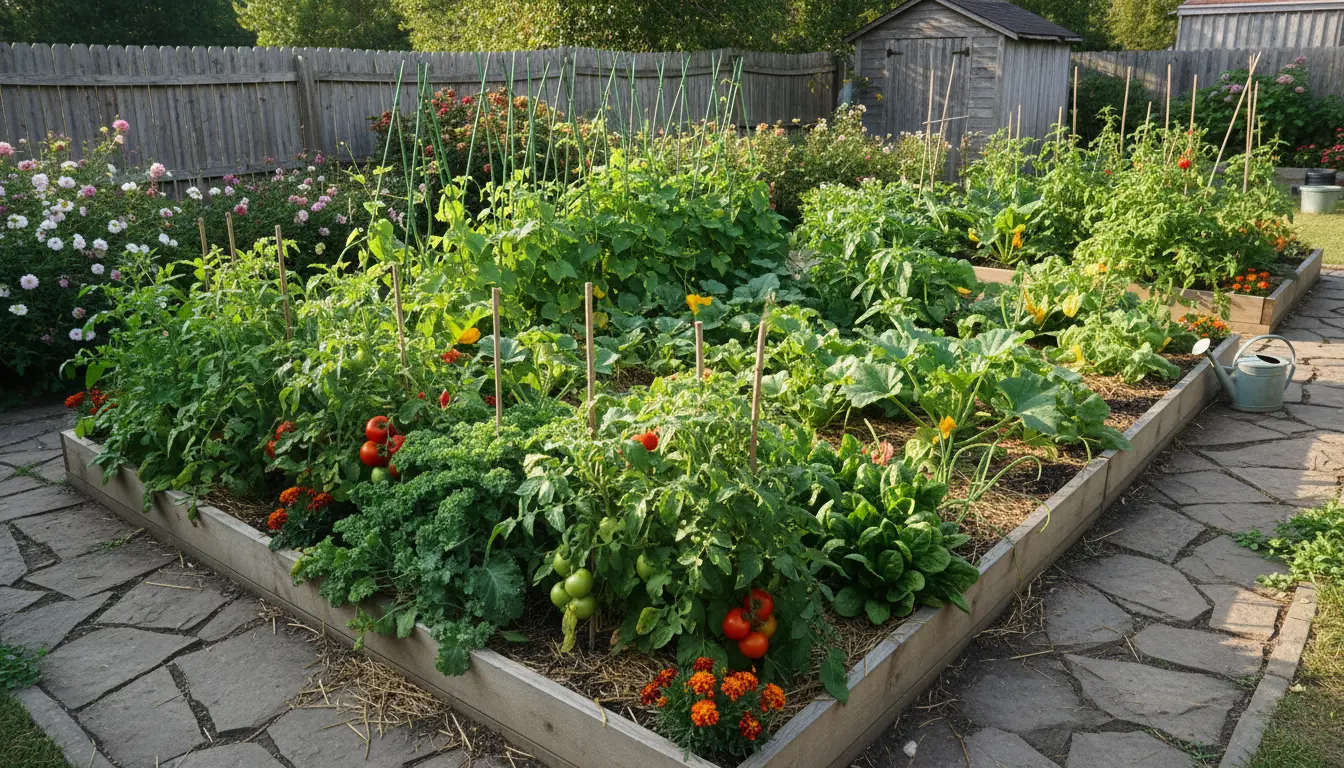
Pick a layout that fits your space and energy. Raised beds, in-ground rows, or container gardens all work depending on soil quality and mobility needs.
- Beginners: one or two raised beds sized 4 x 8 feet.
- Limited space: containers or vertical planters on a patio.
- Large plots: divide into sections for crop rotation.
Preparing Soil for Your Vegetable Garden
Test and improve soil
Start with a simple soil test to check pH and nutrient levels. Many local extension services offer affordable kits and recommendations.
Amend soil with compost or well-rotted manure to improve structure, drainage, and fertility. Aim for a loose, crumbly texture that retains moisture without staying waterlogged.
Soil preparation steps
- Clear weeds and debris from the chosen area.
- Loosen soil to 8–12 inches for most vegetables.
- Mix in 2–4 inches of compost across the surface and work it in.
- Level beds and form rows or raised beds as planned.
Planting and Maintaining Your Vegetable Garden
Choosing seeds and seedlings
Select vegetables suited to your climate and season. Fast-growing crops like lettuce, radishes, and spinach give quick results for new gardeners.
Use seedlings for slower starters like tomatoes, peppers, and eggplants to get a head start in short seasons.
Planting schedule and spacing
Follow seed packet or plant tag instructions for planting depth and spacing. Crowding plants reduces airflow and increases disease risk.
- Row crops (carrots, beets): follow close spacing but thin seedlings.
- Vining crops (cucumbers, beans): provide trellises to save space.
- Large plants (tomatoes, squash): give 2–3 feet between centers.
Watering and fertilizing
Water deeply and less frequently to promote strong roots. Aim for consistent moisture, especially during flowering and fruit set.
Use balanced organic fertilizers or compost tea during the growing season. Avoid over-fertilizing leafy crops if you want more fruit production.
Pest and Disease Management in Vegetable Garden
Prevention and observation
Inspect plants weekly for pests and early disease signs. Remove damaged leaves and use barriers like row covers for delicate seedlings.
Encourage beneficial insects by planting flowers like marigolds, dill, and calendula nearby.
Low-toxicity controls
- Hand-pick larger pests such as beetles and caterpillars.
- Use neem oil or insecticidal soap for soft-bodied insects.
- Practice crop rotation to reduce soil-borne diseases.
Companion plants like basil and marigolds can reduce pests and improve tomato flavor by repelling certain insects and attracting pollinators.
Harvesting and Extending the Season
When to harvest
Harvest vegetables at peak ripeness for best flavor and nutrition. Leafy greens can be cut young, while root crops are ready when they reach recommended size.
Regular harvesting often encourages more production, especially for beans and summer squash.
Extending growing season
Use row covers, cold frames, or simple cloches to protect plants from early frost and extend the harvest into cooler months. Start seeds indoors to lengthen the season for warm-season crops.
Small Vegetable Garden Case Study
Case study: A small urban gardener converted a 4 x 8 foot raised bed into a productive space. They planted tomatoes, basil, lettuce, and bush beans, following these steps:
- Prepared soil with 3 inches of compost and a soil test to adjust pH.
- Used trellis for beans and cages for tomatoes to save space.
- Watered deeply twice a week with drip tubing and mulched with straw.
Result: By mid-summer the gardener harvested weekly salad greens and 10–12 pounds of tomatoes over the season. Minimal pest pressure was managed with hand-picking and companion planting.
Practical Checklist to Start Your Vegetable Garden
- Choose site with good sun and drainage.
- Test and amend soil with compost.
- Plan layout, plant list, and succession planting dates.
- Install irrigation or plan a watering routine.
- Apply low-toxicity pest controls as needed and monitor weekly.
Starting a vegetable garden is mostly about consistent, simple care: right site, healthy soil, and timely maintenance. Follow the steps above and adjust based on your local climate and experience.
If you want, list your local climate or space constraints and I can suggest a specific plant list and seasonal schedule for your area.