
Starting a vegetable garden is a practical way to grow fresh food and learn basic growing skills. This guide explains how to start a vegetable garden step by step, with clear actions you can take in your first season.
Plan Your Vegetable Garden
Good planning saves time and increases yield. Begin by deciding the garden size, location, and what to grow. Keep choices realistic for your time and space.
Choose the right location for your vegetable garden
Vegetables need at least 6 hours of direct sunlight per day for most crops. Select a flat spot with good drainage and easy access to water. Consider wind protection and proximity to your kitchen for easy harvesting.
Pick vegetables that suit your needs
Choose crops based on climate, season, and your cooking habits. Easy beginner choices include lettuce, radishes, tomatoes, beans, and herbs. Mix fast-growing crops with longer-season plants to keep the bed productive.
- Leafy greens: lettuce, spinach
- Roots: carrots, radishes
- Fruiting: tomatoes, peppers
- Legumes: bush beans, peas
Prepare the Soil
Soil is the foundation of a healthy vegetable garden. Test and improve soil before planting to give crops the best start.
Test and amend soil
Use a simple soil test kit to check pH and nutrient levels. Most vegetables prefer a pH between 6.0 and 7.0. Add compost to improve structure and fertility, and use lime or sulfur only if the test shows a need.
Choose between raised beds and in-ground planting
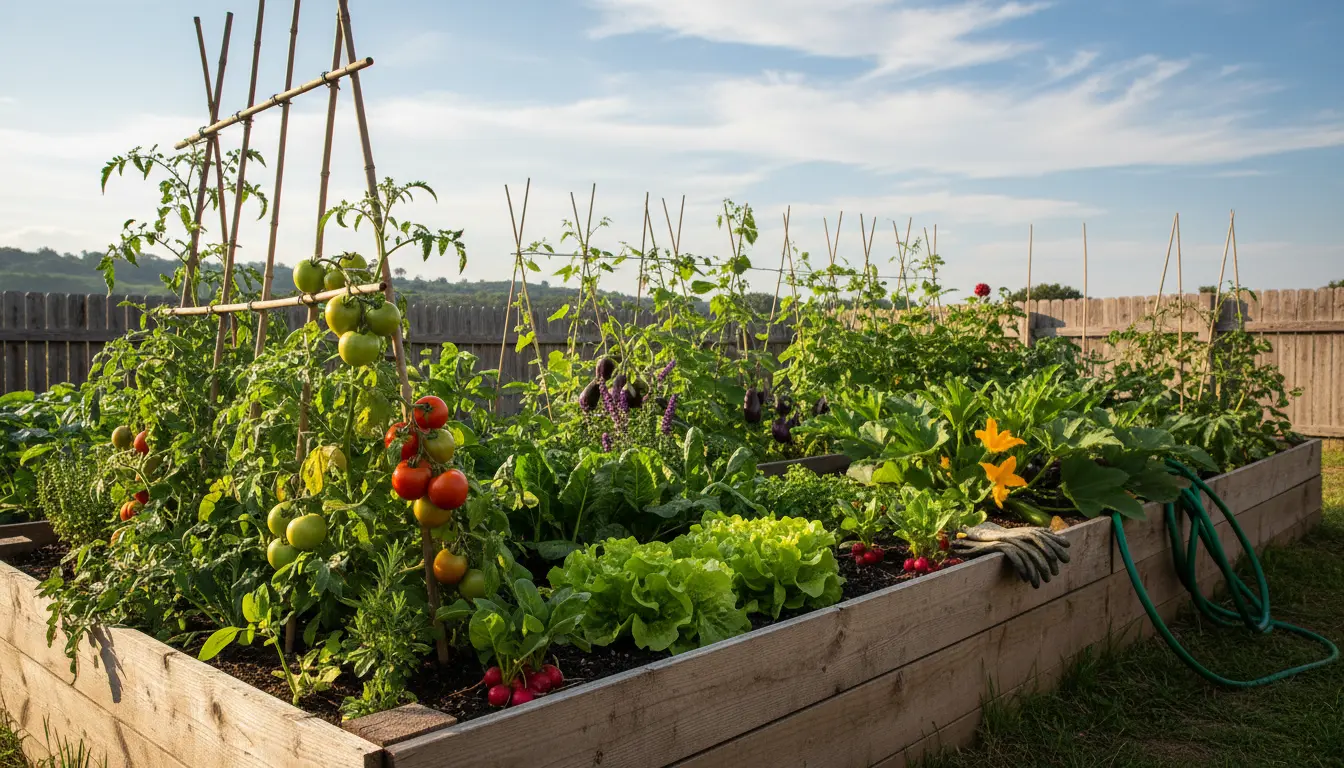
Raised beds warm faster, drain well, and are easier to manage in small spaces. In-ground beds are cheaper and can be deeper if you have good topsoil. Containers work well for patios and balconies.
- Raised beds: better drainage, easier weeding
- In-ground: less initial cost, larger area
- Containers: ideal for small spaces, control soil quality
Planting and Care
Plant at the right time and give crops consistent care. Observe plants regularly and act quickly on problems.
Planting tips
Follow seed packet directions for spacing and depth. For transplants, set them at the same depth as in their pots unless recommended otherwise. Mulch to retain moisture and reduce weeds.
Watering, fertilizing, and pest control
Water deeply and less often to encourage strong roots. Most vegetables need 1–1.5 inches of water per week. Use a balanced organic fertilizer at planting and again mid-season as needed.
Control pests with physical barriers, row covers, or hand removal. Use insecticidal soaps or neem oil for small infestations. Encourage beneficial insects by planting flowers like calendula or buckwheat nearby.
Seasonal Schedule and Succession Planting
Understanding your local seasons helps you get the most from your space. Use succession planting to harvest continuously.
- Early spring: sow peas, radishes, and spinach
- Late spring: transplant tomatoes, peppers, and squash
- Late summer: plant fall greens and second crops of beans
Succession planting example: sow lettuce every 2–3 weeks to maintain a steady supply.
Small Real-World Example
Case study: Sarah converted a 6×4 ft raised bed into a productive kitchen garden. She planted tomatoes, bush beans, lettuce, and basil. In her first season she harvested tomatoes weekly from July to September and a continuous supply of lettuce from staggered sowings.
Sarah’s tips: start small, keep a planting calendar, and record harvests. This helped her plan what to plant more of next season.
Maintenance Checklist
Regular maintenance keeps a vegetable garden productive. Use this checklist throughout the season.
- Water deeply 1–2 times per week depending on weather
- Pull weeds weekly to reduce competition
- Mulch after soil warms to conserve moisture
- Monitor for pests and diseases, act promptly
- Rotate crops yearly to prevent nutrient depletion and disease build-up
Final Tips for Success
Start with a small, manageable area and expand as you gain confidence. Keep notes on planting dates, varieties, and harvest amounts so you can improve each year.
Be patient: learning how to start a vegetable garden takes a season or two, but steady care rewards you with fresh produce and useful gardening skills.