
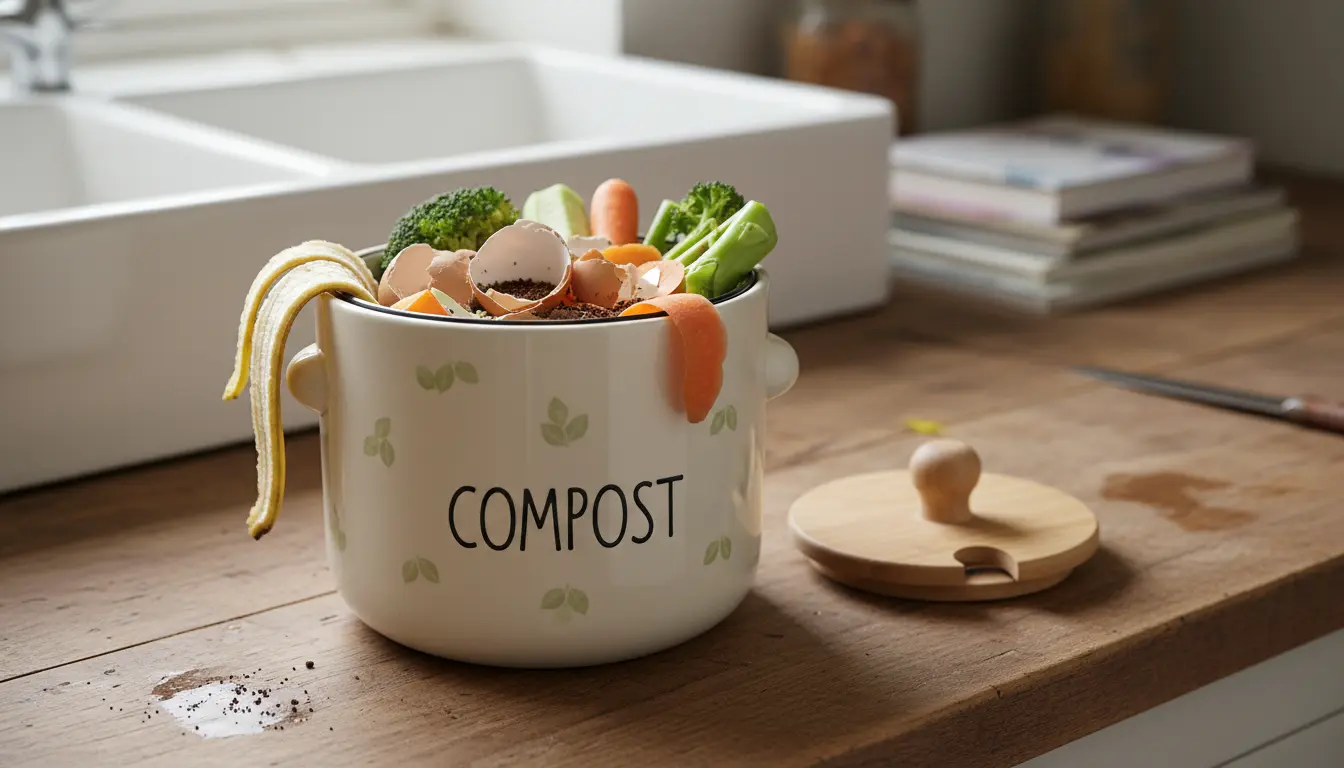
Why Home Composting Matters
Home composting turns kitchen and yard waste into a useful soil amendment. It reduces landfill waste and improves soil structure for gardens and potted plants.
This guide explains simple, reliable steps for home composting for beginners. You can start with minimal equipment and still get good results.
Benefits of Home Composting
Composting offers environmental and gardening benefits that are easy to measure. Use finished compost to reduce fertilizer needs and support healthy plant growth.
- Reduces waste sent to landfills and lowers methane emissions.
- Improves soil water retention and nutrient content.
- Supports beneficial soil organisms and reduces erosion.
- Can save money on soil amendments and reduce garbage collection costs.
How to Start Home Composting
Starting a compost pile or bin is straightforward. Follow these steps to establish a balanced compost system that works in your space.
Step 1: Choose a Composting Method
Select a method that fits your home and schedule. Options include a simple backyard pile, a tumbling compost bin, or a worm (vermicompost) setup for apartments.
Step 2: Pick a Location
Place your compost bin on soil or a well-drained surface. Pick a spot with partial sun and easy access for turning and adding materials.
Step 3: Gather Materials
Compost needs a mix of carbon-rich and nitrogen-rich inputs. Aim for a balance that keeps the pile active without producing odors.
- Carbon (browns): dry leaves, shredded paper, straw, cardboard.
- Nitrogen (greens): fruit and vegetable scraps, coffee grounds, fresh grass clippings.
Step 4: Build and Maintain the Pile
Layer materials in roughly 3:1 ratio of browns to greens by volume to start. Keep layers thin and moisten each layer so the pile feels like a wrung-out sponge.
Turn the pile every 1–2 weeks with a garden fork or use a tumbling bin to mix contents. Regular turning speeds decomposition and reduces odor.
Step 5: Monitor Temperature and Moisture
Active compost piles heat to 130–150°F (54–66°C) when healthy. You can use a compost thermometer or judge by the level of activity and smell.
If the pile is dry, add water and more greens. If it smells sour or ammonia-like, add more browns and turn the pile to introduce air.
What to Compost and What to Avoid
Knowing what to put in your compost keeps the process safe and effective. Some items break down slowly or attract pests.
Compostable Items
- Vegetable and fruit scraps (no oily residues).
- Coffee grounds and tea bags (remove staples).
- Eggshells, shredded paper, yard waste, and small wood chips.
Avoid These Items
- Meat, bones, dairy, and oily food waste (can attract pests and cause odors).
- Diseased plants, invasive weeds with seeds, and chemically treated wood.
- Pet waste from carnivores and glossy or heavily inked paper.
Troubleshooting Common Composting Problems
Even simple systems need small corrections. These quick fixes keep your compost healthy and productive.
- Bad smell: Add dry browns, increase turning, and check moisture.
- Too dry: Add water and fresh greens to rehydrate the pile.
- Slow breakdown: Chop materials smaller, add nitrogen, and increase turning frequency.
- Pests: Remove meat or oily foods, secure the bin, and bury food scraps inside the pile.
Compost can reduce watering needs by improving soil structure; some soils retain up to 30% more water when amended with compost.
Small Real-World Example: Apartment Vermicomposting Case Study
Maria, a city apartment dweller, started a worm bin on her balcony using a 10-liter plastic bin. She used shredded newspaper and kitchen scraps and fed the worms small portions twice a week.
Within three months she harvested dark, crumbly vermicompost and used it to repot herbs. Her plants showed stronger growth, and she reduced trash volume by nearly half for organic kitchen waste.
Using Finished Compost
Finished compost looks dark, crumbly, and earthy-smelling. Use it as a top dressing, mix it into potting soil, or add it to garden beds in spring and fall.
- Top dressing: Apply 1–2 inches around perennials and trees.
- Potting mix: Blend compost with soil and sand for container plants.
- Lawn care: Spread a thin layer over turf before overseeding.
Final Tips for Composting for Beginners
Start small and learn by doing. Monitor your compost, keep a balance of browns and greens, and adapt the method to your space and schedule.
Composting is a low-cost, practical way to reduce waste and improve soil. With simple routines, most beginners see results within a few months.