
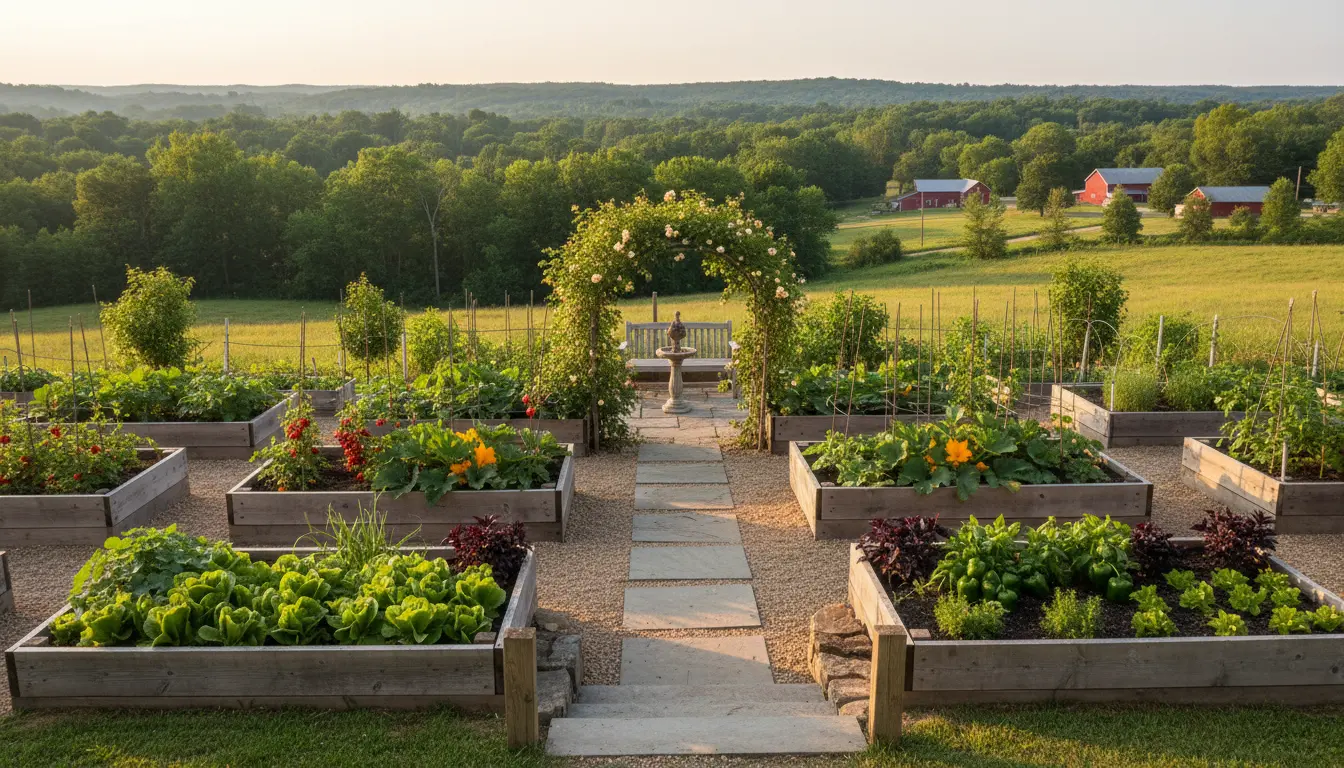
Raised bed vegetable gardening is a reliable way to grow more food in less space while improving soil and drainage. This guide gives step-by-step instructions you can use whether you are a beginner or refining an existing setup.
Why Choose Raised Bed Vegetable Gardening
Raised beds offer better control over soil quality and drainage than in-ground plots. They warm faster in spring, which extends the growing season for many vegetables.
Use raised beds when you have poor native soil, limited space, or want to reduce bending and weeding time. They also allow denser planting and easier pest management.
Key benefits of raised bed vegetable gardening
- Improved soil structure and fertility control.
- Better drainage and reduced compaction.
- Faster warming in spring for earlier planting.
- Easier to manage weeds, pests, and irrigation.
Planning Your Raised Bed Vegetable Garden
Start by selecting the right location. Most vegetables need at least 6 to 8 hours of sun per day, so choose a sunny spot with good access to water.
Consider bed size and layout. Common beds are 4 feet wide so you can reach the center from either side. Length can vary to fit your space. Pathways should be wide enough for wheelbarrows and comfortable movement.
Materials and tools for raised bed vegetable gardening
- Frame materials: untreated cedar, composite boards, or recycled bricks.
- Soil mix: high-quality topsoil, compost, and aeration material like coarse sand or perlite.
- Tools: shovel, rake, level, measuring tape, and a wheelbarrow.
Building and Filling Raised Beds for Vegetables
Constructing the bed is straightforward. Build a simple frame, place it on the chosen site, and fill it with a balanced soil mix.
- Assemble the frame to the desired height, typically 8 to 12 inches for annual vegetables. Taller beds (12 to 24 inches) are better for root crops or poor native soil.
- Place the frame directly on the lawn or bare soil. Remove any large debris and level the area.
- Fill with a soil mix: 50% topsoil, 30% compost, 20% aeration material is a practical starting point. Adjust based on local soil tests.
- Water the new bed thoroughly to settle the soil and eliminate large air pockets.
For very deep beds or when using poor native soil, consider a layered approach with larger organic material at the bottom and finer soil on top to balance drainage and nutrition.
Planting and Care Tips for Raised Bed Vegetable Gardening
Plan crops by height and maturity date to maximize light and harvest frequency. Group quick-growing crops with slower plants to keep beds productive.
Essential care practices
- Watering: Use soaker hoses or drip irrigation placed at the soil surface. Water early in the day to reduce disease risk.
- Mulching: Apply organic mulch to conserve moisture and suppress weeds. Replenish mulch each season.
- Fertilizing: Side-dress with compost or balanced organic fertilizer mid-season for heavy feeders like tomatoes and squash.
- Crop rotation: Rotate plant families between beds each year to reduce pest and disease buildup.
Common Problems and Solutions in Raised Bed Vegetable Gardening
Pest and disease problems in raised beds often stem from overcrowding or poor air circulation. Address these by spacing plants correctly and pruning dense foliage.
- Slugs and snails: Use beer traps or hand-pick at dusk.
- Fungal disease: Improve airflow, avoid overhead watering, and remove infected plants quickly.
- Low yields: Test soil for nutrients and pH, then amend based on results.
Real-World Example: Small Urban Raised Bed Case Study
Case study: A city gardener installed two 4×8-foot beds on a sunny balcony. They used untreated cedar frames and filled them with a mix of local topsoil and certified compost.
Year one results: The gardener grew lettuce, bush beans, cherry tomatoes, and carrots. Intensive succession planting and regular compost top-dressing produced continuous harvests from May to October.
Lessons learned: Start beds at least 12 inches deep for carrots, use drip irrigation to save water, and plant a mix of quick and long-season crops for constant yields.
Raised beds can increase yields by up to 30 percent compared with traditional in-ground rows, thanks to better soil control and denser planting.
Quick Planting Calendar for Raised Bed Vegetable Gardening
Timing will vary by climate, but this schedule works in many temperate zones. Adjust dates for local frost lines.
- Early spring: Plant peas, spinach, lettuce, and radishes.
- Late spring: Transplant tomatoes, peppers, and eggplants after last frost.
- Summer: Direct sow beans, squash, and cucumbers in succession.
- Fall: Plant cover crops or cool-season greens for autumn harvests.
Raised bed vegetable gardening is adaptable and efficient. With proper planning, soil management, and routine care, even small beds can deliver substantial harvests and satisfy home cooks and gardeners alike.