
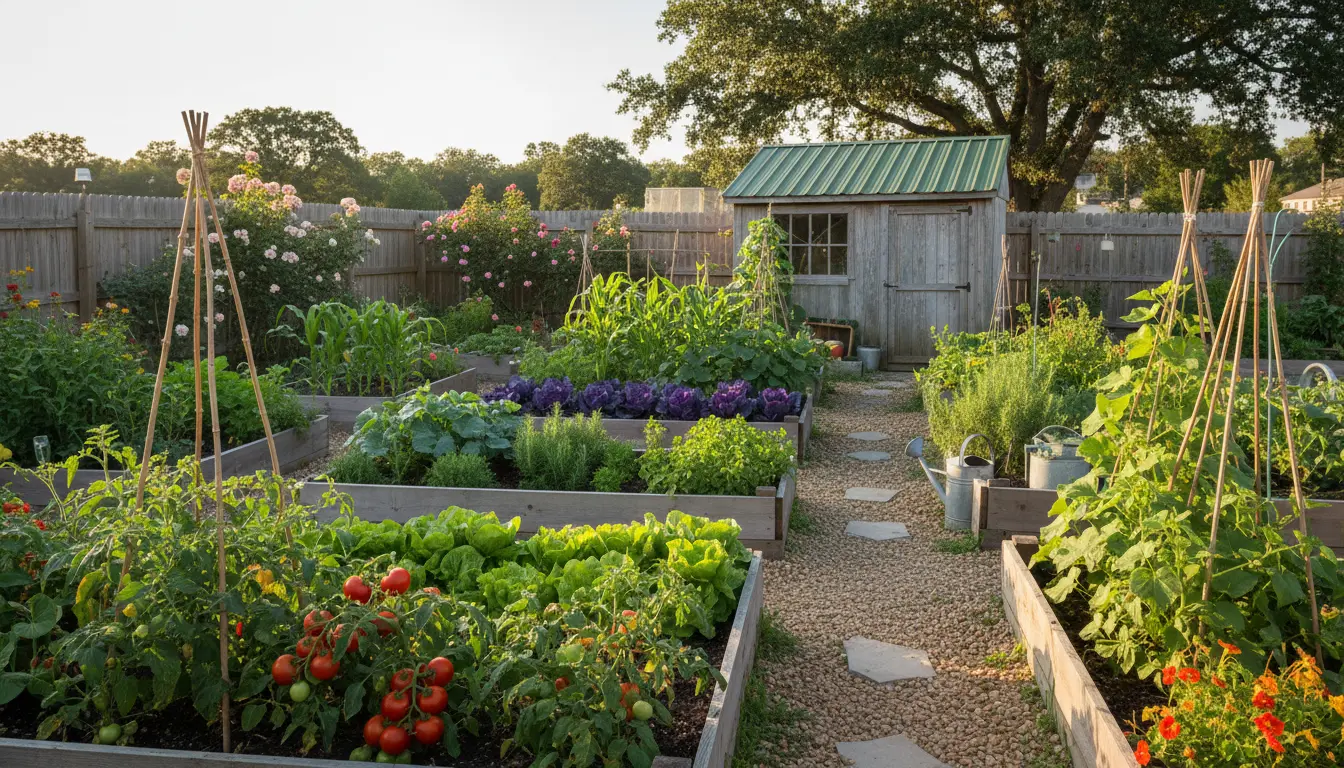
Starting a small vegetable garden is practical and rewarding. This guide gives clear steps you can follow whether you have a backyard patch, balcony, or a few containers.
Plan Your Small Vegetable Garden
Good planning saves time and improves yields. Begin by assessing light, space, and how much time you can commit each week.
Choose the right location for a small vegetable garden
Most vegetables need 6–8 hours of direct sun each day. Look for a spot with good drainage and easy water access.
Consider proximity to your door so routine tasks like watering and harvesting are convenient. Even a sunny balcony or windowsill can work with containers.
Pick suitable vegetables for small spaces
Choose crops that match your space and season. Fast-growing and compact varieties give quick rewards.
- Leafy greens: lettuce, spinach, Swiss chard
- Root crops: radishes, baby carrots
- Compact fruiting plants: cherry tomatoes, patio peppers
- Herbs: basil, parsley, cilantro
Prepare Soil and Beds for a Small Vegetable Garden
Healthy soil is the foundation of a productive small vegetable garden. Test and improve soil before planting for better results.
Soil testing and improvement
Get a simple soil test kit to check pH and basic nutrients. Most vegetables prefer slightly acidic to neutral soil (pH 6.0–7.0).
Mix compost and well-aged organic matter into the top 6–12 inches to improve structure and fertility. Avoid compacted soil; loosen it gently when needed.
Raised beds vs in-ground for small vegetable gardens
Raised beds warm faster and offer better drainage, which is useful in small gardens. They also reduce bending and make soil control easier.
In-ground beds work if you already have good soil and space. Containers are a great choice for balconies or patios and can be moved when necessary.
Planting and Care in a Small Vegetable Garden
Planting at the right time and following basic care routines keeps plants healthy. Use compact planting methods to maximize yields.
Planting tips for a small vegetable garden
Sow seeds at the recommended depth and spacing on the seed packet. For tight spaces, try succession planting to get multiple harvests per season.
Use vertical supports like cages, trellises, or stakes to free up ground space for vining plants. Interplant herbs or quick greens between slower crops.
Watering, mulching, and fertilizing a small vegetable garden
Water deeply and less frequently to encourage strong roots. Aim for consistent moisture rather than daily shallow watering.
- Mulch with straw or wood chips to retain moisture and suppress weeds.
- Use a balanced organic fertilizer at planting and follow up mid-season if needed.
- Consider drip irrigation or soaker hoses for efficient watering in small spaces.
Pest control and crop rotation in a small vegetable garden
Monitor plants weekly for pests and disease. Handpick larger pests and use row covers for early protection against insects.
Rotate crops each season to reduce disease and pest buildup. In small gardens, move families of plants (e.g., brassicas, nightshades) to different beds or containers.
Harvesting and Aftercare for a Small Vegetable Garden
Harvest when vegetables reach prime size for the best flavor and to encourage continued production. Check plants every few days during peak season.
After harvest, clear spent plants and add green matter to compost. Amend soil lightly before the next planting to maintain fertility.
Practical Checklist for a Small Vegetable Garden
- Assess sunlight and space
- Choose 4–6 compatible crops for first season
- Prepare soil or fill raised beds/containers with quality mix
- Plant at proper depth and use supports for vining crops
- Water deeply, mulch, and monitor pests weekly
Carrots and radishes can be harvested as early as 3–4 weeks in cool weather. Quick crops like these let you try multiple varieties in a small garden.
Case Study: A Small Balcony Vegetable Garden
Emma had a 6-foot balcony and wanted fresh greens. She used three 12-inch containers and one shallow trough to grow spinach, lettuce, cherry tomatoes, and basil.
She positioned containers for maximum sun, added compost to commercial potting mix, and installed a small drip line. In one season she harvested weekly greens and a steady supply of tomatoes.
Lessons learned: choose compact varieties, use vertical space, and water consistently. Emma converted limited space into a productive food source.
Final Tips for Starting a Small Vegetable Garden
Start small and expand as you gain experience. Focus on a few reliable crops to build your confidence and a steady supply of produce.
Keep a simple journal with planting dates, varieties, and harvest notes. Small adjustments each season lead to better results and less waste.
With planning and routine care, a small vegetable garden can supply fresh food, save money, and provide satisfying hands-on learning.