
Why choose a raised bed garden
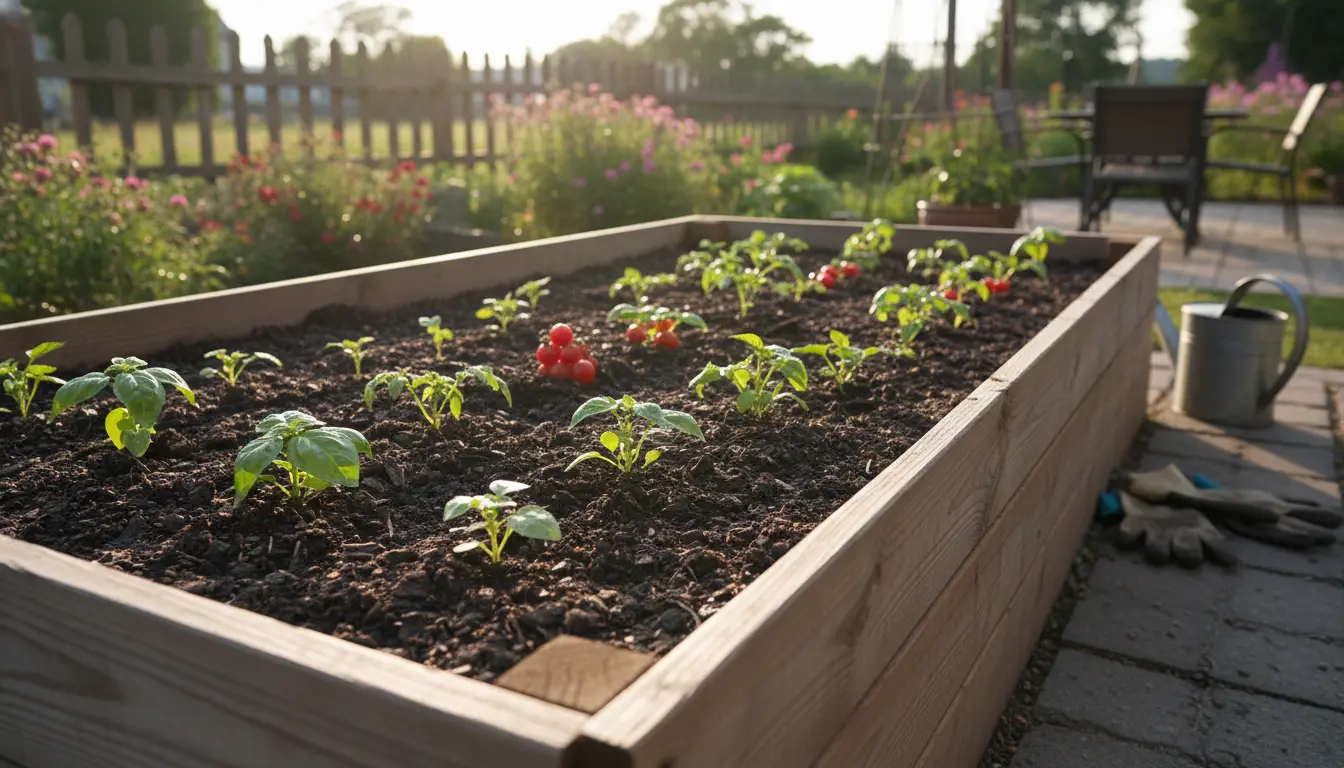
Raised bed gardens are an efficient, space-saving way to grow vegetables with better drainage and fewer soil compaction problems. They warm faster in spring and let you control soil quality from the start.
This guide gives practical steps to plan, build, plant, and maintain a productive raised bed garden at home.
Plan your raised bed garden
Start with location and size. Choose a spot that gets at least 6 hours of sun for most vegetables and is near a water source. Consider convenient access for planting and harvesting.
Standard raised bed dimensions make care easier: 4 feet wide lets you reach the center from either side without stepping in the bed. Length can vary; common sizes are 4×8 or 4×10 feet.
Materials and tools for raised bed garden
Select durable materials like untreated cedar, galvanised steel, or rot-resistant composite boards. Avoid treated lumber that can leach chemicals into the soil.
- Wood boards or metal panels
- Galvanised screws or brackets
- Landscape fabric (optional)
- Soil mix components and a shovel
- Level and measuring tape
Build the raised bed
Lay out the bed footprint and check for level. Assemble the frame on the ground and then place it in position. If your ground has grass or weeds, remove sod or lay landscape fabric to suppress regrowth.
Bed height matters: 6–12 inches works for shallow-rooted crops, while 12–18 inches is better for most vegetables and reduces bending while gardening.
Soil mix for a productive raised bed garden
Good soil is the most important factor. Use a light, fertile mix that holds moisture but drains well. A common recipe is 50% topsoil or screened garden soil, 30% compost, and 20% aeration material like coconut coir or perlite.
Alternatively, buy a ready-mix labeled for raised beds or vegetable gardens. Aim for a slightly acidic to neutral pH (6.0–7.0).
What to plant in a raised bed garden
Choose crops suited to your season and sunlight. Mix fast-growing crops with slower ones to get continuous harvests.
- Leafy greens: lettuce, spinach, Swiss chard
- Root crops: carrots, beets, radishes
- Fruiting plants: tomatoes, peppers, bush beans (watch spacing)
- Herbs: basil, parsley, cilantro
Use succession planting: sow quick crops between rows of slower-growing vegetables to maximize production.
Planting layout and spacing
Plan for proper spacing to avoid overcrowding and disease. Use square-foot gardening or traditional rows. For example, in a 4×4 foot bed you can fit:
- 16 head lettuces (4 rows of 4)
- 9 bush tomato plants with cages (3×3 grid)
- 4–6 pepper plants depending on variety
Raised beds can extend your growing season by warming soil faster in spring and helping roots drain in cool, wet weather.
Watering and feeding your raised bed garden
Raised beds drain faster and may dry out sooner, so consistent watering is important. Aim to keep soil evenly moist but not waterlogged.
Consider drip irrigation or soaker hoses to deliver water directly to roots and reduce evaporation.
- Water deeply 1–2 times per week depending on weather
- Add compost or balanced organic fertilizer at planting and mid-season
- Mulch with straw or leaf mulch to retain moisture and suppress weeds
Pest control and disease prevention
Good practices reduce pest and disease problems: rotate crops, avoid overcrowding, and remove diseased plants promptly. Use row covers to protect seedlings from insects.
Encourage beneficial insects by planting flowers like calendula, borage, or alyssum near your vegetables.
Common issues and quick fixes
- Slugs: handpick, use traps, or create copper barriers
- Aphids: blast with water or use insecticidal soap
- Powdery mildew: improve air circulation and avoid overhead watering
Seasonal care and maintenance
Monitor beds regularly for moisture, nutrient needs, and pests. Replenish compost annually and top up soil as needed.
In fall, remove spent plants, add a layer of compost, and consider planting a winter cover crop if you won’t garden through winter.
Small case study: 4×8 raised bed garden
Jane, an apartment-dwelling gardener, built a 4×8 raised bed on a small yard area. She used untreated cedar, filled it with a mix of screened topsoil, compost, and coir, and planted tomatoes, basil, lettuce, and carrots.
By using drip irrigation and succession planting, Jane harvested enough salad greens weekly and two heavy tomato produce weeks in summer. Her bed required seasonal compost top-ups and minimal pest control thanks to companion planting.
Quick checklist before you start your raised bed garden
- Site: 6+ hours sun and water access
- Size: 4 feet wide for easy reach
- Materials: durable, untreated wood or metal
- Soil: fertile, well-draining raised bed mix
- Plan: crop layout, watering system, and maintenance schedule
Final tips for a successful raised bed garden
Start small to learn spacing, watering, and crop timing. Keep simple records of what you planted, when you harvested, and any problems you saw.
With basic planning and seasonal care, a raised bed garden can deliver reliable, healthy vegetables even in limited space.