
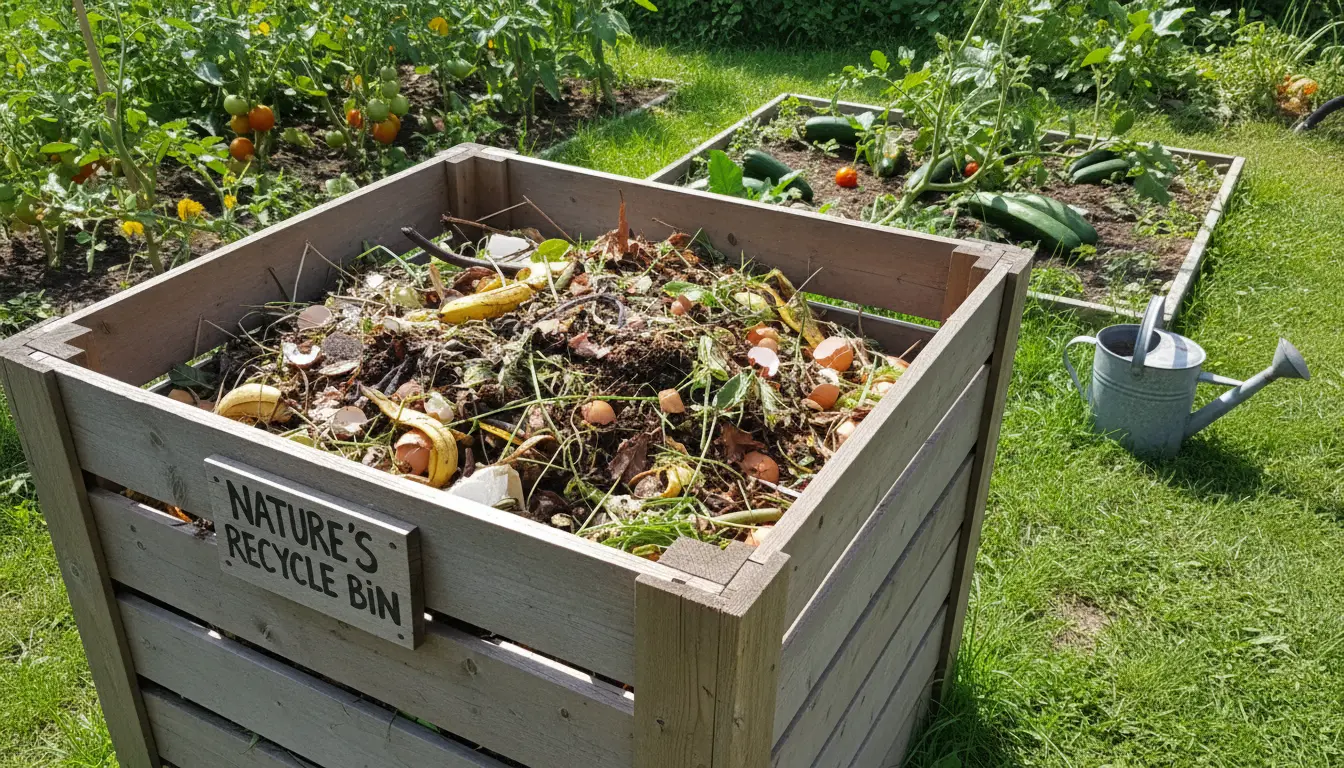
Home Composting Basics
Home composting turns kitchen scraps and yard waste into nutrient-rich compost for gardens and potted plants. It reduces landfill waste and improves soil structure.
Before starting, understand the two main approaches: hot composting for faster breakdown and cold composting for low-effort, slower results. Choose the one that fits your time, space, and energy.
How to Start Home Composting
Begin by choosing a method and a container. Options include open piles, tumblers, bins, or simple heaps in a corner of the yard. Tumblers speed mixing and deter pests, while bins are low-cost and discrete.
Place your composting area on soil or grass to allow worms and microbes to enter. Provide some shade and moderate moisture to keep the process active without drying out the pile.
Materials to Add
Successful home composting balances carbon-rich and nitrogen-rich materials. Adding both types keeps decomposition steady.
- Carbon (browns): dry leaves, straw, shredded paper, cardboard.
- Nitrogen (greens): vegetable scraps, coffee grounds, fresh grass clippings.
- Avoid: meat, dairy, oily foods, diseased plants, and pet waste to prevent odors and pests.
Layering and Ratios
Follow a simple rule of thumb: aim for about 25–30 parts carbon to 1 part nitrogen by weight, commonly expressed as a 3:1 or 4:1 mix of browns to greens by volume.
Layer materials in 2–4 inch layers. Add a handful of garden soil or finished compost to introduce microbes and speed the process.
Maintaining Your Compost
Maintain the pile by managing moisture, aeration, and temperature. These three factors determine decomposition speed and odor control.
Moisture Control
Compost should feel like a wrung-out sponge: damp but not dripping. Add water during dry spells and cover or add browns if the pile becomes too wet.
Aeration and Turning
Turning introduces oxygen that boosts microbial activity. For hot composting, turn the pile every 4–7 days. For cold composting, turning every few weeks is sufficient.
Temperature Monitoring
Hot piles reach 130–160°F (55–70°C), killing weed seeds and pathogens. If you want rapid results, aim for higher temps by adding more greens and turning often.
Common Problems and Quick Fixes
Compost can develop issues, but most are easy to correct with small changes.
- Bad odor: Add more browns and turn to add air.
- Pests: Secure the bin, bury food scraps, and avoid meat/dairy.
- Slow breakdown: Chop materials smaller, add moisture, or add nitrogen-rich greens.
- Too dry: Water lightly and mix to distribute moisture.
Using Finished Compost
Finished compost is dark, crumbly, and earthy-smelling. Use it as a soil amendment, top dressing, or potting mix component.
Incorporate 1–3 inches into garden beds or mix 10–30% into potting soil for container plants. Compost improves water retention and nutrient availability.
Composting can reduce household waste weight by up to 30 percent and cut methane emissions from landfills. A small home bin can divert hundreds of pounds of organic waste per year.
Small Case Study: Urban Balcony Composting
Sara, an apartment dweller, started home composting in a 20-liter tumbler on her balcony. She used a 3:1 mix of shredded cardboard and vegetable scraps, turning weekly and keeping the tumbler shaded.
In six months she produced about 25 liters of compost. She mixed it into potting soil for herbs and tomatoes, which showed healthier growth and less need for store-bought fertilizer.
Practical Tips and Tools for Home Composting
Gather basic tools to make composting easier and cleaner. These items improve handling, monitoring, and final quality.
- Compost thermometer for temperature checks.
- Tumbler or aeration fork to turn and mix materials.
- Kitchen container with a tight lid for daily scraps.
- Shredder or scissors to reduce particle size for faster decomposition.
Seasonal Considerations
In winter, decomposition slows. Insulate the bin with straw or add more greens and cover to retain heat. In hot summers, prevent drying by shading and watering when needed.
Start a Simple Weekly Routine
Consistency matters more than perfection. Follow a basic routine to keep your home composting system effective.
- Collect kitchen scraps daily in a small lidded pail.
- Empty into the compost bin 2–3 times a week and add a layer of browns.
- Turn the pile or spin the tumbler weekly for faster results.
- Monitor moisture and temperature, adjusting as needed.
With small, regular actions you can convert household organic waste into a valuable resource for your garden. Home composting is practical, low-cost, and scalable to any living situation.