
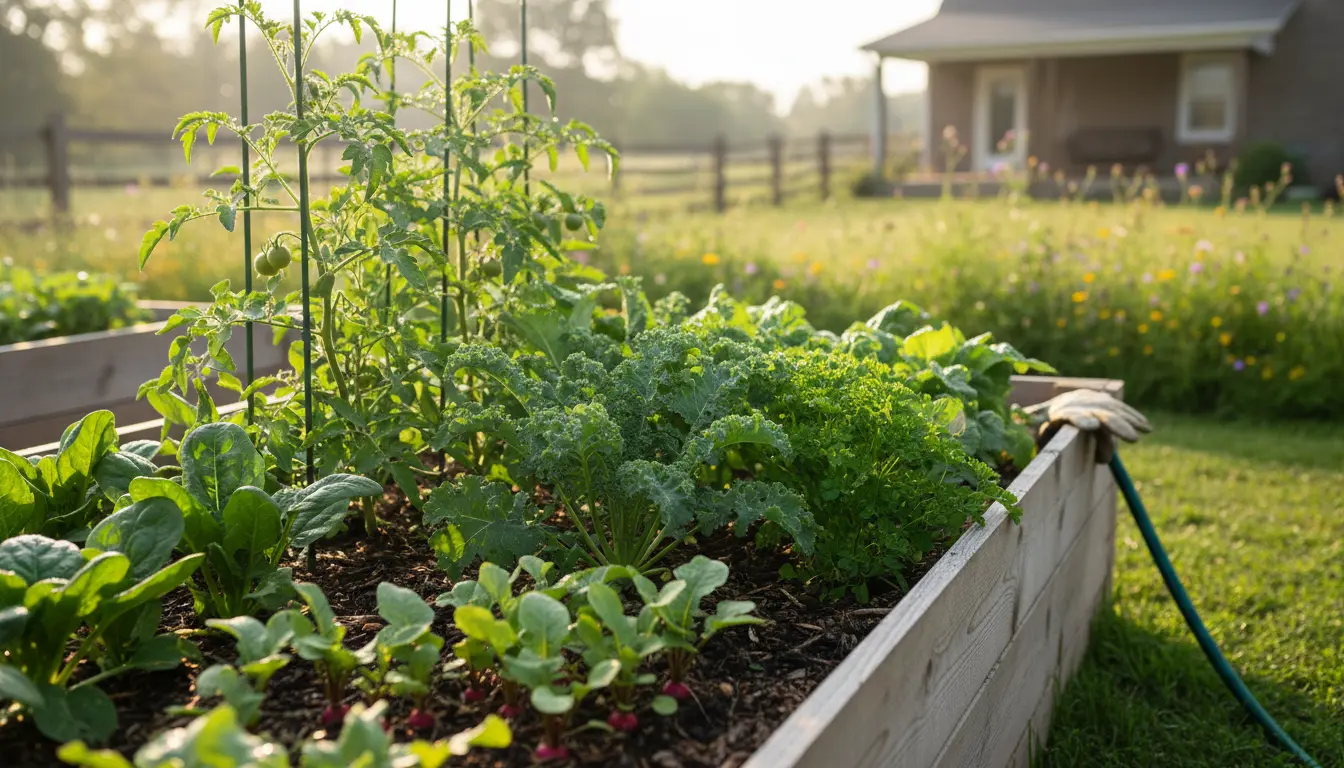
Starting a vegetable garden is a practical way to grow fresh food, save money, and enjoy time outside. This guide explains how to start a vegetable garden with clear steps, tools, and simple techniques for beginners.
How to Start a Vegetable Garden: Quick Overview
Before you dig, understand the basics: pick a sunny spot, choose easy crops, and prepare good soil. Planning lowers mistakes and improves yields.
Keep your first garden small and manageable. A single raised bed or a few containers can teach you more than an overambitious plot.
How to Start a Vegetable Garden Step by Step
Step 1: Choose Location and Assess Sunlight
Most vegetables need 6 to 8 hours of direct sun. Observe the yard for a few days to find the sunniest area.
Also note wind exposure and drainage. Avoid low spots where water pools after rain.
Step 2: Decide on Beds or Containers
Options include in-ground rows, raised beds, and containers. Each has pros and cons:
- Raised beds: better soil control and drainage, easier on the back.
- Containers: good for patios and small spaces, but need more frequent watering.
- In-ground: cheaper for large areas but may have poor native soil and weeds.
Step 3: Test and Improve Soil
Healthy soil is the foundation of a productive garden. Test pH and nutrient levels with a home kit or local extension service.
Improve soil with organic matter such as compost and aged manure. Aim for a loose, crumbly soil that holds moisture but drains well.
Step 4: Choose Vegetables and Timing
Start with easy, fast crops: lettuce, radishes, bush beans, peas, and cherry tomatoes. Check your local frost dates to schedule planting.
Stagger plantings for a continuous harvest. Use seeds for most crops and transplants for tomatoes, peppers, and eggplants if you want an early start.
Step 5: Planting and Spacing
Follow seed packet or plant tag spacing instructions to avoid overcrowding. Overcrowding reduces airflow and increases disease risk.
Mulch around plants with straw or shredded leaves to conserve moisture and suppress weeds.
Step 6: Watering and Fertilizing
Water deeply and less often to encourage strong roots. Most gardens need about 1 inch of water per week, adjusted for rain.
Side-dress with compost or a balanced organic fertilizer midseason if plants show slow growth or yellowing leaves.
Step 7: Pest and Disease Management
Monitor plants weekly. Remove damaged leaves and handpick large pests like caterpillars.
Use row covers, crop rotation, and companion planting to minimize problems. Choose resistant varieties when available.
Maintenance and Harvesting for Beginners
Maintenance is mostly weeding, monitoring moisture, and occasional feeding. Keep a simple schedule: water in the morning, check for pests twice a week, and harvest regularly.
Harvesting at the right time improves flavor and encourages continued production. Pick lettuce when leaves are young and beans when pods are firm but not bulging.
Planting marigolds near vegetables can help deter some soil nematodes and attract beneficial insects. Many companion plants provide natural pest control and pollinator support.
Small Real-World Example: A Beginner Raised Bed
Case study: Sarah, a beginner in Portland, built a 4×8 raised bed in spring. She filled it with a 60:40 mix of topsoil and compost, planted lettuce, radishes, bush beans, and one tomato plant.
Results: By fall she harvested about 35 heads of lettuce, 10 pounds of beans, and five pounds of tomatoes. Initial cost was around $120 for lumber, soil, and seeds. She spent 1–2 hours per week on maintenance.
Takeaways: Start small, amend soil with quality compost, and choose high-yield, low-maintenance crops for early success.
Tools, Seeds, and Materials Checklist
- Basic tools: spade, hand trowel, gloves, watering can or hose with nozzle.
- Soil amendments: compost, aged manure, mulch.
- Seeds and transplants: starter pack of easy vegetables.
- Optional: raised bed kits, row covers, trellises for vining crops.
Quick Tips to Succeed
- Keep a garden journal: note planting dates, varieties, and problems to learn each season.
- Use succession planting for continuous harvests.
- Start seeds indoors for a head start on the season if your area has a short growing period.
- Ask local gardeners or extension services about varieties that perform well in your climate.
Growing your first vegetable garden is a step-by-step process that rewards planning and regular care. Use the checklist and simple techniques above to get started this season. With small, steady investments of time and attention you can build a productive, enjoyable garden.