
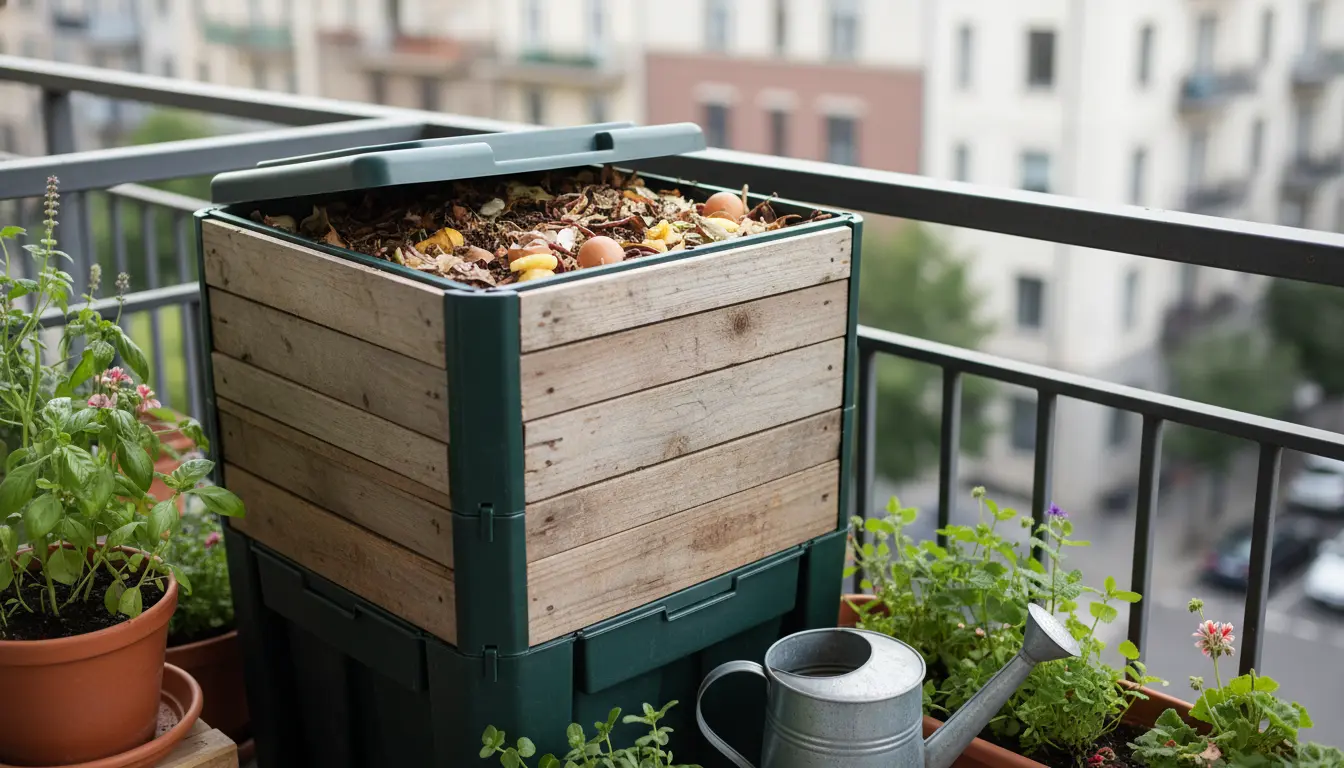
Why Home Composting for Beginners Matters
Home composting reduces kitchen and yard waste while producing nutrient-rich soil for plants. It is a simple, low-cost way to close the loop on organic waste.
This guide gives practical, step-by-step instructions, common mistakes to avoid, and a short case study to show how it works in a real home setting.
Basic Principles of Home Composting for Beginners
Compost works when green materials (nitrogen) and brown materials (carbon) break down together. Microbes need moisture, oxygen, and the right mix to do the job.
Keeping a good balance and turning the pile regularly speeds decomposition and prevents odors.
Green and Brown Materials
- Green: vegetable scraps, coffee grounds, grass clippings (adds nitrogen).
- Brown: dry leaves, shredded cardboard, straw (adds carbon).
- Aim for a mix close to 2 parts brown to 1 part green by volume in many systems.
How to Start Home Composting for Beginners
Choose the right system for your space: a simple bin, tumbler, or a small pile. Beginners often start with a covered bin to keep pests away and retain heat.
Place your compost bin on bare soil or a balcony tray with drainage. This allows worms and beneficial organisms to access the pile.
Step-by-step Setup
- Pick a location with partial sun and convenient access.
- Add a 2–3 inch layer of coarse brown material for drainage.
- Alternate layers: add some greens then cover with browns.
- Keep the pile moist like a wrung-out sponge; add water only if dry.
- Turn the pile every 1–2 weeks to add oxygen and speed composting.
What to Compost and What to Avoid
Knowing what to add keeps the process healthy. Many materials are safe and common in households.
Safe to Compost
- Fruit and vegetable scraps
- Coffee grounds and filters
- Tea bags (without plastic)
- Eggshells, shredded paper, and yard trimmings
Avoid or Use with Caution
- Meat, dairy, and oily foods (attract pests)
- Diseased plant material (may carry pathogens)
- Large branches (chop small first)
- Pet waste from carnivores (contains harmful bacteria)
Troubleshooting for Home Composting for Beginners
Most problems come from imbalance, moisture issues, or lack of oxygen. Addressing these quickly restores healthy decomposition.
Common Issues and Fixes
- Bad smell: add more brown material and turn the pile to increase air flow.
- Too dry: add water and more greens to restore moisture.
- Slow decomposition: chop materials into smaller pieces and turn more often.
- Pests: cover food scraps with brown material and use a closed bin if necessary.
Your compost pile can reach temperatures of 130 to 160 F during active decomposition. Those heat levels help kill weed seeds and some pathogens when the pile is large enough.
How to Use Finished Compost
Finished compost is dark, crumbly, and smells earthy. Use it as a soil amendment, potting mix ingredient, or top dressing for lawns and garden beds.
Mix 1 part finished compost with 2–3 parts soil for container plants. For garden beds, work a 1–3 inch layer into the topsoil.
Small Real-World Example
Case study: A two-person apartment household used a 20-liter kitchen caddy and a covered compost bin on a small balcony. They added all vegetable scraps, coffee grounds, and shredded paper, turning the outdoor bin every 10 days.
After six months they produced about 40 liters of finished compost. They mixed small amounts into potting soil for herbs and tomatoes, noting healthier leaves and stronger growth the following season.
Tips and Best Practices
- Chop or shred materials when possible to speed breakdown.
- Keep a small caddy in the kitchen to collect scraps and reduce trips outside.
- Record simple notes: what you added and when. This helps diagnose issues later.
- Use compost in moderation for young plants; too much can alter nutrient balance.
Final Checklist for Home Composting for Beginners
- Choose the right bin for your space and pests.
- Balance greens and browns and maintain moisture.
- Turn regularly and monitor temperature and smell.
- Harvest finished compost and put it to work in your garden.
Home composting is a practical skill with immediate benefits for your garden and the planet. Start small, observe the process, and adjust as you learn. With basic care, even beginners can make rich compost in a few months.