
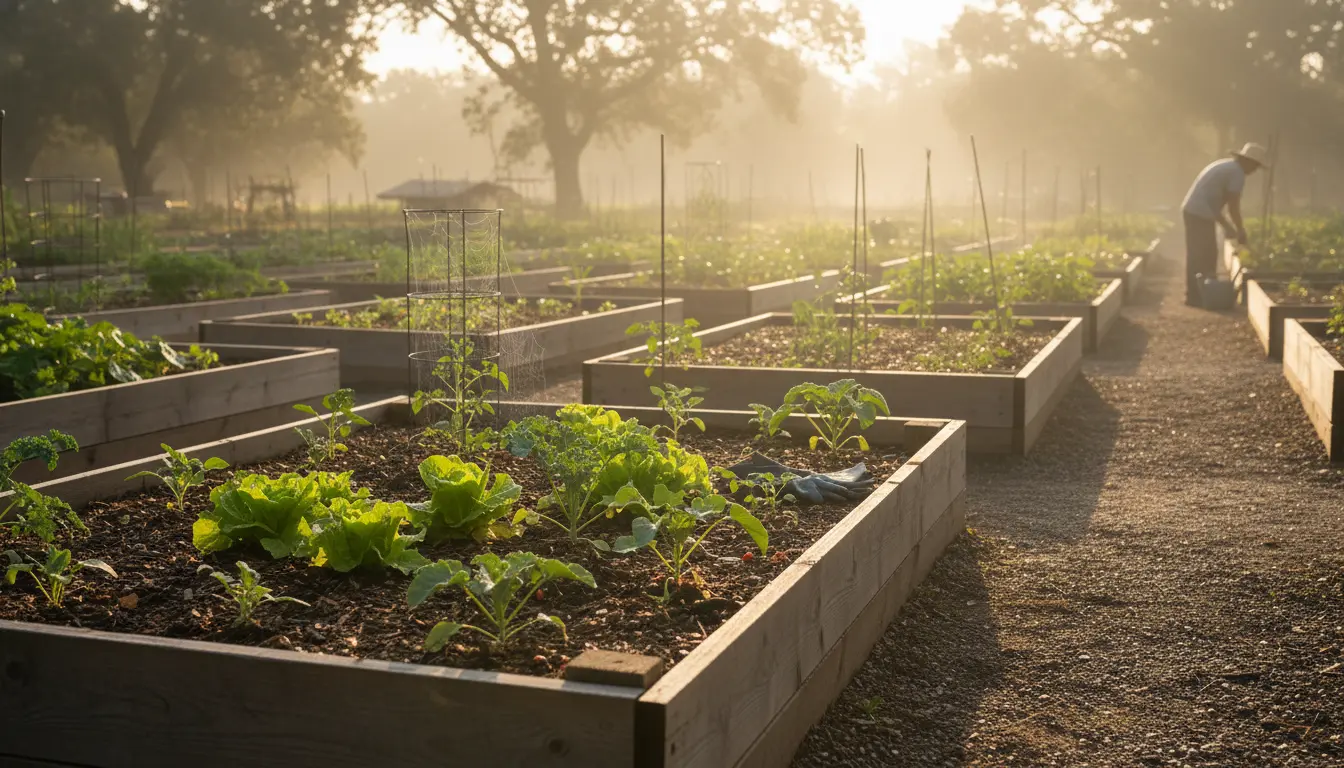
Overview of a Raised Bed Vegetable Garden
A raised bed vegetable garden is an elevated planting area that gives better control over soil, drainage, and access. Raised beds can be built from wood, composite, stone, or metal and work in small yards, balconies, or community plots.
This guide explains how to plan, build, plant, and maintain a raised bed vegetable garden for reliable yields and easier care.
Plan the Location for Your Raised Bed Vegetable Garden
Choose a spot that gets at least six hours of direct sun for most vegetables. Good sunlight is the single most important factor for a productive raised bed vegetable garden.
Consider access to water, level ground, and protection from strong winds. Place beds near a hose or irrigation source to simplify regular watering.
Sizing and Orientation for Raised Bed Vegetable Garden
Common bed sizes are 4 feet wide by 8 feet long. Four feet lets you reach the center from either side without stepping into the bed. Depth of 12 to 18 inches is enough for most vegetables.
Orient longer sides north-south if possible to reduce shading from taller plants. Adjust size to fit your space and ability to maintain the beds.
Build the Bed and Prepare Soil
Use rot-resistant wood like cedar, metal, or stone for the frame. Ensure edges are smooth and corners are secure to hold soil in place.
Line the bottom with cardboard or landscape fabric if weeds are a concern, but allow for drainage. Avoid using pressure-treated wood that may leach chemicals into edible crops.
Soil Mix for a Raised Bed Vegetable Garden
Fill beds with a well-draining, nutrient-rich mix. A common ratio is 50% topsoil or screened garden soil, 30% compost, and 20% coarse materials like perlite or decomposed granite for drainage.
- Compost supplies nutrients and improves water retention.
- Topsoil provides bulk but should be screened and free of contaminants.
- Mix materials thoroughly to avoid layers that trap water.
Planting and Crop Selection
Begin with easy, high-yield vegetables like tomatoes, peppers, lettuce, radishes, beans, and herbs. Group plants by water needs and height to reduce competition.
Use succession planting for continuous harvests. For example, follow early spring radishes with summer beans and then fall greens.
Layout Tips for Raised Bed Vegetable Garden
Plant taller crops on the north side so they don’t shade lower plants. Use trellises for vining crops like peas and cucumbers to save space and improve airflow.
Interplant fast-maturing crops with slower ones. For example, plant lettuce between tomato seedlings so lettuce can be harvested before the tomatoes need the space.
Watering and Fertilizing a Raised Bed Vegetable Garden
Water deeply and less frequently to encourage strong root growth. Early morning is the best time to water to reduce disease risk.
Consider installing a drip irrigation line or soaker hoses to deliver consistent moisture and reduce evaporation.
Feeding Schedule
Apply a balanced organic fertilizer at planting and side-dress with compost or a slow-release fertilizer mid-season. Leafy crops benefit from higher nitrogen while fruiting crops need more potassium and phosphorus.
Raised beds warm faster in spring than in-ground rows, allowing earlier planting and potentially a longer growing season.
Pest, Weed, and Disease Management
Start with clean soil and healthy transplants to reduce pest and disease pressure. Use row covers to protect young plants from insects and birds.
Mulch around plants to suppress weeds and retain soil moisture. Regularly inspect plants and remove affected leaves to limit disease spread.
Integrated Pest Management
Encourage beneficial insects by planting companion flowers like nasturtiums and marigolds. Handpick larger pests such as slugs or use traps where appropriate.
Seasonal Care and Crop Rotation
Rotate plant families to different beds each season to reduce the buildup of soil-borne diseases and pests. Maintain records of what you plant where to plan rotations effectively.
At season end, remove spent plants and add a thick layer of compost to refresh soil for the next crop cycle.
Case Study: Small Backyard Raised Bed Success
Sarah, a homeowner with a 10-by-10 foot yard, built two 4×8 raised beds filled with a mix of screened topsoil, compost, and perlite. She oriented the beds east-west and installed a drip line connected to a timer.
In the first season she grew tomatoes, basil, lettuce, and bush beans. Using succession planting and trellises, Sarah harvested fresh salad greens through spring and tomatoes in late summer. Her beds produced more than she expected and required less weeding than nearby in-ground plots.
Simple Checklist to Start a Raised Bed Vegetable Garden
- Choose a sunny, accessible location.
- Build a bed 4 feet wide and 12–18 inches deep.
- Fill with a balanced soil-compost-drainage mix.
- Select crops suited to your climate and season.
- Install drip irrigation or water deeply and consistently.
- Mulch, monitor pests, and rotate crops each year.
Final Tips for a Productive Raised Bed Vegetable Garden
Start small and expand as you gain experience. Keep notes on planting dates, varieties, and yields to improve future seasons.
Raised beds make gardening more accessible and productive. With proper planning and simple care, a raised bed vegetable garden can provide fresh produce through most of the year.