
Why Home Composting for Beginners Matters
Home composting reduces kitchen and yard waste while producing rich soil for gardens. For beginners, it is a low-cost way to lower trash output and improve plant health.
Basic Principles of Home Composting for Beginners
Compost is a controlled decomposition process that turns organic material into a stable, nutrient-rich product. The main needs are carbon, nitrogen, moisture, air, and time.
Understand Carbon and Nitrogen
Carbon-rich materials are often dry and brown, such as leaves, straw, and cardboard. Nitrogen-rich materials are green and moist, like vegetable scraps, coffee grounds, and fresh grass clippings.
Balance, Moisture, and Air
A good compost mix is roughly 25–30 parts carbon to 1 part nitrogen by weight, but visible balance works well: layers of brown and green. Keep the pile as damp as a wrung-out sponge and turn it occasionally to supply oxygen.
Choosing a Method for Home Composting for Beginners
Select a method that matches your space, time, and output. Popular options include open piles, tumblers, and worm bins.
Open Pile
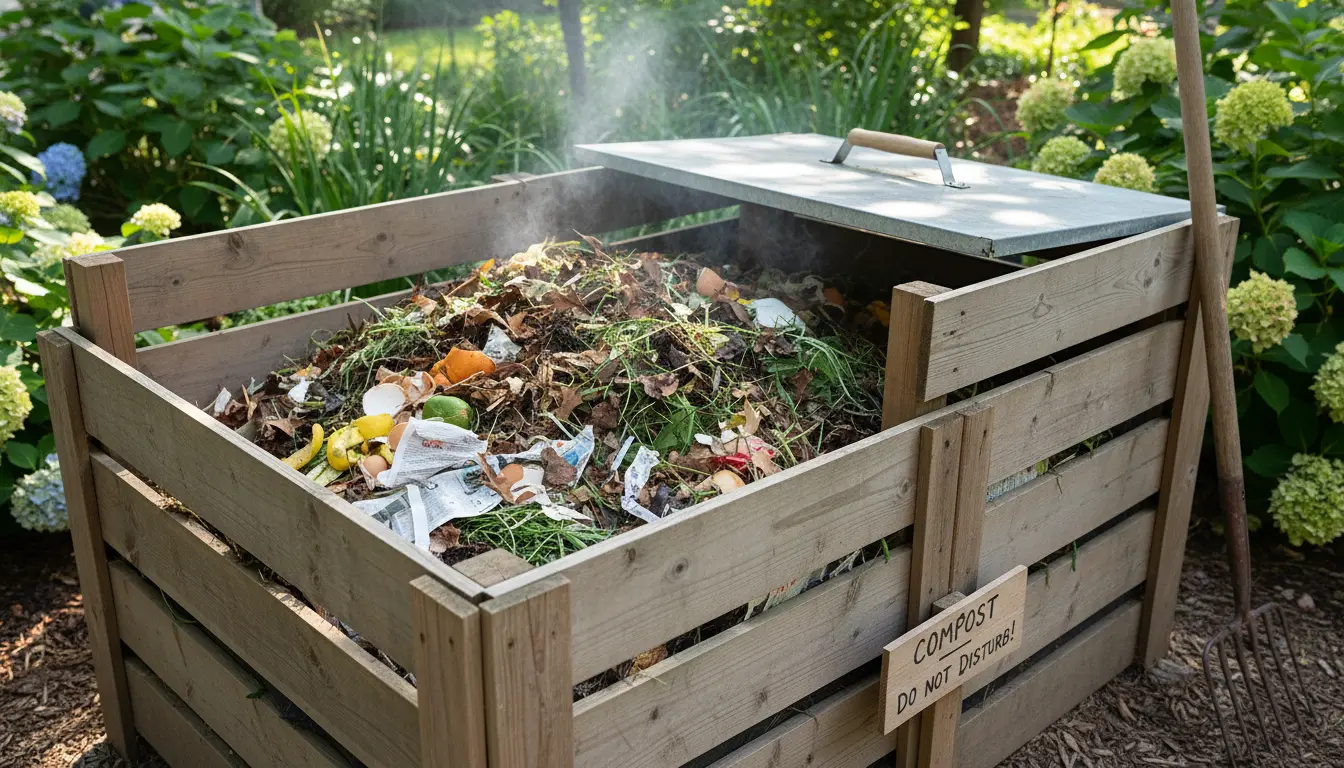
An open pile works well in gardens and accepts large volumes. It requires turning with a pitchfork and benefits from layering with browns and greens.
Compost Tumblers and Bins
Tumblers speed up mixing and reduce pests, making them good for small yards. Solid-sided bins keep compost tidy and can be purchased or DIY-built from pallets or wire mesh.
Vermicomposting (Worm Bins)
Vermicomposting uses red worms to break down kitchen scraps quickly and is ideal for indoor or small-space setups. It produces nutrient-dense worm castings suitable for potted plants.
Step-by-Step Setup for Home Composting for Beginners
Follow these practical steps to start composting at home. The instructions work for any chosen method and emphasize simple, repeatable actions.
- Pick a location: level, shaded or partly shaded, with good drainage.
- Choose a container or set up an open pile.
- Start with a 4–6 inch layer of brown material to aid airflow and drainage.
- Add green material in smaller layers; chop large pieces to speed decomposition.
- Maintain moisture: water lightly during dry spells; avoid waterlogging.
- Turn the pile every 1–2 weeks to introduce oxygen and distribute moisture.
- Wait 2–6 months for finished compost; it should be crumbly and smell earthy.
Troubleshooting Common Problems
Beginners often encounter odors, pests, or slow decomposition. These are usually easy to fix with simple adjustments.
- Bad odor: add more browns, turn the pile, and check moisture levels. Avoid meat or oily foods.
- Pests: use a closed bin, bury food scraps under browns, or cover with a lid or wire mesh.
- Slow composting: chop materials smaller, add some nitrogen (grass clippings), and turn more often.
Using Finished Compost
Finished compost looks dark, crumbly, and has an earthy smell. Use it as a soil amendment, top dressing, or potting mix component.
- Mix 1–3 inches into garden beds before planting.
- Top-dress lawns with a thin layer to improve soil structure.
- Blend with potting soil to improve water retention and nutrients.
Simple Real-World Example: Case Study
Case study: Maria, a small apartment gardener, started vermicomposting in a 10-liter worm bin on her balcony. She collected only fruit and vegetable scraps, coffee grounds, and shredded paper.
Within three months she produced enough worm castings to repot five houseplants and reduced her weekly kitchen trash by half. Regular feeding, a covered bin, and maintaining moderate moisture were key to success.
Quick Tips for Home Composting for Beginners
- Chop or shred large items to speed decomposition.
- Avoid meat, dairy, oily foods, and diseased plants.
- Keep a small kitchen caddy for scraps and empty it daily.
- Use fallen leaves in autumn to build brown material reserves.
- Label bins and keep a simple log of turning and additions to track progress.
Final Checklist Before You Start
Before you begin, confirm you have a suitable spot, a basic bin or pile, a supply of browns and greens, and a routine for turning. Start small and adjust as you learn how materials decompose in your climate.
Home composting for beginners is achievable with minimal effort and delivers long-term benefits for soil health and household waste reduction. Begin with the steps above and refine your system based on results.