
Why Remote Work Productivity Matters
Remote work productivity affects individual output and team outcomes. Employers and freelancers both need reliable practices to maintain consistent results.
This guide gives practical steps you can use to improve focus, reduce context switching, and deliver work on time.
Remote Work Productivity Basics
Start with a clear daily structure to make the most of your work hours. A predictable routine reduces decision fatigue and makes deep work possible.
Set measurable goals for each day and week so progress is visible and motivating.
Set Clear Work Hours
Decide on start and end times and share them with colleagues. Consistency helps your brain shift into work mode and prevents burnout.
Use calendar blocks for focused work and mark them as busy to avoid interruptions.
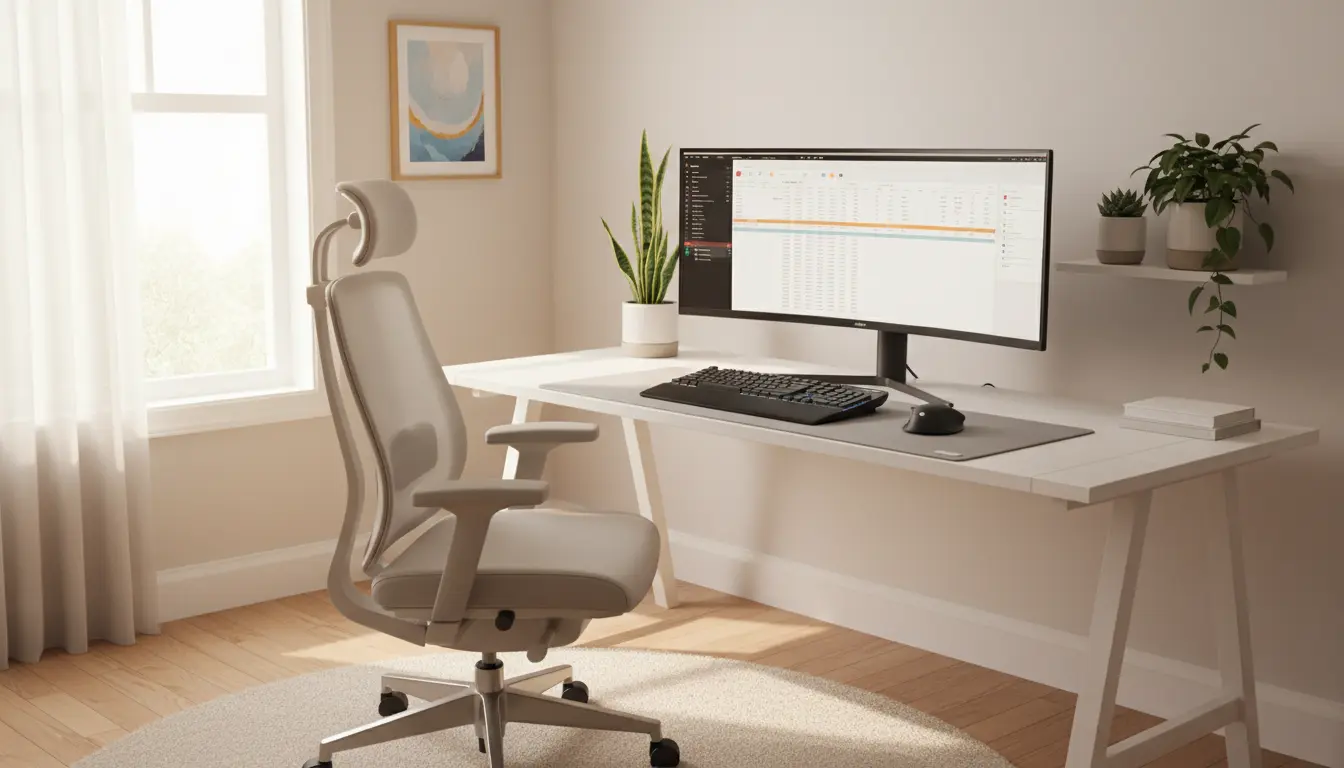
Design a Dedicated Workspace
Choose a quiet, well-lit spot for work and keep it free of non-work clutter. The physical separation of work and leisure supports concentration.
Invest in an ergonomic chair and a monitor at eye level to reduce physical strain during long sessions.
Practical Techniques to Improve Remote Work Productivity
Combine time management methods, task organization, and micro-habits to create a workflow that scales.
Apply these techniques one at a time and measure their impact.
Use Time Blocking
Divide your day into blocks dedicated to specific task types: deep work, meetings, admin, and breaks. Time blocking prevents task-switching penalties.
- Morning: Deep work for high-focus tasks.
- Midday: Meetings and collaboration.
- Afternoon: Low-focus tasks and wrap-up.
Adopt the Two-Minute Rule
If a task takes two minutes or less, do it immediately. This reduces the build-up of tiny tasks that break concentration later.
Use a short checklist to capture tasks that need more time and schedule them into blocks.
Limit Meeting Overload
Set clear agendas and time limits for meetings. Only invite people who must attend and designate a note-taker to summarize action items.
Try asynchronous updates when possible using shared documents or recorded messages.
Tools That Support Remote Work Productivity
The right tools reduce friction in communication and help you stay organized. Choose tools that match your workflow rather than adding noise.
Task and Project Tools
Use a single task manager to capture tasks and deadlines. Popular options include Trello, Asana, and Todoist.
Create boards or lists for weekly priorities and check them during your planning blocks.
Focus and Time Tracking Tools
Apps like Pomodoro timers and time trackers help you measure how long tasks take and maintain focus. Short timed sprints can improve performance.
- Try 25-minute focus sprints with 5-minute breaks (Pomodoro).
- Use time tracking to spot tasks that take longer than expected.
Routines and Habits to Maintain Productivity
Small daily habits compound into meaningful improvements. Build a short morning routine that signals the start of work.
End each day with a quick review to plan the next day and clear your head.
Morning and End-of-Day Rituals
Begin with 10 minutes of planning and end with 10 minutes of review. That planning window sets priorities and reduces morning uncertainty.
Close your laptop, stretch, and log non-work activities to mark the end of your workday.
Common Productivity Pitfalls and Fixes
Identify common traps such as social media browsing, unclear priorities, and meeting creep. Apply targeted fixes to counter each issue.
- Social media: Use site blockers during focus blocks.
- Unclear priorities: Use the 3 MITs (Most Important Tasks) each day.
- Meeting creep: Reserve meeting-free days for deep work.
Small Real-World Case Study
Anna is a freelance UX designer who struggled with irregular hours and missed deadlines. She implemented three changes: a dedicated home office, time blocking, and a weekly plan on Monday mornings.
Within six weeks, Anna reduced late deliveries by 60 percent and reported less stress. Her clients noticed faster turnaround time and clearer communication.
Checklist to Start Improving Remote Work Productivity Today
- Set fixed work hours and share them with your team.
- Create a dedicated workspace with ergonomic setup.
- Start time blocking: allocate deep work periods.
- Pick one task manager and track tasks consistently.
- Limit meetings and prefer async updates when possible.
- Review your day and plan tomorrow for 10 minutes.
Final Tips on Remote Work Productivity
Experiment with one change at a time and measure results over two weeks. Small, repeatable practices beat grand but inconsistent solutions.
Keep communication clear with teammates and protect blocks of uninterrupted time. Over time, these steps build a reliable, productive remote work routine.