
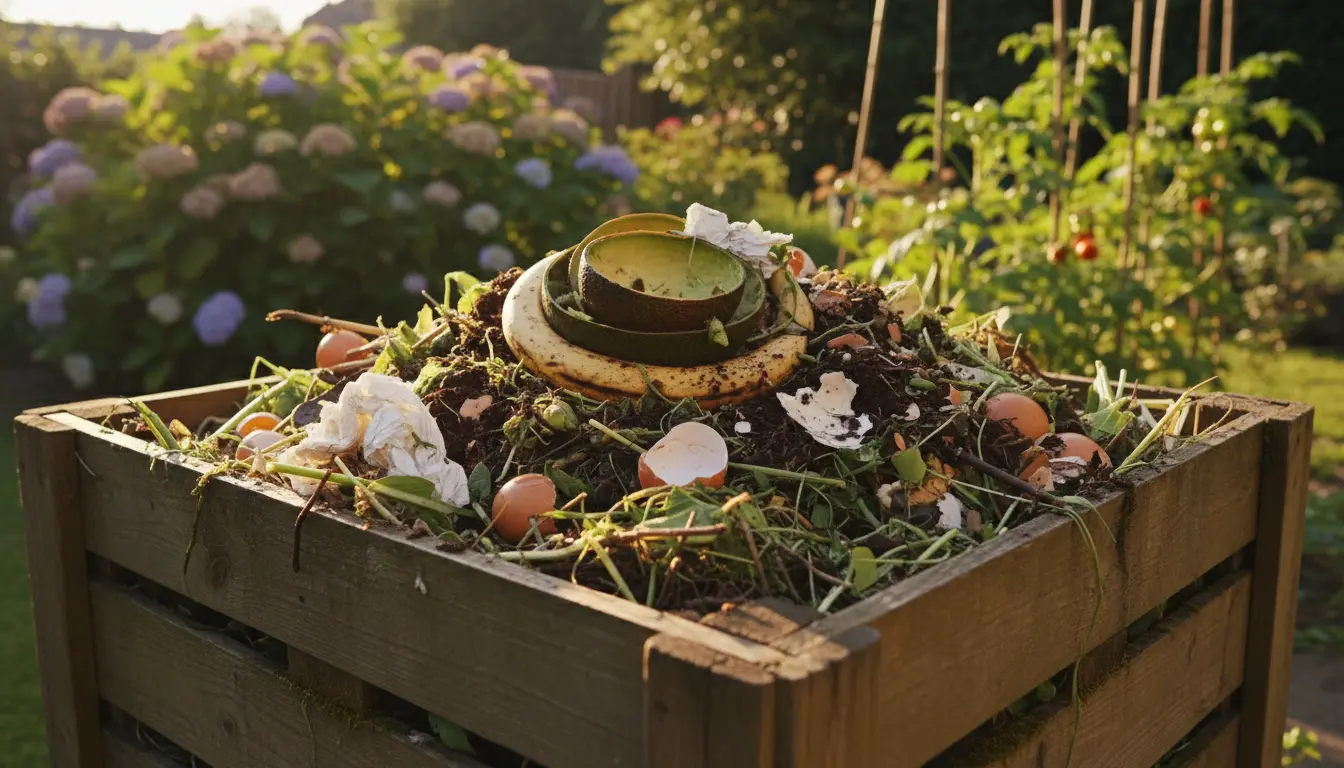
Why Home Composting for Beginners Is Worth Trying
Home composting turns kitchen and yard waste into nutrient-rich soil. It reduces household trash and improves garden health with minimal cost.
This guide gives clear, practical steps so anyone can start composting at home with confidence.
Choose a Composting Method for Home Composting for Beginners
Select a method that fits your space and schedule. Popular options include a simple backyard pile, a bin, a tumbler, and indoor bokashi for small spaces.
Each method needs basic attention to balance materials, air, and moisture.
Backyard Bin or Pile
A bin or open pile works well for yards. It is low-cost and handles large volumes of leaves and kitchen scraps.
Place it on soil to allow organisms to enter and help break down materials.
Compost Tumbler
Tumblers are enclosed and easier to turn. They are cleaner and speed up decomposition when used properly.
They are ideal for those who want a tidier setup or faster results.
Indoor and Small Space Options
Bokashi fermentation or a worm bin (vermicompost) fits apartments and condos. They handle food scraps with less odor and take less space.
These methods require specific containers and occasional feeding preferences for worms or microbes.
What to Compost: Core Items for Home Composting for Beginners
Good compost needs a mix of ‘greens’ (nitrogen) and ‘browns’ (carbon). Aim for variety to keep decomposition steady.
- Greens: vegetable scraps, coffee grounds, fresh grass clippings, tea bags
- Browns: dry leaves, straw, shredded paper, cardboard, small twigs
- Avoid: meat, dairy, oils, diseased plants, pet waste
Simple Rules and Ratios
Follow the 3:1 rule for many home compost piles: three parts browns to one part greens by volume. This keeps the pile aerated and avoids smells.
Maintain moisture like a wrung-out sponge. Too wet leads to smell; too dry slows decomposition.
Turning and Aeration
Turn or mix the pile every 1–2 weeks for faster compost. If using a tumbler, spin it according to the manufacturer’s guidance.
If you prefer low effort, a static pile will still compost but more slowly.
Troubleshooting Common Problems
Smell: Usually from too many greens or excess moisture. Add dry browns and turn the pile.
Slow breakdown: Check for low moisture, compacted material, or too many large items. Chop or shred materials and moisten slightly.
Pests: Avoid adding meat or oil. Use a closed bin and bury food scraps in the center of the pile to deter animals.
Compost can reduce household waste by up to 30 percent and returns valuable nutrients to soil, improving plant water retention and growth.
How to Know When Compost Is Ready
Finished compost is dark, crumbly, and smells earthy. Most home setups take 2–12 months depending on method and care.
Screen or sift the compost for a fine texture, and return any large pieces to the next batch to finish breaking down.
Small Real-World Case Study
Case: A three-person household in a suburban lot started a backyard bin. They collected kitchen scraps in an indoor container and added shredded leaves from fall.
Within six months they had 80 liters of usable compost. Their garden beds showed better moisture retention and a 20 percent increase in tomato yields the next season. They also reduced weekly garbage by one small bag.
Practical Tips for Success with Home Composting for Beginners
- Start small: One bin or three-tier approach helps you learn without being overwhelmed.
- Chop or shred bulky items to speed decomposition.
- Keep a small indoor container with a tight lid to collect scraps before transferring to the bin.
- Use a thermometer if you want to manage heat—compost between 40–60°C for faster breakdown, but many home systems work fine at lower temps.
- Label a schedule to turn or add materials so composting becomes a routine.
Using Finished Compost
Use finished compost as top dressing, mix it into potting soil, or add to garden beds. Start with a thin layer and increase over time.
A cup or two per plant at planting time boosts root development and improves long-term soil structure.
Final Checklist for Home Composting for Beginners
- Choose a method that fits your space and effort level.
- Balance greens and browns in roughly a 1:3 ratio by volume.
- Maintain moisture, aeration, and avoid problem foods.
- Monitor progress, troubleshoot issues, and harvest finished compost.
With a little planning and consistent small actions, home composting is an easy way to cut waste and grow healthier soil. Start today with a simple bin and a kitchen container, and learn as you go.