
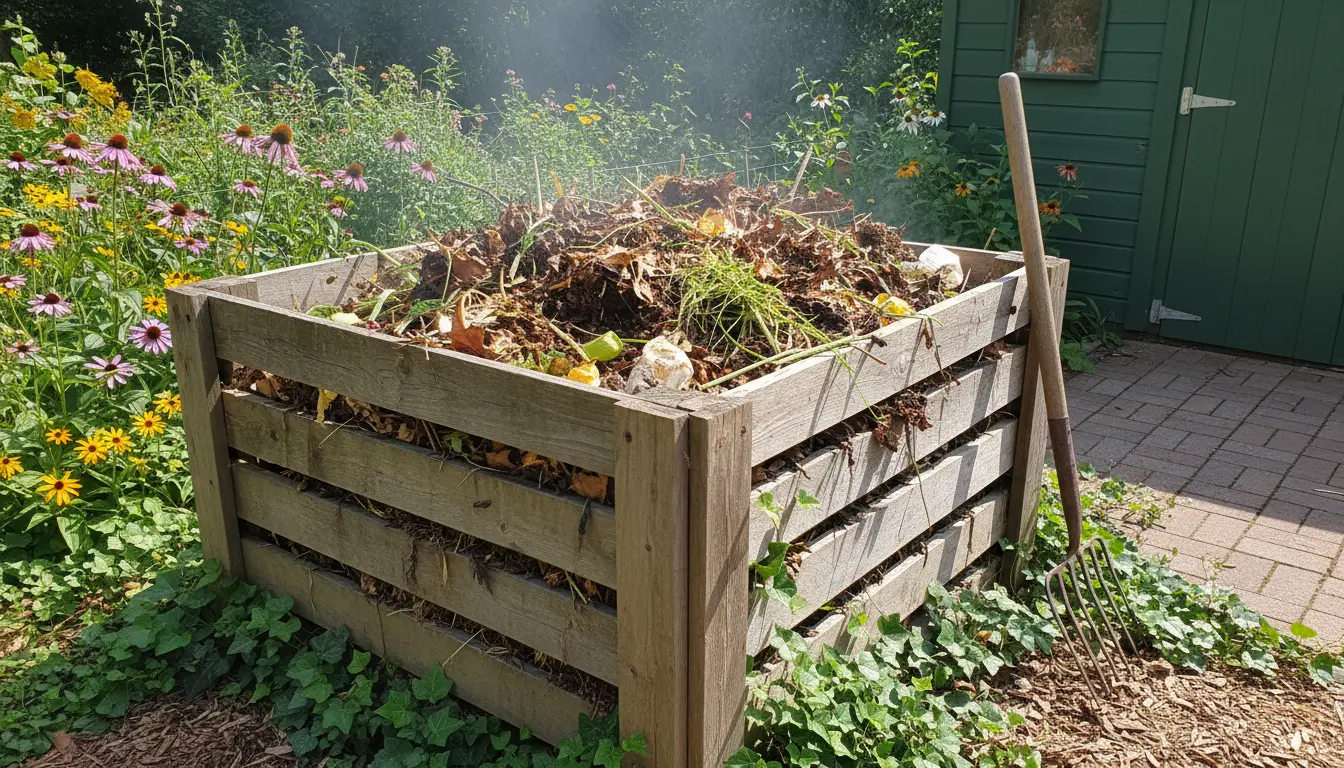
Composting at home is a simple way to reduce waste and make nutrient-rich soil for gardens or potted plants. This guide gives step-by-step instructions, tips for common problems, and a short case study you can follow.
Why choose composting at home
Composting turns kitchen scraps and yard waste into useful material that improves soil structure and water retention. It reduces landfill waste and the methane emissions that come from organic material breaking down anaerobically.
Home composting also saves money on fertilizer and helps plants grow healthier over time. You don’t need special skills to get started—just the right mix of materials and basic routine care.
Getting started with composting at home
Choose a location that is convenient and has good drainage. A spot in partial shade is ideal to keep the pile from drying out or overheating.
Select a container or plan for an open pile based on space and aesthetics. There are several workable options for beginners.
Compost bin and space options for composting at home
- Open pile: Best for larger yards. No cost but needs space and occasional turning.
- Plastic or wooden bin: Contained and tidy. Choose a bin with air vents and a removable base for harvesting compost.
- Tumbler: Easy to turn and faster composting. Works well for small spaces and keeps pests out.
- Vermicompost (worm bin): Uses red worms to convert kitchen scraps into rich castings. Good indoors or on a balcony.
Materials and the right mix
Compost needs a balance of carbon-rich (brown) and nitrogen-rich (green) materials. Aim for roughly a 3:1 ratio by volume of browns to greens for an efficient composting at home routine.
Examples of brown and green materials
- Browns: dry leaves, straw, cardboard, shredded paper, sawdust.
- Greens: fruit and vegetable scraps, coffee grounds, fresh grass clippings, plant trimmings.
Chop or shred larger pieces to speed breaking down. Layer materials: start with a layer of coarse browns for airflow, then add greens, and continue alternating.
Simple step-by-step process for composting at home
- Place the bin or start a pile on soil to allow beneficial organisms to enter.
- Add a mix of browns and greens. Keep the pile moist like a wrung-out sponge.
- Turn the pile every 1–2 weeks to add oxygen and mix materials. Tumblers make this easier.
- Monitor temperature: a properly working pile heats up to 120–160°F (50–70°C). Cooling is normal as decomposition slows.
- Harvest finished compost when it is dark, crumbly, and earthy-smelling—usually 2–6 months depending on conditions.
Troubleshooting common problems with composting at home
If the pile smells bad, it is likely too wet or lacks air. Turn it and add more browns to absorb moisture.
If decomposition is slow, add more greens or increase surface area by chopping materials. Check moisture—too dry and microbes are inactive.
Pest prevention tips
- Avoid adding meat, dairy, or oily foods that attract animals.
- Use a closed bin or tumbler in areas with frequent wildlife.
- Bury food scraps under a layer of browns each time you add them.
Composting can reduce household waste weight by up to 30 percent. Finished compost can hold up to 50 percent more water than regular soil, helping drought-prone gardens.
Using finished compost from composting at home
Mix finished compost into garden beds at a rate of 1–3 inches on top or incorporate it into potting mixes to improve nutrient content and structure.
Use compost as a top dressing for lawns, around trees, or in vegetable rows. It slowly releases nutrients and supports beneficial soil life.
Small case study: One-family composting at home
Case: A family of three started a 55-gallon tumbler in a small backyard. They added kitchen scraps and yard trimmings, maintaining a 3:1 brown-to-green ratio.
They turned the tumbler twice a week, kept the pile moist, and avoided meat and dairy. After four months, they had dark, crumbly compost which they mixed into their raised vegetable beds.
Result: Tomatoes and basil showed stronger growth the next season, with less need for store-bought fertilizer.
Quick checklist to start composting at home
- Choose bin type and location.
- Collect brown and green materials separately.
- Maintain moisture and aeration by turning regularly.
- Monitor for pests and bad smells.
- Harvest and use finished compost in your garden.
Final tips for success with composting at home
Start small and learn what works in your climate. Composting speeds vary with temperature, materials, and how often you turn the pile.
Keep a simple routine and adjust the brown-to-green balance based on how your pile behaves. Over time you’ll produce high-quality compost that benefits your garden and reduces household waste.