
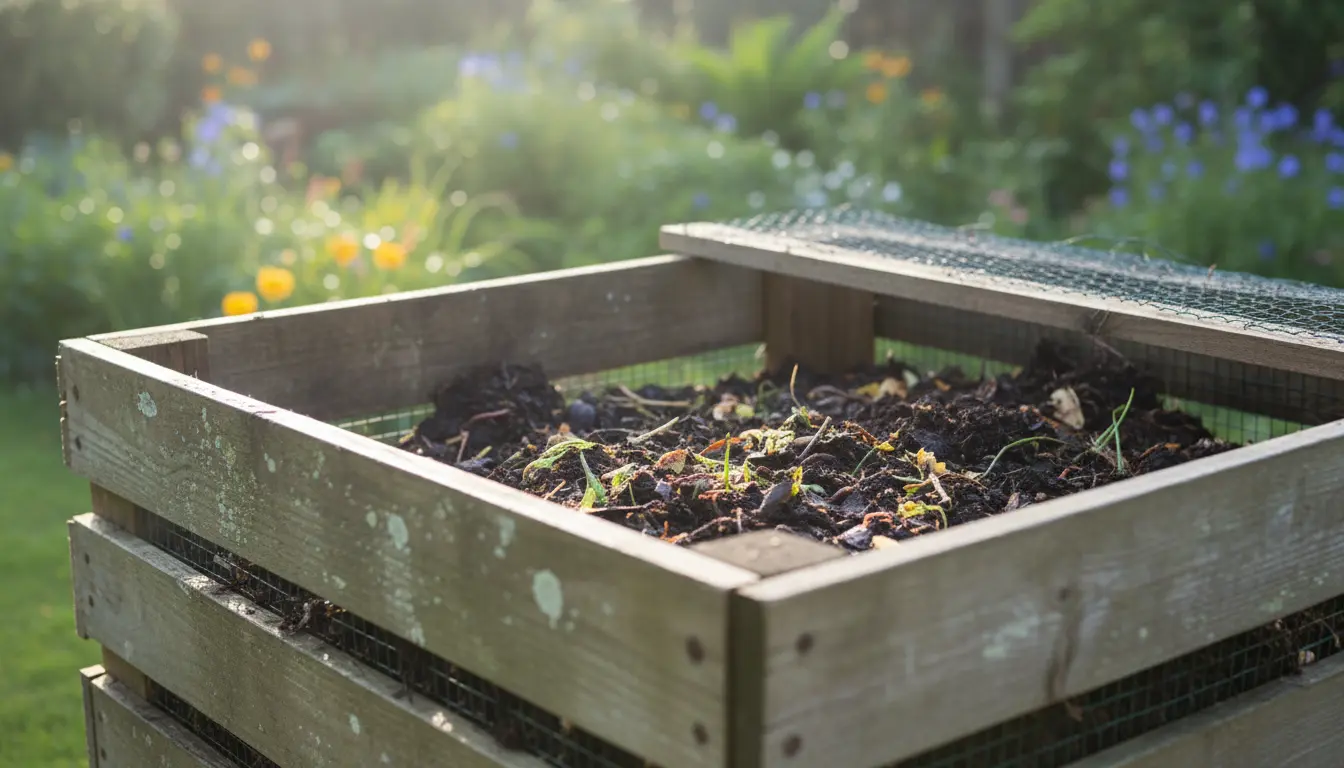
Why home composting matters
Home composting reduces kitchen and yard waste while producing nutrient-rich soil for gardens and potted plants. It cuts garbage volume and lowers methane emissions from landfill decomposition.
This guide gives practical steps for home composting for beginners, including setup, materials, maintenance, and troubleshooting.
Choose a composting method for home composting
Select a method that fits your space, time, and comfort level. Common options include a simple bin, tumbler, or pile.
- Compost bin: Enclosed, tidy, good for small yards.
- Tumbler: Faster mixing and fewer pests, ideal for limited space.
- Open pile: Works for large yards and bulk material but needs more management.
What you need to set up a compost bin
Gather a few basic items before you start. Most can be reused or found cheaply.
- Compost bin or tumbler
- Garden fork or pitchfork for turning
- Kitchen caddy or compostable bag for scraps
- Shredding tool or scissors for breaking down materials
Materials to compost: Browns and greens
Balance is the key: alternate carbon-rich “browns” with nitrogen-rich “greens.” Proper balance speeds decomposition and reduces odor.
- Browns (carbon): Dry leaves, straw, cardboard, shredded paper.
- Greens (nitrogen): Vegetable scraps, coffee grounds, fresh grass clippings.
A useful rule is roughly 3 parts browns to 1 part greens by volume for a backyard bin.
Step-by-step: How to start home composting
Follow these simple steps to build a productive compost bin.
- Place your bin in a partly shaded, level spot with good drainage.
- Start with a 4–6 inch base layer of coarse browns like twigs to aid airflow.
- Add a mix of greens and chopped browns, aiming for the 3:1 ratio.
- Moisten new layers until materials feel like a wrung-out sponge.
- Turn the pile every 1–2 weeks to add oxygen and speed breakdown.
Routine maintenance for home composting
Maintaining a compost bin requires simple regular checks and occasional adjustments. These small tasks keep the process efficient.
- Check moisture weekly; add water if too dry or more browns if soggy.
- Turn or rotate the pile to maintain airflow and even heating.
- Monitor temperature; a hot active pile reaches 120–150°F (50–65°C).
Composting can reduce household waste by up to 30 percent and return valuable nutrients to garden soil in as little as three months with proper management.
Troubleshooting common composting problems
Small issues are normal. Here are quick fixes for frequent problems encountered by beginners.
- Bad smell: Add more browns and turn the pile to increase oxygen.
- Pests or rodents: Avoid meat, dairy, and oily foods; use a closed bin or bury scraps deep.
- Too dry: Moisten materials and add kitchen scraps or green clippings.
- Slow decomposition: Chop materials smaller and check the carbon-to-nitrogen balance.
How to tell when compost is ready
Finished compost is dark, crumbly, and has an earthy smell. Most home systems produce usable compost in 3 to 12 months depending on management.
Use finished compost as a soil amendment, mulch top dressing, or potting mix ingredient. Avoid using unfinished material directly on seedlings.
Real-world example: Small apartment balcony success
Emma, a city gardener, used a 50-liter tumbler on her balcony. She composted vegetable scraps, coffee grounds, and shredded paper, rotating the tumbler twice a week.
Within five months she produced dark, crumbly compost which she mixed into potting soil for her tomatoes. Her plants showed improved growth and reduced need for store-bought fertilizer.
Tips to speed up home composting
If you want faster results, focus on particle size, moisture, and temperature.
- Chop or shred materials before adding them to the pile.
- Layer materials thinly to improve airflow and heat retention.
- Use a thermometer and aim for the active composting temperature range.
Final practical checklist for home composting for beginners
- Choose a bin type that fits your space.
- Keep a balance of browns and greens.
- Maintain moisture and turn regularly.
- Troubleshoot odors, pests, or slow breakdown quickly.
- Harvest compost when dark and crumbly for best results.
Home composting is low-cost and scalable. Start small, learn from your bin, and adjust the process to suit your household. With routine care, you can turn everyday organic waste into a valuable resource for your garden.