
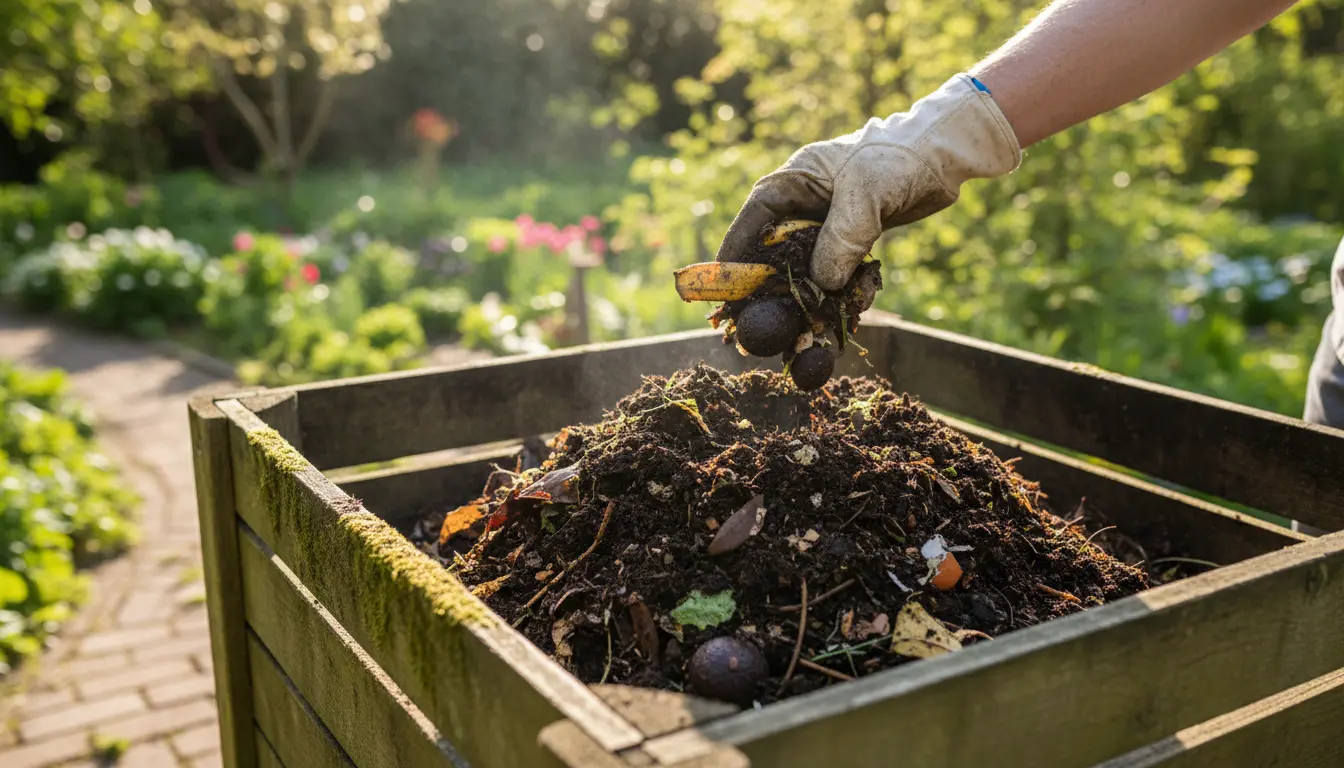
Quick Start Guide to Home Composting for Beginners
Home composting for beginners focuses on simple, repeatable steps you can do in any yard or even on a balcony. This guide gives practical instructions and common-sense tips so you can turn kitchen scraps into healthy soil.
Why Home Composting for Beginners Works
Composting uses natural decomposition to convert organic waste into nutrient-rich material for gardens. It reduces household trash and improves soil structure and water retention.
Even a small, well-managed bin can produce useful compost in a few months if you follow basic rules on balance and aeration.
What You Need to Start Composting
- Container: bin, tumbler, pile, or worm bin for small spaces.
- Materials: a mix of greens (nitrogen) and browns (carbon).
- Tools: pitchfork or turning tool, kitchen container for scraps, garden gloves.
Choosing a Bin
Choose a size that fits your space and waste output. Tumblers are tidy and fast; open piles work well for larger gardens. For apartments, try a worm bin or Bokashi system.
7 Easy Steps for Home Composting for Beginners
- Pick a location: level ground with partial shade helps retain moisture and airflow.
- Layer your materials: start with coarse browns like small twigs, then add alternating layers of greens and browns.
- Maintain balance: aim for roughly 2–3 parts browns to 1 part greens by volume.
- Moisture control: compost should be as damp as a wrung-out sponge; add water or dry browns as needed.
- Turn regularly: aerate the pile every 1–2 weeks to speed decomposition and reduce odor.
- Chop materials: small pieces break down faster; run a blender for veggie scraps or chop yard waste.
- Harvest and use: when dark and crumbly, mix finished compost into garden beds or potting mixes.
What to Compost and What to Avoid
Safe items include fruit and vegetable scraps, coffee grounds, eggshells, shredded paper, yard trimmings, and leaves.
Avoid meats, dairy, oily foods, diseased plants, and pet waste to prevent pests and pathogens.
Troubleshooting Common Problems
- Bad smell: usually too wet or too many greens. Add dry browns and turn the pile.
- No heat: pile may be too small or lacks nitrogen. Add greens and increase volume or insulation.
- Slow breakdown: materials too large or too dry. Chop and moisten, then turn more often.
- Pests: avoid adding meat/dairy, bury kitchen scraps, or use a closed bin.
Tips to Speed Up Composting
- Shred and chop materials before adding them.
- Maintain the moisture and aerate regularly.
- Add a thin layer of finished compost or soil to introduce microbes.
- Insulate the bin in cold months to keep microbial activity going.
Compost can reduce household waste by up to 30 percent. Proper home composting also locks carbon into soil and can improve plant nutrient uptake.
Simple Timeline for Home Composting for Beginners
With active management (turning, moisture, and balance), you can expect usable compost in 2–4 months. Slower cold-composting methods can take 6–12 months but require less effort.
Example Material Schedule
- Week 1–2: Build layers and keep moist.
- Week 3–8: Turn every 1–2 weeks; add greens and browns as needed.
- Month 2–4: Monitor breakdown; begin harvesting small amounts as ready.
Small Real-World Case Study
Case Study: Sarah, a suburban gardener, started a 3×3 ft bin in spring. She collected kitchen scraps in a small jar and added them twice weekly with shredded leaves and cardboard.
By month three she had dark, crumbly compost. She mixed 2 inches into her vegetable beds and saw stronger seedling growth and better moisture retention that season.
Using Your Compost
Mix finished compost into garden beds at a ratio of 1:4 compost to soil for continuous improvement. Use as a top dressing for established plants or blend into potting mixes for seed starting.
Final Practical Checklist for Home Composting for Beginners
- Select an appropriate bin or system for your space.
- Keep a simple balance of greens and browns.
- Monitor moisture and aerate regularly.
- Avoid problem items that attract pests.
- Harvest and apply finished compost to improve soil health.
Home composting for beginners is accessible, low-cost, and environmentally valuable. Start small, follow the basic steps, and adjust by observing your pile. Over time you’ll produce nutrient-rich compost that supports healthier plants and reduces waste.