
Why start a vegetable garden
Growing your own vegetables saves money and gives you fresh produce at peak flavor. It also lets you control how food is grown and reduces trips to the store.
This guide explains clear, practical steps to start a vegetable garden, from choosing a site to managing pests and harvesting.
Planning to start a vegetable garden
Good planning reduces wasted effort and improves yields. Before you dig, consider light, space, water, and how much time you can commit.
Choose the right site
Most vegetables need 6–8 hours of direct sunlight. Pick the sunniest spot you have. Ensure the area drains well and is close to a water source.
Avoid low spots that stay soggy after rain. If full sun is not available, choose vegetables that tolerate part shade like leafy greens or root crops.
Plan what to grow
Start with a few easy crops so you can learn without feeling overwhelmed. Consider what your household eats most and the local growing season.
- Best beginner vegetables: lettuce, radishes, green beans, tomatoes, zucchini.
- Choose compact or bush varieties for small spaces or containers.
- Use a planting calendar based on your hardiness zone to set planting dates.
Soil and preparation when you start a vegetable garden
Soil quality is the single most important factor for success. Healthy soil holds water, drains excess moisture, and provides nutrients.
Test and amend soil
Do a simple soil test for pH and basic nutrients. Many extension services offer low-cost testing with recommendations for amendments.
Common amendments: compost to improve structure, lime to raise pH, sulfur to lower pH, and balanced organic fertilizer to add nutrients.
Planting and timing to start a vegetable garden
Follow seed packet or plant tag directions for spacing and depth. Planting too close reduces airflow and increases disease risk.
Decide between direct sowing and transplanting. Root crops and many greens are sown directly. Tomatoes and peppers often start as transplants.
Succession planting and crop rotation
Succession planting keeps beds productive across the season. Sow fast crops (radishes, lettuce) between slower crops (tomatoes, beans).
Rotate families (nightshades, brassicas, legumes) to reduce pest cycles and soil nutrient depletion.
Watering, feeding, and maintenance
Consistent watering is crucial. Most vegetables prefer deep, infrequent watering rather than light, frequent watering.
- Water at the base of the plant early in the morning to reduce evaporation and disease.
- Apply mulch (2–3 inches) to retain moisture and suppress weeds.
- Fertilize according to crop needs: leafy greens benefit from nitrogen; fruiting crops need balanced nutrients.
Weeding and staking
Remove weeds regularly to reduce competition for water and nutrients. Use hand tools to avoid disturbing plant roots.
Stake or cage tall crops like tomatoes and beans to improve air circulation and make harvesting easier.
Pest control and common problems
Monitor plants weekly. Early detection limits damage and reduces the need for heavy treatments.
- Use physical barriers like row covers against insect pests and birds.
- Introduce or encourage beneficial insects, such as ladybugs and lacewings.
- Remove and dispose of heavily infested or diseased plants to prevent spread.
If you use pesticides, choose targeted, low-toxicity options and follow label instructions precisely.
Simple tools and supplies to start a vegetable garden
- Hand trowel and fork
- Garden hoe and rake
- Watering can or hose with a nozzle
- Compost or well-rotted manure
- Mulch (straw, wood chips, or leaves)
Small real-world example
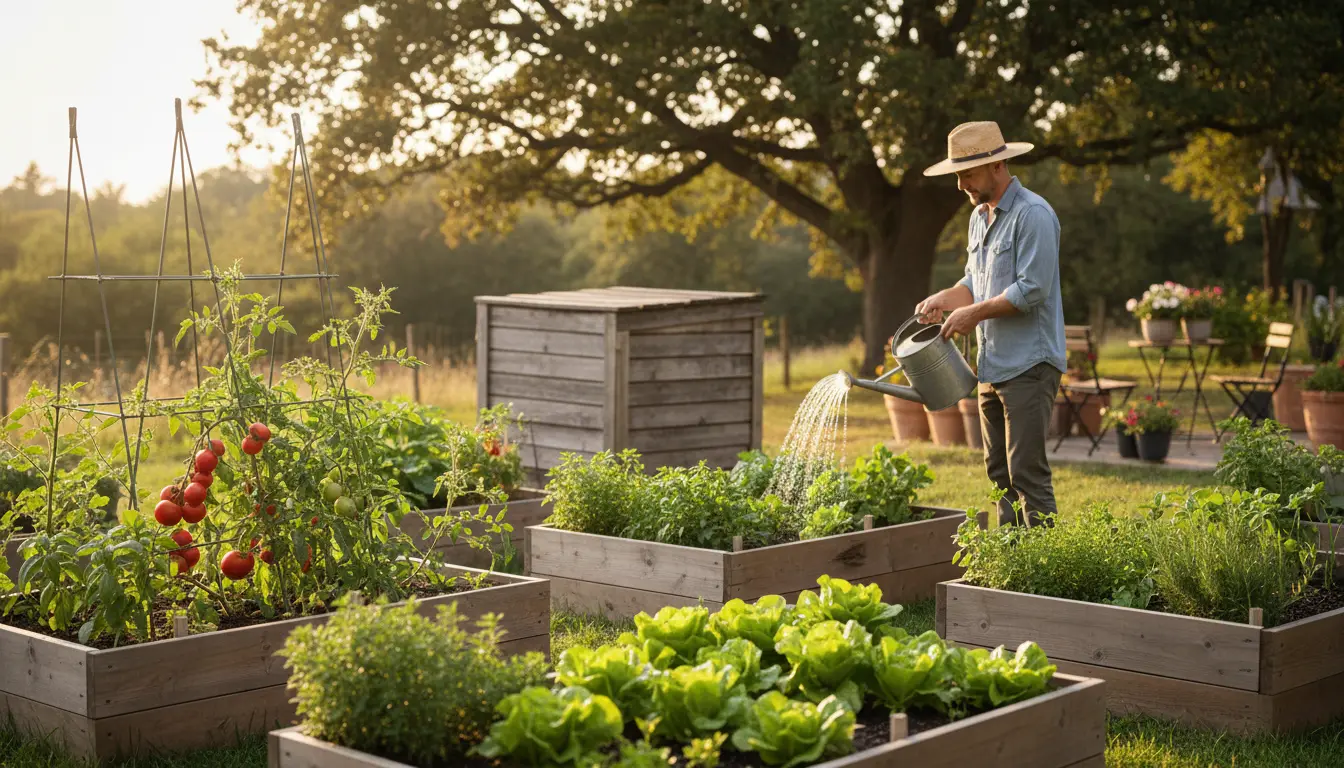
Case study: A first-time gardener in Portland began with two 4×8 raised beds. They planted lettuce, radishes, green beans, and determinate tomatoes.
By rotating the beds and adding compost each season, they increased yields and reduced weeding time. The beds produced salad greens weekly and enough tomatoes for fresh use and canning.
Harvesting and storing
Harvest regularly to encourage more production. Pick leafy greens when young for tenderness, and harvest tomatoes at full color for best flavor.
Store excess produce by canning, freezing, or drying. Root vegetables can be kept in a cool, dark place for months.
Quick checklist to start a vegetable garden
- Select a sunny site near water
- Test and improve soil with compost
- Start with 4–6 easy crops
- Use mulch and consistent watering
- Monitor for pests and rotate crops annually
Starting a vegetable garden is a step-by-step process. Begin small, learn from each season, and expand as your skills and confidence grow.