
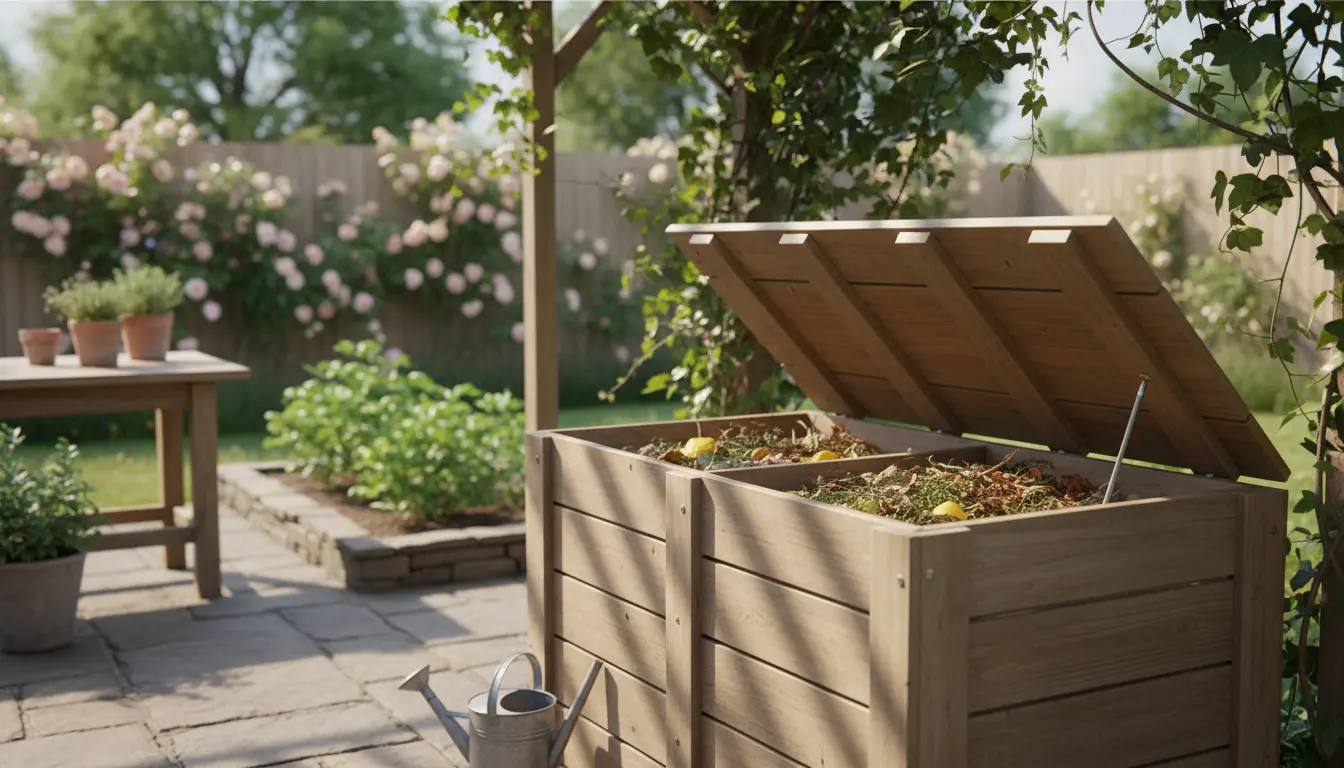
Home composting turns kitchen and yard waste into rich soil for gardens. This practical guide shows beginners how to set up and maintain a compost bin with clear, actionable steps.
Why Home Composting Matters
Home composting reduces landfill waste and returns nutrients to soil. It saves money on fertilizers and improves garden health without chemical inputs.
Composting is also a simple, low-energy way to lower household waste and encourage a circular approach to resources.
Benefits of home composting
- Reduces trash volume and landfill methane.
- Creates free, nutrient-rich compost for plants.
- Improves soil structure and water retention.
- Teaches sustainable habits for the household.
How to Start a Compost Bin at Home
Starting a compost bin is straightforward and requires only a few decisions. Choose a method that fits your space, time, and type of waste.
Choose a bin type for home composting
- Tumbler: Easy turning, faster decomposition, good for small yards.
- Open bin or pile: Lowest cost, flexible size, needs occasional turning.
- Worm composting (vermicompost): Ideal for apartments or limited space, handles kitchen scraps efficiently.
Consider available space, odor control, and how much effort you want to spend turning the pile when selecting a bin.
Where to place your compost bin
Place the bin on soil or grass if possible to allow drainage and access for beneficial organisms. Choose a partly shaded spot to avoid drying out or overheating.
Near the kitchen path helps with convenience and increases the likelihood of regular use.
What to compost in your home compost bin
Balance ‘greens’ and ‘browns’ for effective decomposition. Greens provide nitrogen; browns provide carbon.
- Greens: Vegetable scraps, fruit peels, coffee grounds, fresh grass clippings.
- Browns: Dry leaves, shredded paper, cardboard, straw, wood chips.
- Avoid: Meat, dairy, oils, diseased plants, pet waste from carnivores.
A common ratio to aim for is roughly 2 to 3 parts browns to 1 part greens by volume.
Maintaining Your Compost Bin
Routine checks keep compost active and prevent odors or pests. Maintenance is mostly about moisture, aeration, and particle size.
Key maintenance steps for home composting
- Turn the pile every 1–2 weeks to add oxygen and mix materials.
- Monitor moisture: compost should feel like a wrung-out sponge.
- Shred or chop larger items to speed decomposition.
- Add water during dry spells and add dry browns if too wet or smelly.
Troubleshooting common problems
- Bad smell: Add more browns and turn the pile frequently.
- Pests: Bury food scraps deeper, use a closed bin, or avoid problematic items.
- Slow decomposition: Increase surface area by shredding and ensure a good mix of greens and browns.
Compost can reach temperatures of 120 to 160 degrees Fahrenheit in an active pile, which helps kill weed seeds and pathogens when managed correctly.
How to Know When Compost Is Ready
Finished compost is dark, crumbly, and smells earthy. Most materials break down in 3 to 12 months depending on method and maintenance.
Use finished compost as a soil amendment, mulch, or a component of potting mixes for healthier plants.
Ways to use your finished home compost
- Mix 10–30% compost into garden soil to improve fertility.
- Top-dress houseplants or garden beds with a thin layer of compost.
- Blend compost with potting soil for seedlings and containers.
Small Real-World Example: Balcony Composting Case Study
Sarah, an apartment dweller, started a worm bin on her balcony with a 10-liter container. She added shredded paper, vegetable scraps, and a handful of leaves.
After six months of weekly feeding and occasional harvesting, Sarah produced about 8 liters of rich vermicompost. She used it to top-dress potted herbs and saw faster growth and better water retention.
This simple setup reduced her kitchen waste by roughly half and improved the health of her balcony garden.
Quick Checklist for New Home Composters
- Choose a bin type that fits your space and effort level.
- Keep a balance of greens and browns; aim for 2–3:1 browns to greens.
- Turn regularly and monitor moisture to prevent odors.
- Use finished compost to feed soil and plants.
Home composting is a low-cost, high-impact activity that benefits gardens and the environment. Start small, be consistent, and adapt your system to your household needs.