
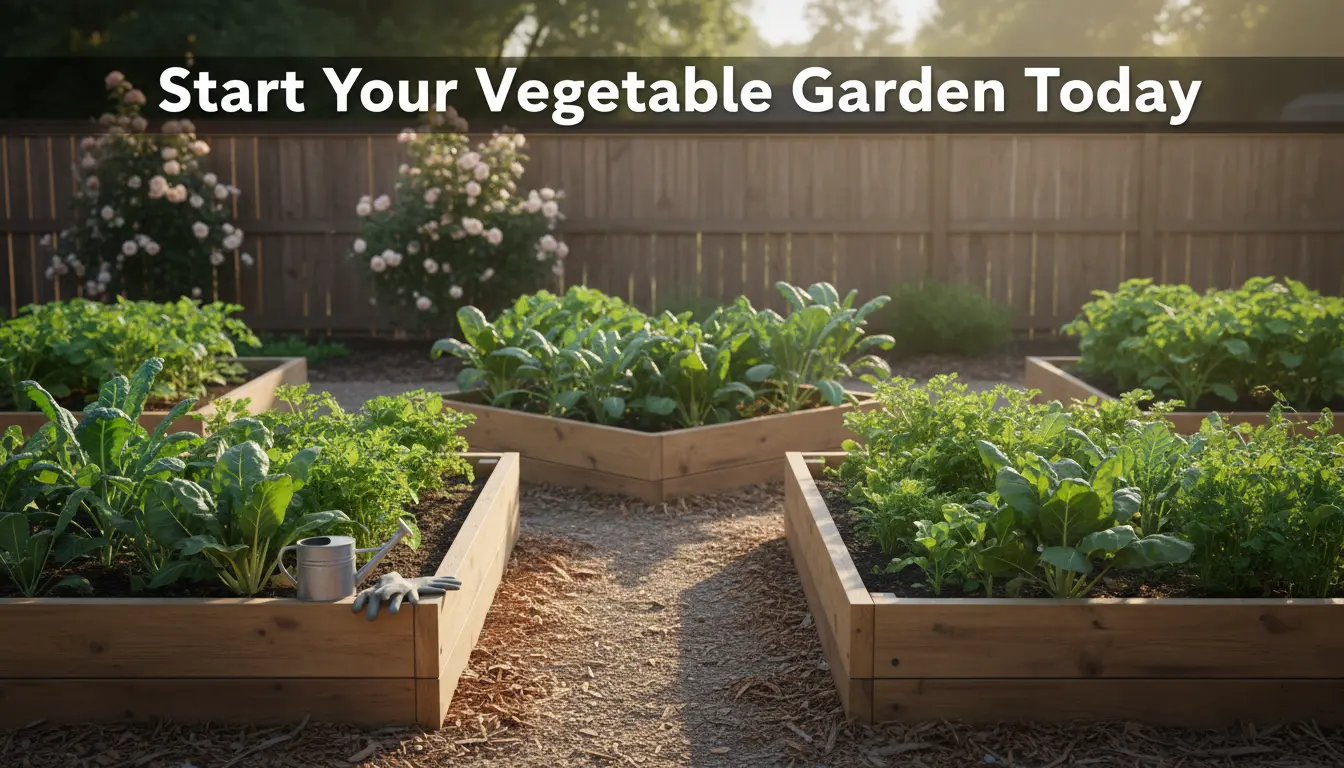
Why Start a Vegetable Garden
Growing your own vegetables saves money, improves meal quality, and connects you to the food you eat. For beginners, a small well-planned garden reduces workload and increases success.
This guide explains how to start a vegetable garden step by step. Follow short practical steps to create a productive space, even in a small yard or balcony.
Plan Your Vegetable Garden
Planning is the most important step when you start a vegetable garden. A clear plan helps you choose the right location, bed type, and crops for your climate and time.
Decide on the garden size and style. Common choices are raised beds, in-ground rows, or containers for small spaces.
Choose a Location for Your Vegetable Garden
Pick a spot that gets at least 6 hours of direct sunlight daily for most vegetables. Good light improves yields and reduces pest problems.
Consider water access, drainage, and convenience to your kitchen. Close proximity makes harvesting and maintenance easier.
Decide Between Raised Beds, In-Ground, or Containers
Raised beds warm faster and have better soil control. In-ground gardens work well for larger spaces. Containers are ideal for patios and balconies.
- Raised beds: Better drainage and soil quality control.
- In-ground: Lower initial cost for large areas.
- Containers: Portable and space-efficient.
Prepare Soil and Planting Plans
Good soil is critical when you start a vegetable garden. Test soil pH and texture when possible, and amend to improve fertility and drainage.
Use compost, aged manure, or a balanced organic fertilizer to enrich the soil. Mix amendments into the top 6–12 inches for most vegetables.
Soil Preparation Steps
- Clear weeds and debris from the planting area.
- Loosen soil with a fork or tiller to a depth of 8–12 inches.
- Add 2–4 inches of compost and mix thoroughly.
- Level and mark beds or rows before planting.
Choose Plants for Beginner Success
Select easy-to-grow vegetables to build confidence. Choose varieties suited to your climate and available growing season.
Good beginner crops include lettuce, radishes, bush beans, tomatoes, zucchini, and herbs like basil and parsley.
Planting Tips
- Start seeds indoors for long-season plants like tomatoes if your growing season is short.
- Follow spacing and depth instructions on seed packets or plant tags.
- Succession plant fast crops (like lettuce and radishes) every 2–3 weeks for continuous harvest.
Watering and Maintenance
Consistent watering helps plants set fruit and grow reliably. Aim for deep, infrequent watering rather than light daily sprinkling.
Use mulch to retain soil moisture and suppress weeds. Organic mulches like straw or shredded leaves also add organic matter as they break down.
Pest and Disease Basics
Inspect plants weekly for pests and early signs of disease. Handpick pests, use row covers for protection, and remove affected leaves promptly.
Rotate crops yearly to reduce soil-borne diseases and avoid planting the same family in the same spot consecutively.
Tools and Supplies Checklist
- Garden fork or shovel
- Hand trowel and pruning shears
- Quality garden soil or compost
- Mulch and water hose or soaker hose
- Seed packets or starter plants
Tomatoes and peppers are heavy feeders and benefit most from compost and regular side-dressing during the season. Adding a 1 inch layer of compost around plants in early June can boost yields.
Simple Calendar for New Gardeners
Follow this basic seasonal schedule when you start a vegetable garden. Adjust timing based on local frost dates and microclimate.
- Early spring: Prepare beds, sow cool-season crops (lettuce, peas, radish).
- Late spring: Plant warm-season crops (tomato, pepper, squash).
- Summer: Mulch, water deeply, harvest and succession plant.
- Fall: Remove spent plants, add compost, and plan winter cover crops if applicable.
Real-World Example: Small Raised Bed Success
Case study: Sarah, a beginner in Portland, started a 4×8 raised bed in April. She used store-bought loam mixed with compost and planted tomatoes, bush beans, lettuce, and basil.
Within ten weeks she harvested continuous lettuce and the first tomatoes. Mulching reduced watering to twice weekly and pests were controlled with companion planting and hand removal.
Her key wins were starting small, choosing easy crops, and keeping a weekly 20-minute maintenance routine. By fall she had saved on grocery bills and donated extra produce to neighbors.
Final Tips When You Start a Vegetable Garden
- Start small and expand after you gain experience.
- Keep a garden journal to track planting dates, varieties, and yields.
- Learn by doing: trial and error is part of gardening success.
Starting a vegetable garden is manageable with a simple plan and regular care. Use these steps to create a thriving garden that fits your space and lifestyle.