
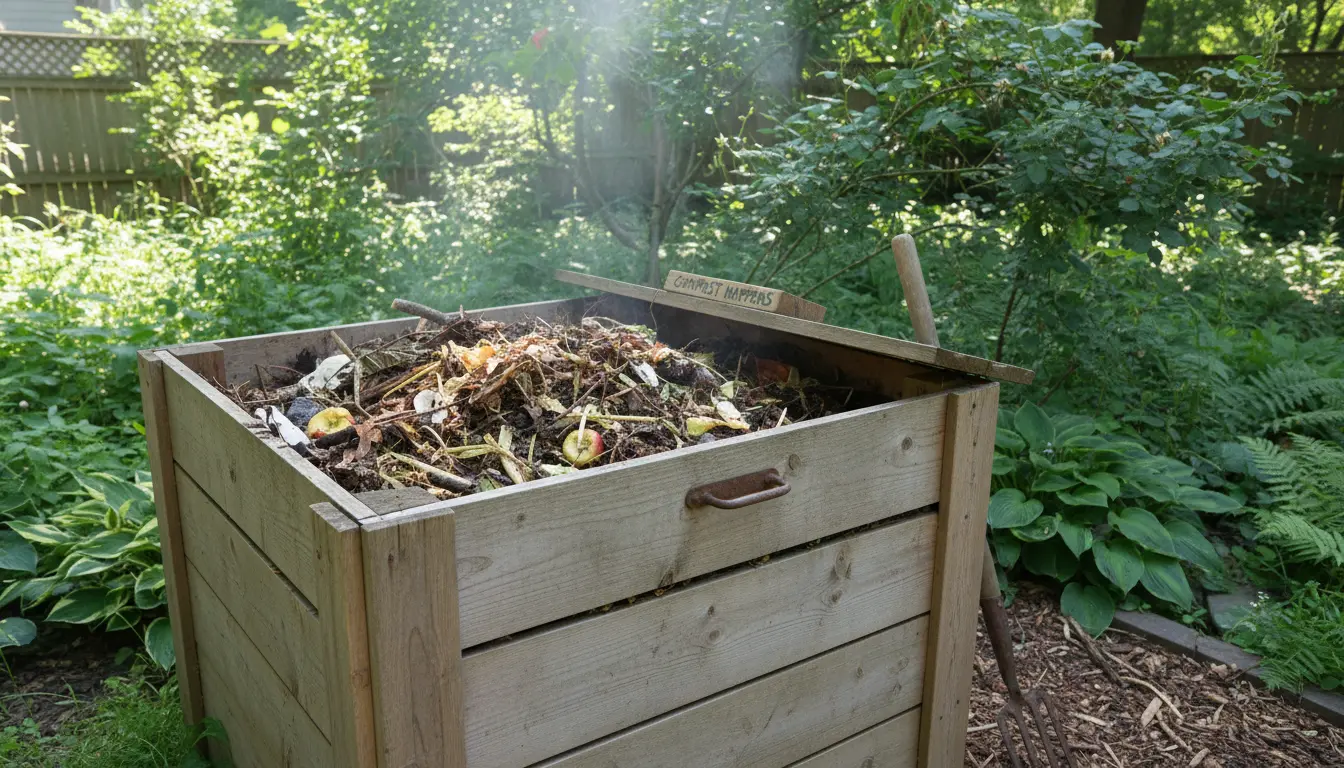
Composting at home turns kitchen scraps and yard waste into nutrient-rich soil. This guide gives clear, practical steps to start home composting with minimal cost and effort.
Home Composting Basics
Home composting breaks down organic materials into humus through microbes, moisture, and oxygen. You can compost in a bin, pile, tumbler, or worm bin depending on space and goals.
Why choose home composting
Composting reduces landfill waste and returns nutrients to soil. It helps retain moisture, improves soil structure, and reduces the need for synthetic fertilizers.
Choosing a Method for Home Composting
Select a method that fits your living situation and effort level. Small households often prefer a simple bin or worm composting, while yards can use open piles or tumblers.
- Compost bin: Enclosed, tidy, good for moderate volumes.
- Tumbler: Faster aeration, easier turning, higher cost.
- Open pile: Low cost, requires space and regular turning.
- Vermicompost (worm bin): Great for indoor or small-space composting, especially kitchen scraps.
Materials: Greens and Browns
Balance is key. Greens provide nitrogen and moisture, while browns add carbon and structure. Aim for roughly a 2:1 or 3:1 ratio by volume of browns to greens for a stable pile.
Examples of greens and browns
- Greens: Fruit and vegetable scraps, coffee grounds, fresh grass clippings.
- Browns: Dry leaves, shredded paper, cardboard, straw.
Step-by-Step: Start Your Home Compost Pile
Follow these steps to set up a basic compost bin or pile in your backyard or balcony area. Each step is simple and quick to implement.
- Pick a location: Choose a well-drained, semi-shaded spot near water access.
- Assemble or buy a bin: Use a store-bought compost bin or build one from pallets or chicken wire.
- Layer materials: Start with coarse browns for drainage, then alternate greens and browns in 6-8 inch layers.
- Moisten: Keep the pile as damp as a wrung-out sponge—not soaking wet.
- Aerate: Turn the pile every 1–2 weeks to introduce oxygen and speed decomposition.
- Monitor: Check temperature and moisture; a working pile warms to 120–140°F (50–60°C) in the center.
Troubleshooting Common Home Composting Problems
Problems are often easy to fix with small adjustments. Here are common issues and quick solutions.
- Bad odors: Add more browns and turn the pile to introduce air.
- Slow breakdown: Chop materials into smaller pieces and maintain moisture and aeration.
- Pests: Use a closed bin, bury food scraps, and avoid meat, dairy, and oily foods.
- Too wet: Mix in dry browns and turn to increase airflow.
Using Finished Compost
Finished compost is dark, crumbly, and earthy-smelling. Use it to improve garden beds, mix into potting soil, or top-dress lawns and potted plants.
Application tips
- Vegetable beds: Mix 1–2 inches of compost into the top 6 inches of soil before planting.
- Lawns: Spread a thin layer (about 1/4 inch) as a top-dressing in spring or fall.
- Potted plants: Blend compost with potting mix at a ratio of up to 1:4 compost to soil.
Small Real-World Case Study
The Martinez family started home composting on a small city lot using a 55-gallon tumbler. In six months they diverted roughly 120 pounds of kitchen waste from the trash and produced enough compost to enrich three raised beds.
They noted faster plant growth and reduced need for store-bought fertilizer. Their key changes were chopping scraps and staying disciplined about adding dry browns after wet collections.
Maintenance Schedule for Home Composting
Keeping a simple routine makes composting reliable. A weekly check and occasional turning keep the process active and odor-free.
- Daily: Collect kitchen scraps in a small container or freezer bag for transfer to the compost bin.
- Weekly: Add new material, balance greens and browns, and check moisture.
- Every 1–2 weeks: Turn the pile for aeration, or rotate the tumbler handles.
Final Tips for Successful Home Composting
Start small and learn what your compost responds to best. Record what you add and the pile’s behavior to refine your approach.
- Keep materials varied for nutrient diversity.
- Shred or chop large pieces to speed decomposition.
- Use a thermometer for active piles to monitor temperature.
With modest effort, home composting becomes a regular household habit that benefits your garden and reduces waste. Start with a simple bin, balance greens and browns, and adjust as you learn what works in your space.