
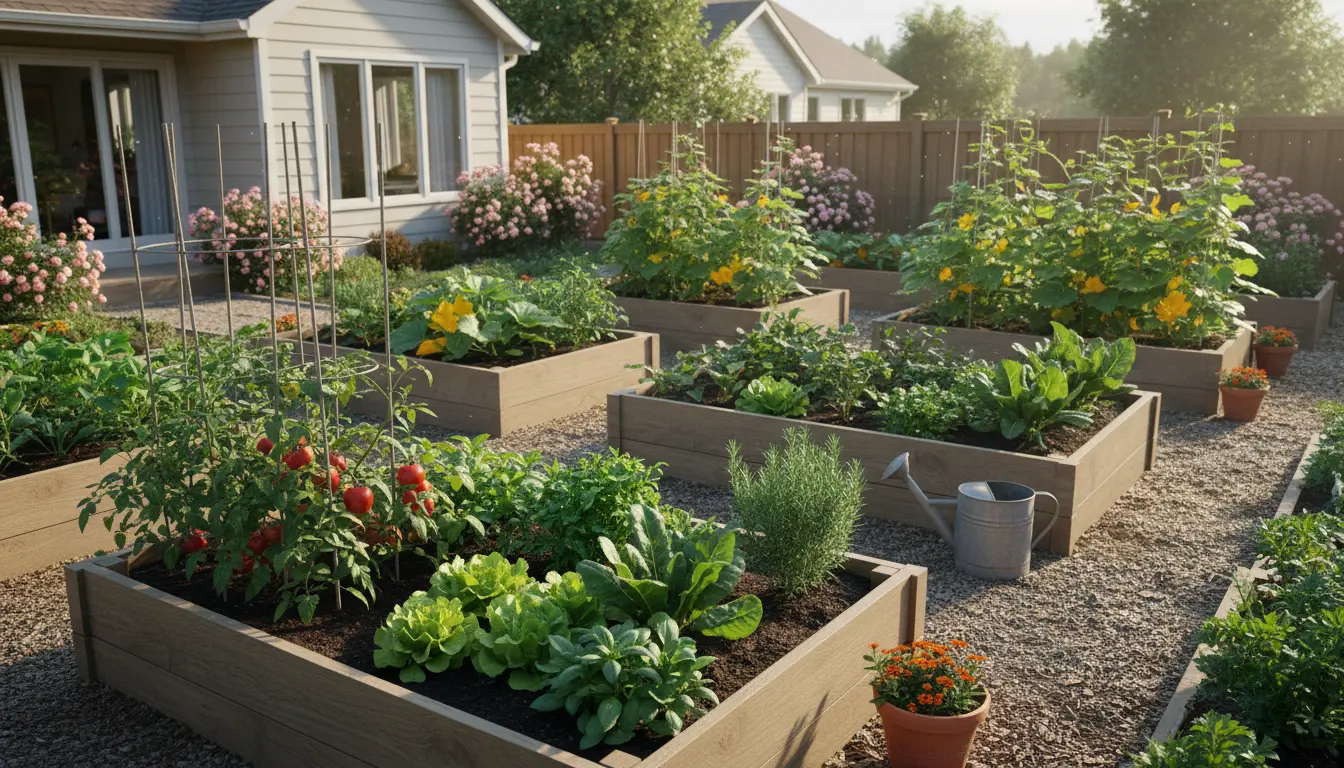
Starting a vegetable garden is a practical way to grow fresh food, save money, and enjoy time outdoors. This guide explains how to start a vegetable garden in clear, actionable steps for beginners.
How to Start a Vegetable Garden: First Decisions
Before you break ground, make a few basic decisions. Decide what you want to grow, how much time you can spend, and whether you will use containers, raised beds, or in-ground rows.
These choices shape the rest of the process and help avoid common setup mistakes.
Choose the Right Location to Start a Vegetable Garden
Most vegetables need 6–8 hours of direct sun. Pick a site with good light and easy access to water. Avoid low spots that collect cold air or stay soggy after rain.
- Sunny, well-drained area
- Close to a hose or rain barrel
- Avoid under large trees or next to buildings that cast shade
Test Soil and Improve It Before You Start a Vegetable Garden
Healthy soil makes planting easy. Use a basic soil test kit or send a sample to a local extension service to check pH and nutrient levels.
Common improvements include adding compost, adjusting pH with lime or sulfur, and loosening compacted soil.
Pick Plants for Your First Vegetable Garden
Choose easy, productive crops for your first season. Examples include tomatoes, lettuce, radishes, green beans, and zucchini. Start with varieties labeled ‘easy’ or ‘for beginners’.
Consider planting a mix of quick-maturing crops and longer-season staples for steady harvests.
Prepare to Start a Vegetable Garden: Step-by-Step
Preparation sets you up for success. Follow these practical steps to prepare planting areas and get seeds or seedlings ready.
- Clear the area: Remove grass, weeds, and debris from your chosen spot.
- Build or mark beds: Decide on bed size (4 feet wide works well for access) and frame with wood or use simple soil mounds.
- Amend the soil: Spread 2–4 inches of compost and mix into the top 6–8 inches of soil.
- Plan layout: Use rows, blocks, or square-foot gardening to maximize space and ease of maintenance.
- Planting: Sow seeds at recommended depths or transplant nursery starts after last frost date.
Care and Maintenance After You Start a Vegetable Garden
Once planted, regular but simple care keeps plants productive. Focus on watering, feeding, pest control, and harvest timing.
Watering Tips for a New Vegetable Garden
Water deeply and less often to encourage strong roots. Most vegetables need about 1 inch of water per week. Use drip irrigation or a soaker hose to reduce evaporation and leaf wetness.
Weeding, Mulching, and Fertilizing Your Vegetable Garden
Mulch reduces weeds and conserves moisture. Apply 2–3 inches of organic mulch such as straw or shredded leaves between plants once they are established.
Side-dress with compost or a balanced fertilizer mid-season for heavy feeders like tomatoes and squash.
Common Mistakes When You Start a Vegetable Garden
Beginners often make avoidable errors. Watch for these pitfalls to save time and improve yields.
- Planting too densely — follow spacing recommendations.
- Watering lightly and frequently — encourages shallow roots.
- Ignoring soil quality — poor soil yields poor crops.
- Starting with difficult crops — avoid finicky varieties at first.
Small Real-World Example: Backyard Raised Bed Success
Case study: Maria, a busy teacher, converted a 10 x 10 ft corner of her yard into two 4 x 8 raised beds. She chose tomatoes, lettuce, bush beans, and basil and used drip irrigation and compost built from kitchen scraps.
Result: In her first season she harvested enough salad greens for weekly salads and 15 pounds of tomatoes, while spending 20–30 minutes twice a week on garden tasks. The raised beds reduced weeds and made watering efficient.
Quick Planting and Care Checklist to Start a Vegetable Garden
- Pick a sunny site and test the soil.
- Amend soil with compost and set up beds or containers.
- Choose beginner-friendly crops and follow planting dates.
- Water deeply, mulch, and monitor pests weekly.
- Harvest regularly to encourage more production.
Starting a vegetable garden is a manageable project when you follow practical steps. Begin small, learn each season, and adjust plant choices and care as you gain experience. With simple planning and routine maintenance, you can enjoy fresh vegetables from your own backyard.