
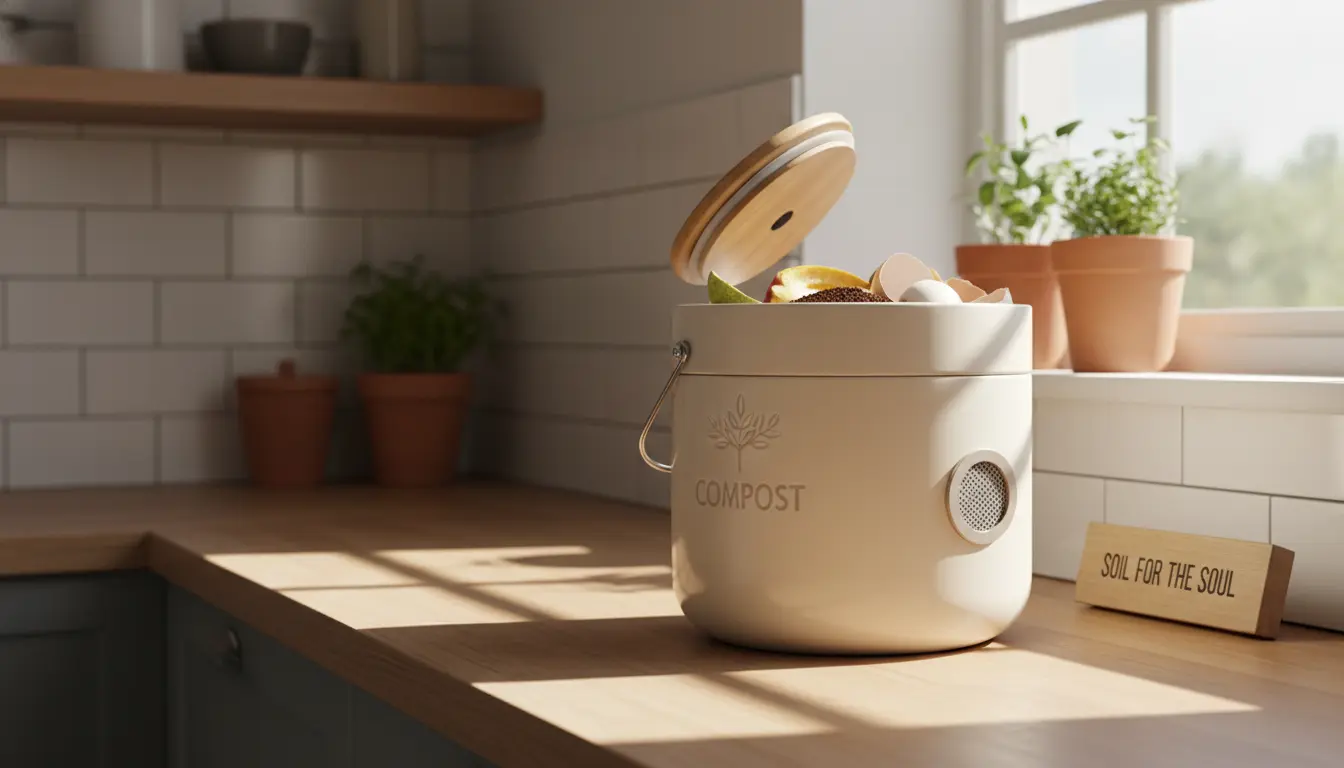
Home composting turns everyday kitchen and yard waste into useful soil amendment. This guide explains clear, practical steps for beginners to start composting at home with minimal tools and time.
Home Composting for Beginners: What You Need
Starting composting does not require special equipment. Basic needs are a container or corner of a yard, a mix of green and brown materials, and occasional turning.
Choose what fits your living situation: a small indoor bin, a tumbling composter, or an outdoor pile. Each works well when you follow the simple rules below.
How to Start Home Composting: Step-by-Step
Follow these steps to set up a reliable compost system. Keep each step short and manageable to avoid common mistakes.
1. Choose a compost bin
Select a bin based on space and effort. For small apartments, an indoor counter bin or worm (vermicompost) bin works best. For yards, choose a 3×3 foot open pile, bin, or tumbler.
- Indoor bin: Good for kitchen scraps; requires odor control and drainage.
- Tumbler: Easier aeration and faster breakdown with regular turning.
- Open pile/bin: Low cost; needs more management of moisture and pests.
2. Balance green and brown materials
Compost needs both nitrogen-rich greens and carbon-rich browns. Aim for a roughly 2:1 ratio by volume of browns to greens for steady decomposition.
- Greens: vegetable scraps, coffee grounds, fresh grass clippings.
- Browns: dry leaves, shredded paper, cardboard, straw.
3. Layer and maintain
Start with a layer of coarse brown material for airflow. Alternate greens and browns and keep materials moist but not soggy. Turn the pile every 1–2 weeks to add oxygen.
Use a garden fork or tumbler to mix. Turning speeds decomposition and reduces odors.
Common Problems and Troubleshooting for Home Composting
Beginners often face a few recurring issues. Address them quickly to keep compost active and healthy.
Smelly compost
Bad odors usually mean too many greens or poor aeration. Add more dry browns and turn the pile to introduce air.
Slow breakdown
If decomposition is slow, check moisture, particle size, and temperature. Chop large pieces into smaller bits and ensure the pile is warm and damp.
Pests
Avoid adding meat, dairy, oily foods, and large amounts of fruit. Use a closed bin or secure the pile with a lid if animals are a problem.
Using Finished Compost
Finished compost smells earthy and is dark and crumbly. Use it to improve potting mixes, top-dress lawns, or enrich garden beds.
- Vegetable gardens: Mix 1–2 inches of compost into the topsoil before planting.
- Pots and containers: Replace up to 20% of potting mix with compost for added nutrients.
- Lawn: Spread a thin layer (about 1/4 inch) and water to boost soil health.
Tools and Supplies for Home Composting for Beginners
You only need a few inexpensive items to start. Optional tools can make the process easier, but they are not required.
- Compost bin or container
- Garden fork or shovel for turning
- Kitchen compost pail with lid for collecting scraps
- Thermometer (optional) to monitor pile temperature
Food scraps and yard waste make up roughly 30% of household trash by weight. Composting those materials at home can significantly reduce landfill waste and return nutrients to your soil.
Small Case Study: Quick Results from Simple Steps
Sarah, a renter in Portland, started a 20-liter indoor compost bin with a small outdoor caddy for yard waste. She used a 60:40 mix of shredded newspaper (browns) and kitchen scraps (greens).
After three months of weekly turning and maintaining moisture, she reduced her weekly trash bag by 70% and used finished compost to refresh three herb pots. The herbs grew stronger and required less store-bought fertilizer.
Tips to Keep Home Composting for Beginners Successful
- Keep materials chopped smaller to speed decomposition.
- Maintain moisture like a wrung-out sponge; avoid saturation.
- Record what you add for a few weeks to balance greens and browns.
- Use finished compost within a year for best nutrient value.
Home composting is a low-cost, high-impact habit. With a small bin, a basic balance of materials, and a little routine maintenance, beginners can turn waste into valuable soil in a matter of months.