
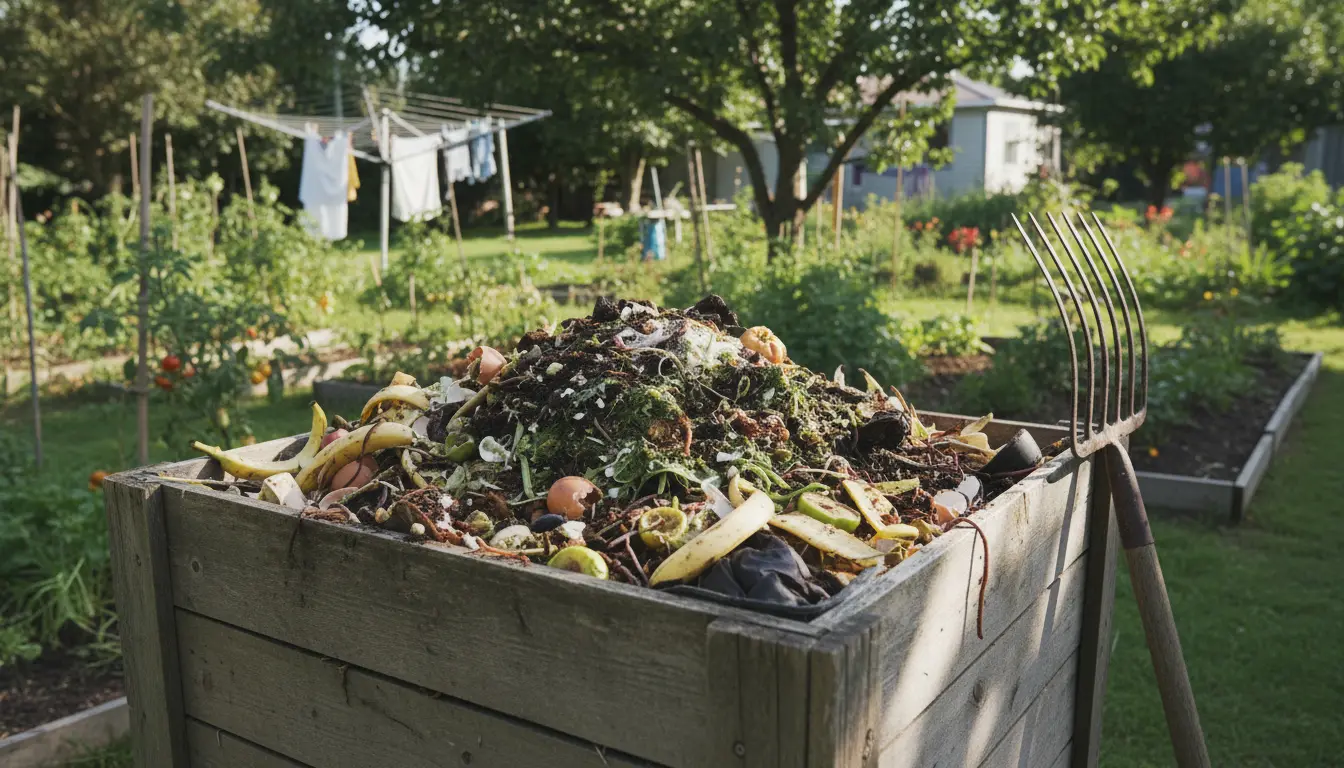
Why Home Composting Matters
Home composting turns kitchen and yard waste into valuable soil material. It reduces landfill waste, lowers household emissions, and improves garden soil.
Starting a compost bin is low cost and works in small spaces like balconies or large yards.
Choosing a Compost Bin for Home Composting
Pick a bin based on space, budget, and how fast you want compost. Options include tumbler bins, stationary bins, and worm bins (vermicomposters).
- Tumbler bin: Faster mixing, good for small yards.
- Stationary bin: Simple and cheap, needs manual turning.
- Worm bin: Best for apartments, handles most kitchen scraps.
Where to Place Your Compost Bin
Place the compost bin on bare soil or a pallet to allow drainage and airflow. Choose a partly shaded area to avoid overheating or drying out.
Keep it within easy reach of your kitchen to encourage regular use.
What to Put in Your Compost Bin
Compost needs a mix of green (nitrogen) and brown (carbon) materials. Aim for a roughly 2:1 ratio of browns to greens by volume for most systems.
- Greens: fruit and vegetable scraps, coffee grounds, fresh grass clippings.
- Browns: dry leaves, straw, shredded paper, cardboard (untreated).
- Avoid: meat, dairy, diseased plants, pet waste, and oily foods.
Practical Tips for Adding Materials
Chop large items into smaller pieces to speed decomposition. Layering browns and greens helps prevent odors and pests.
If you have more kitchen scraps than yard waste, add shredded paper or cardboard to balance carbon.
Maintaining a Compost Bin
Maintaining temperature, moisture, and aeration keeps compost active. Check the pile every 1–2 weeks.
- Moisture: Squeeze a handful of material—should feel like a damp sponge.
- Aeration: Turn or tumble the pile weekly or use a passive aeration pipe.
- Temperature: Warm piles (131–160°F or 55–70°C) decompose quickly; home piles usually stay cooler but still work.
Troubleshooting Common Problems
Bad smell usually means too wet or too many greens. Add browns and turn the pile.
Pests like rodents indicate exposed food or improper materials. Bury food scraps under browns and use a closed bin if needed.
How Long to Compost in a Home Compost Bin
Time varies with method and conditions. A well-managed tumbler can produce usable compost in 2–3 months. Most backyard bins take 6–12 months.
Finished compost is dark, crumbly, and earthy-smelling. It no longer resembles the original materials.
Using Finished Compost
Use compost as a soil amendment, mulch, or potting mix ingredient. Apply a 1–3 inch layer to garden beds or mix into potting soil for vegetables and flowers.
Composting one household can divert up to 600 kilograms of carbon dioxide equivalent from the landfill each year, depending on diet and yard waste habits.
Simple Weekly Routine for Home Composting
Keeping a short routine reduces issues and speeds composting. Follow these steps once a week:
- Add kitchen scraps and a handful of browns.
- Turn or rotate the bin to aerate.
- Check moisture and adjust as needed.
This routine keeps you on track without a lot of effort.
Real-World Example: Small-Scale Success
Case study: A two-person household in a suburban home started a 60-gallon tumbler and a small worm bin in March. They added daily kitchen scraps and yard trimmings, turned the tumbler weekly, and added shredded cardboard during heavy kitchen-scrap weeks.
After six months they reported the following results:
- Reduced weekly trash volume by 40%.
- Produced enough compost to enrich two raised vegetable beds.
- Noticed healthier tomato plants with fewer irrigation needs.
They chose a tumbler for convenience and a worm bin for slower winter processing. Both systems complemented each other and increased compost output.
Quick Checklist Before You Start a Compost Bin
- Choose bin type and location
- Gather a balance of greens and browns
- Set a simple weekly routine
- Prepare for troubleshooting (odors, pests, moisture)
Final Tips for Successful Home Composting
Start small and grow your system as you learn. Keep records or photos if you want to track improvements.
Join local gardening groups or online forums to swap tips and free materials like leaves or shredded paper.
With regular attention and the right balance, home composting becomes an easy and rewarding part of household waste management.