
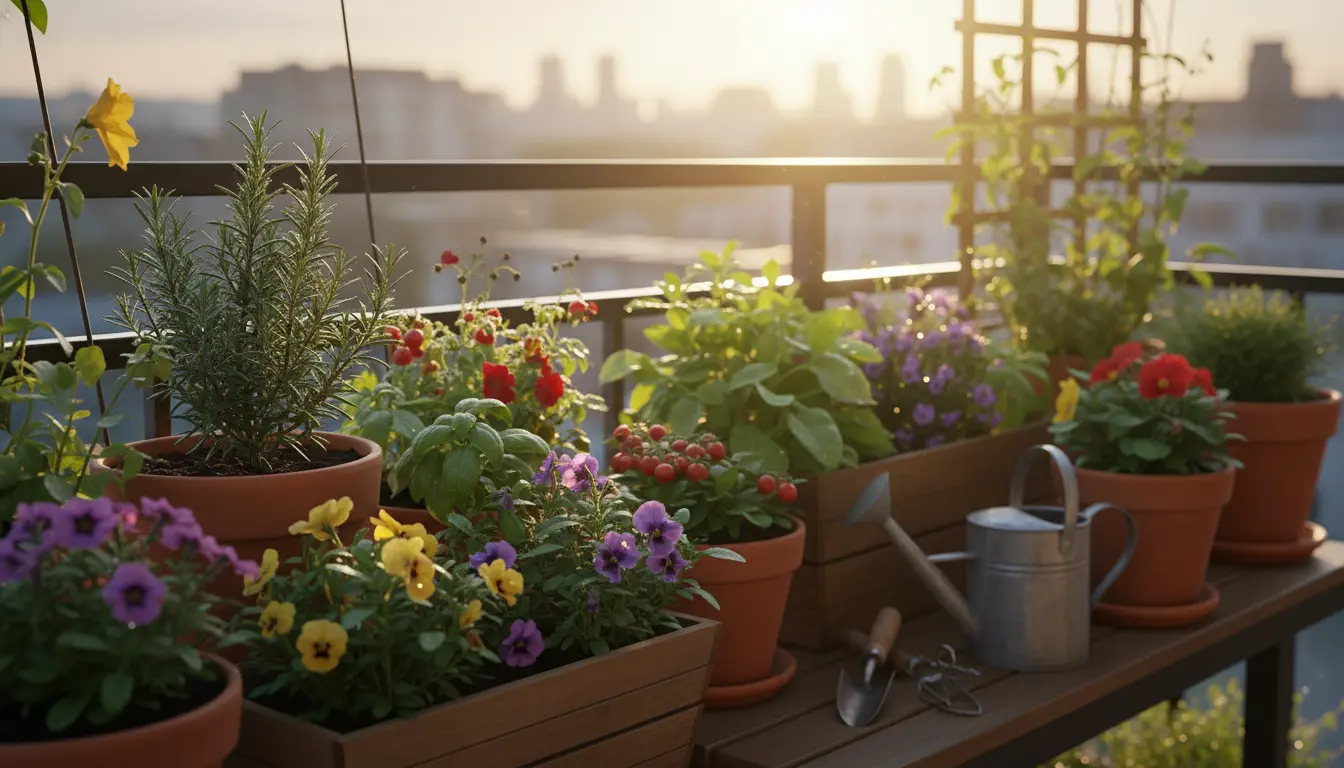
Container gardening is a practical way to grow vegetables, herbs, and flowers in small spaces. This guide covers the basics you need to start a healthy container garden at home, including container choice, soil, watering, and maintenance.
Container Garden Basics
A container garden uses pots, buckets, or other containers instead of ground beds. Containers give you control over soil, drainage, and placement—ideal for balconies, patios, and small yards.
Before planting, consider sunlight, space, and what you want to grow. Most vegetables and herbs need at least 6 hours of sun a day.
Choosing the Right Containers for a Container Garden
Select containers based on plant type and root depth. Large, deep containers suit tomatoes and peppers; shallow pots work for lettuce and herbs.
- Material: Terracotta, plastic, and fabric pots each have pros and cons. Plastic retains moisture; terracotta breathes but dries faster.
- Size: Aim for at least 5 gallons for small vegetables; 10+ gallons for larger fruiting plants.
- Drainage: Ensure containers have drainage holes to prevent root rot.
Soil and Potting Mix for Container Garden Success
Use a quality potting mix formulated for containers rather than garden soil. Potting mix drains better and contains additives to support growth.
Consider mixes with peat moss or coco coir, perlite for aeration, and slow-release fertilizer. Avoid heavy soils that compact and inhibit roots.
Soil Amendments and Fertilization
Add a balanced slow-release granular fertilizer at planting, then supplement with liquid feed every 2–4 weeks during the growing season. Organic options include compost tea or fish emulsion.
- Nitrogen for leafy growth
- Phosphorus for roots and blooms
- Potassium for overall plant health
Plant Selection for a Container Garden
Choose plants suited to container life and your climate. Herbs, salad greens, dwarf tomatoes, peppers, strawberries, and compact flowers are top choices.
Look for words like “compact”, “bush”, or “patio” on seed packets and plant labels—these varieties perform better in containers.
Companion Planting in Containers
You can mix herbs and flowers with vegetables to maximize space and deter pests. For example, basil near tomatoes can improve flavor and repel insects.
- Pair basil with tomatoes
- Plant marigolds to deter nematodes
- Grow chives near roses to reduce fungal disease
Watering and Drainage Tips for Your Container Garden
Containers dry out faster than ground beds, so consistent watering is key. Check moisture daily during hot weather and water when the top inch of soil feels dry.
Water deeply so roots reach the entire pot; shallow, frequent watering encourages weak roots. Use drip irrigation or self-watering containers to reduce daily work.
Signs of Overwatering and Underwatering
Brown, wilting leaves and persistent wet soil signal overwatering. Dry, crispy leaves and slow growth indicate underwatering. Adjust your schedule and container type accordingly.
Pest Management and Common Problems in a Container Garden
Container gardens face similar pests as beds: aphids, slugs, whiteflies, and fungal diseases. Inspect plants weekly and remove damaged leaves promptly.
- Use insecticidal soap for soft-bodied pests
- Introduce beneficial insects like ladybugs if feasible
- Ensure good air circulation to prevent mildew
Many herbs and small vegetables can be grown in containers year-round with the right light and protection. Indoor container gardens can extend your harvest into winter.
Maintenance Plan for a Container Garden
A simple maintenance routine keeps containers productive: feed every 2–4 weeks, prune and harvest regularly, and refresh topsoil each season. Replace or repot plants that become root-bound.
Rotate crops seasonally to reduce disease pressure and try succession planting to maximize yields in limited space.
Seasonal Checklist
- Spring: Inspect pots, refresh soil, plant seedlings
- Summer: Monitor water closely, pinch back growth, stake tall plants
- Fall: Harvest remaining crops, clear spent plants, store containers if needed
Small Case Study: A Balcony Container Garden
Maria, a city renter with a small balcony, started a container garden using five 10-inch pots and two 5-gallon buckets. She chose cherry tomatoes, basil, lettuce, and mint for varied harvests.
Within eight weeks, she had a steady supply of salad greens and herbs. By using self-watering inserts and a weekly liquid feed, Maria reduced watering time and prevented nutrient deficits.
Her key wins: choosing compact varieties, consistent watering, and harvesting regularly to encourage new growth.
Quick Start Checklist for a Container Garden
- Pick a sunny spot with at least 4–6 hours of direct light
- Choose containers with adequate depth and drainage
- Use quality potting mix and add slow-release fertilizer
- Select compact plant varieties suitable for containers
- Water deeply and monitor soil moisture daily during heat
- Inspect for pests and prune or harvest regularly
Starting a container garden is accessible and rewarding, even in tight spaces. With proper container choice, soil, water management, and a simple maintenance plan, you can enjoy fresh produce and flowers from almost any home.